Know what needs protecting
A human-hair wig may feel familiar to wash, but it does not behave exactly like hair growing from a scalp. Its strands cannot benefit from your scalp’s natural oils, and the hair is attached to a cap that needs careful handling. On a lace-front or hand-tied wig, individual hairs may be secured with small knots. Pulling, scrubbing or repeatedly brushing close to those knots can loosen hair over time. Machine-wefted wigs have different attachments, but their stitching and cap materials still benefit from a light touch.
Check any care instructions supplied with your wig before washing, especially if it has a delicate lace area, a silk top, colour treatment or a bonded attachment. If you wear the wig with adhesive, remove it using the method recommended for that product before washing. Do not try to scrub adhesive out of lace while the wig is on your head.
Prepare before adding water
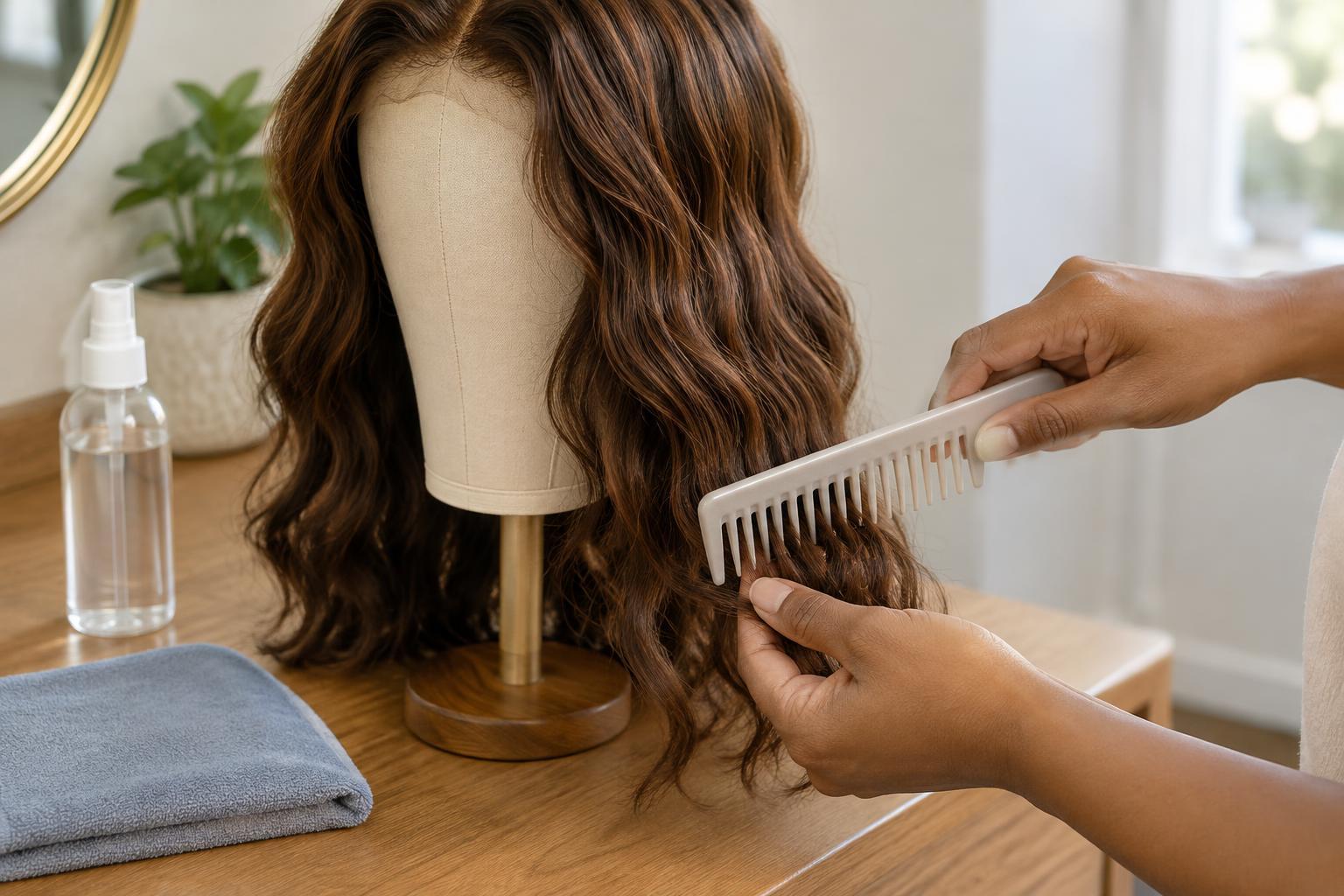
Begin by removing pins and accessories. With the wig dry, gently separate tangles using your fingers, then a wide-tooth comb or a suitable wig brush. Start at the ends and work upward in small sections. Hold the hair above the section you are detangling so the force does not travel to the roots or cap. Take extra time around the nape, where friction from clothing often causes tangles.
Use a mild shampoo suitable for human-hair wigs or colour-treated human hair, following the product directions. Have a towel and a place to dry the wig ready. Washing does not need to follow a rigid calendar: product buildup, odour and how often you wear the wig are more useful guides. Washing more often than needed adds handling, while leaving heavy buildup in place can make the hair harder to manage.
Cleanse with the hair pointing downward
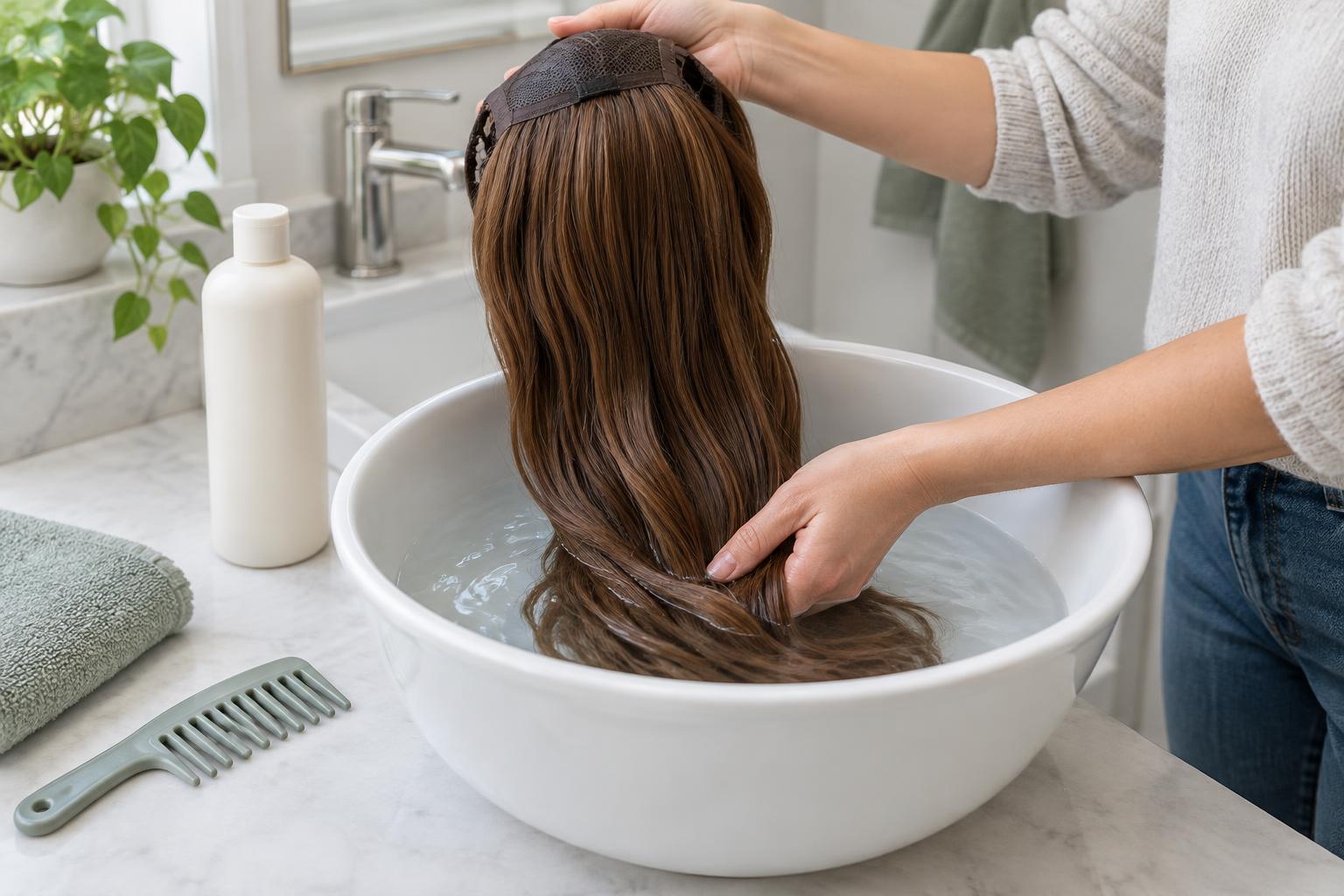
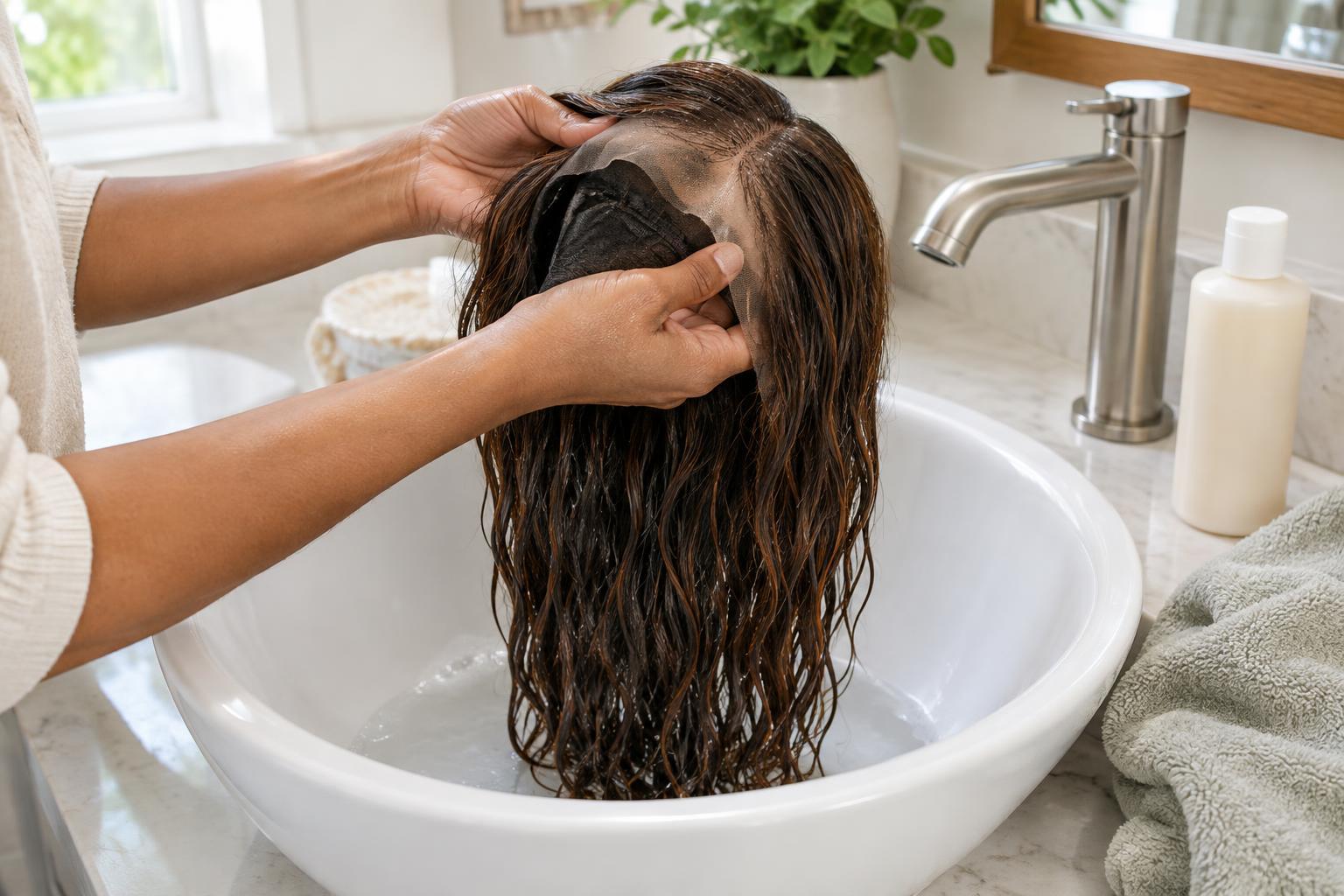
Wet the wig with lukewarm water, letting it flow from the top toward the ends. Keep the hair aligned rather than piling it on the crown or swirling it in a basin. Apply a small amount of shampoo to the hair and smooth it down the lengths. To clean the cap, support it with your hand and use your fingertips to lightly press shampoo onto areas that contact your skin. Around lace and knots, avoid scratching, vigorous circular rubbing and pulling hair back and forth through the lace.
Rinse thoroughly in the same downward direction until the shampoo is gone. Support the cap as you move the wig; wet hair is heavier, and lifting it by a small lace edge or a handful of strands can strain the attachment points. If the wig is still visibly soiled, repeat a gentle cleanse rather than scrubbing harder. Do not twist or wring the hair to remove water.
Condition the lengths, not the knots
Apply conditioner mainly from the mid-lengths to the ends, where human hair often needs the most slip. Unless the wig maker’s instructions say otherwise, keep rich conditioner and oil-based masks away from the roots, lace and hand-tied areas. These products can leave residue on the cap, and repeated contact may make knots more prone to loosening. Let the conditioner sit for the time stated on its label, then rinse well.
If you encounter a tangle while the hair is conditioned, ease it apart gently while supporting the hair near the cap. Do not force a comb through a knot at the root. Once rinsed, press the hair between your hands to release water, then blot it with a towel. Rubbing the towel against the hair or cap can create tangles and friction.
Dry fully before styling or storing
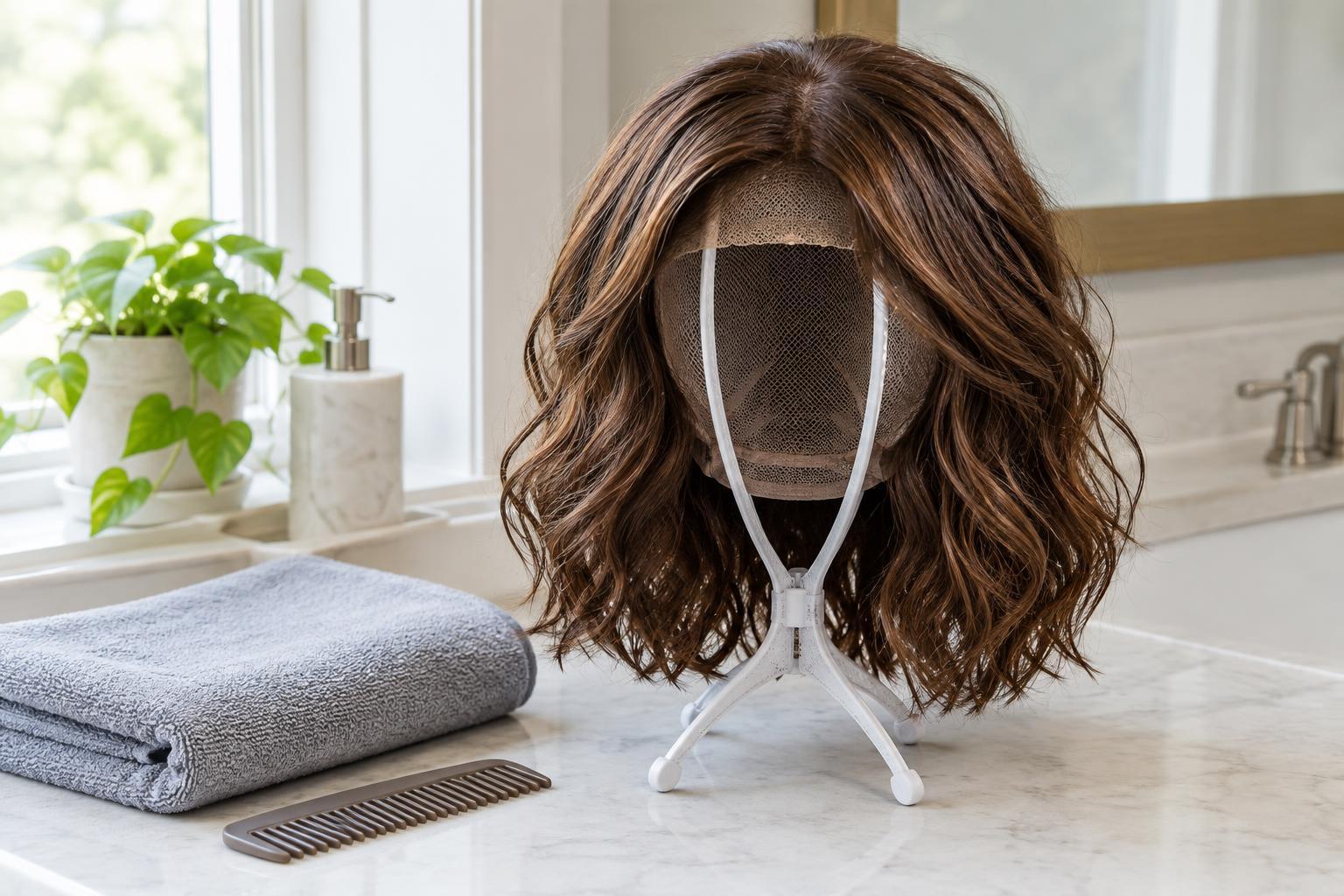
Place the wig on a suitable stand that allows air to circulate without stretching the cap. Arrange the hair in its usual direction and let both hair and cap dry completely. Avoid hanging a wet wig by its lace or leaving it bunched in a towel. If you use a hair dryer, check the wig’s care guidance and use a gentle airflow and moderate heat while keeping tension off the cap. Wait until the hair is dry before using heated styling tools, and follow the tool and wig makers’ temperature guidance.
Store the wig only when it is fully dry. A clean, dry wig can rest on an appropriately sized stand or be placed carefully in a breathable storage option that does not crush its shape. Between washes, gentle detangling and keeping heavy styling products away from the cap can help make the next wash easier. The aim is not to make the wig perfectly untouched, but to clean it without unnecessary friction or strain.