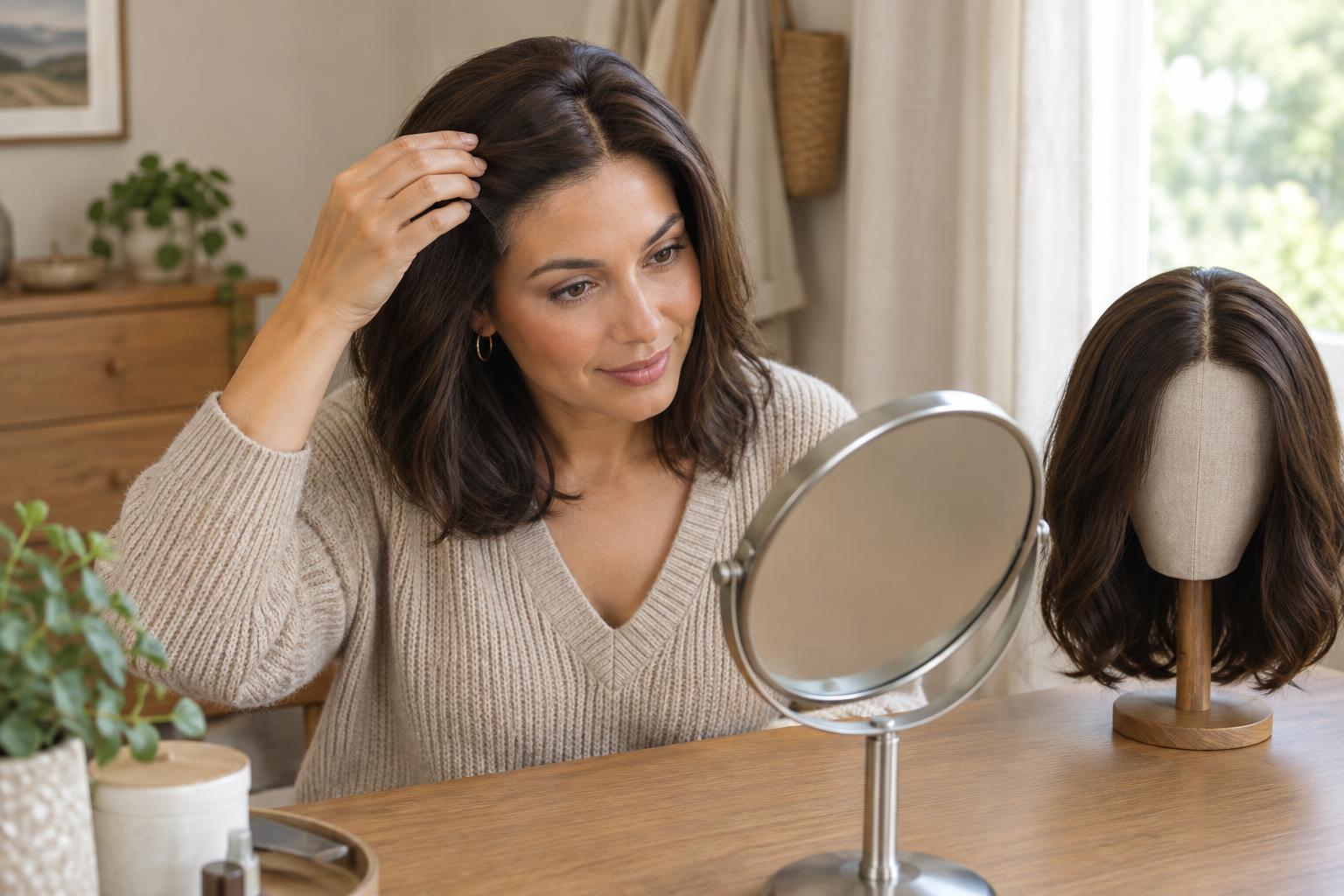
Decide what you want the shade to do
Before comparing colours, decide whether you want a wig to resemble your usual hair, complement it or give you a different look. A close match can be useful if you plan to wear a wig alongside visible natural hair. If the wig will cover all your hair, you may have more freedom to choose a shade simply because you enjoy it. There is no requirement to match a particular colour to your age or skin tone.
It helps to name two or three features you want rather than searching for one perfect shade. You might prefer a medium brown with little warmth, a blonde with darker roots, or a colour with enough variation to avoid looking flat. Keep in mind that a wig frames your whole face. A shade you like in a small sample may feel stronger or lighter when it appears across a full head of hair.
Read the swatch, not just the shade name
A physical swatch is a small sample of wig fibre or hair in a particular colour. It can show details that a product image may not make clear, such as whether a brown leans red, whether a blonde looks creamy or cool, and how several tones are blended. Look through the sample as well as at its surface. Some colours mix lighter and darker strands throughout; others concentrate one tone at the roots or ends.
Shade names and codes are useful for identifying a colour within a seller’s range, but they are not universal. Two wigs called “dark ash blonde” may look different, especially if they come from different ranges. If a listing uses terms such as rooted, highlighted, tipped or blended, check where those colours appear on the finished wig. A swatch may represent the overall colour without showing its placement. When possible, compare the swatch with photos of the specific wig and ask the seller how closely the sample reflects that style.
Compare colours in steady daylight
Check swatches near a window in indirect daylight, or outdoors in open shade. This makes it easier to see subtle warmth, coolness and contrast without a bright lamp changing their appearance. Hold each swatch beside your face, roughly where the wig hair will sit, rather than against your wrist or on a table. If matching visible natural hair matters to you, hold the sample alongside that hair too, particularly near the parting or hairline.
Daylight is helpful, but it is not one fixed type of light. Direct sun can make highlights appear brighter and shiny fibres more reflective; a heavily shaded room can make colours look duller. Take another look under the indoor lighting you use most often. Rather than expecting an identical appearance in every setting, notice whether you still like the shade as the light changes. A neutral background and clothing colour can also make comparisons easier.
Narrow the choice with side-by-side checks
Compare no more than a few promising swatches at once. Place them next to each other to judge which is lighter, warmer or more varied, then hold them beside your face one at a time. If you are choosing between neighbouring shades, pay attention to the feature that matters most to you: the depth at the roots, the brightness around the face or the amount of contrast in the blend. A quick photo can help you remember your impressions, but screen settings and camera processing can shift colour, so keep the physical samples as your main reference.
Consider the wig’s material and style as well as its shade. Synthetic fibres, heat-friendly fibres and human hair can reflect light differently, and curls or layers can change how a blend appears. A dark root may be barely noticeable in a swatch yet prominent at the parting. If you can try on the finished wig, view it from the front, sides and back in more than one lighting condition before deciding.
Check the practical details before buying
Once you have a shortlist, confirm the exact shade code on the wig you intend to buy. Check whether a swatch belongs to that range and whether the colour is shown on the same fibre type. If you are ordering online, read the seller’s information about colour variation, swatch availability and returns before removing any tags or making alterations. These details matter if the finished wig looks different from what you expected.
If you remain unsure, choose according to the look you would be happiest wearing, not a rule about what should suit you. Swatches and daylight will not guarantee a perfect prediction, but together they give you a clearer basis for choosing than a shade name or screen image alone.