Know what the clip might catch
A claw clip is designed to grip a bundle of hair between interlocking teeth. On a wig, those teeth can sometimes pass through the hair and reach the construction underneath. Depending on the wig, that may mean a stretch cap, rows of sewn-in wefts, lace or another base material. A caught tooth can pull on the construction when you adjust or remove the clip.
The aim is to let the clip hold hair, not the wig base. This is easiest when there is enough hair to cushion the teeth and when the clip is not pressed flat against the head. If the wig has sparse areas, short layers or exposed wefts near the place you want to clip, try a different position or a looser style instead.
Choose a clip that suits the amount of hair
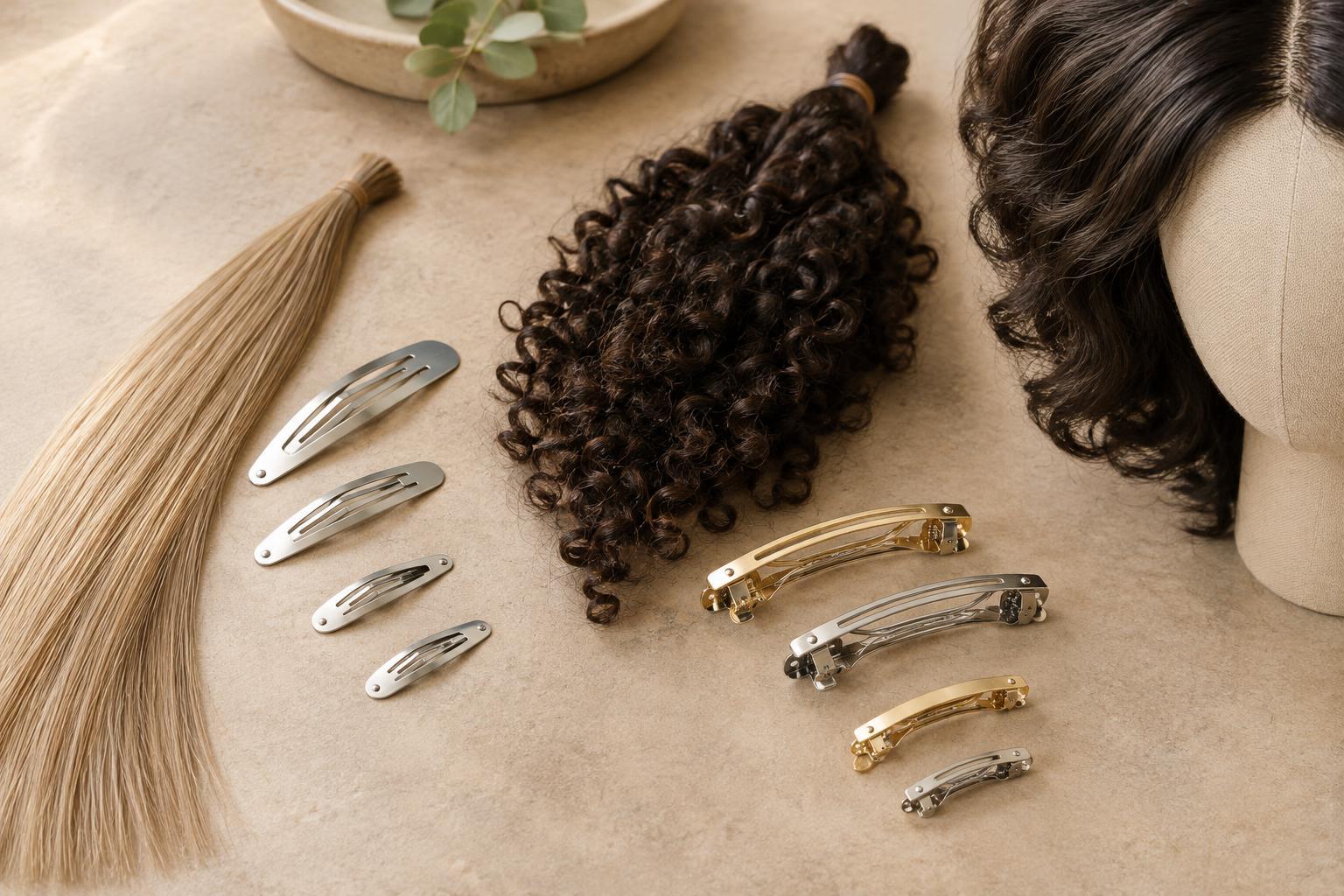
Start with a clip that closes around the gathered hair without needing to be forced. An oversized clip may leave its teeth reaching past the hair toward the cap; a very small one may require you to pull the hair too tightly to make it fit. Smooth, rounded teeth and edges are preferable to sharp points or rough seams. Check the hinge and any decorative attachments for places where strands could become trapped.
Clip weight matters too. A heavy clip can tug on the wig as you move, particularly if it holds hair high on the back of the head. For a light half-up style, a smaller, lighter clip may be enough. Before styling the wig, open and close the clip in your hand to see whether its spring feels manageable and whether any teeth cross or scrape.
Gather hair without digging into the base
Put the wig on and settle its fit before clipping, or secure it on a suitable wig stand if that makes the hair easier to handle. Use your fingers or a wig-appropriate brush to smooth the section you want to lift. Work through tangles first rather than asking the clip to hold a knotted bundle. Keep your hand between the gathered hair and the wig base while you decide where the clip will sit.
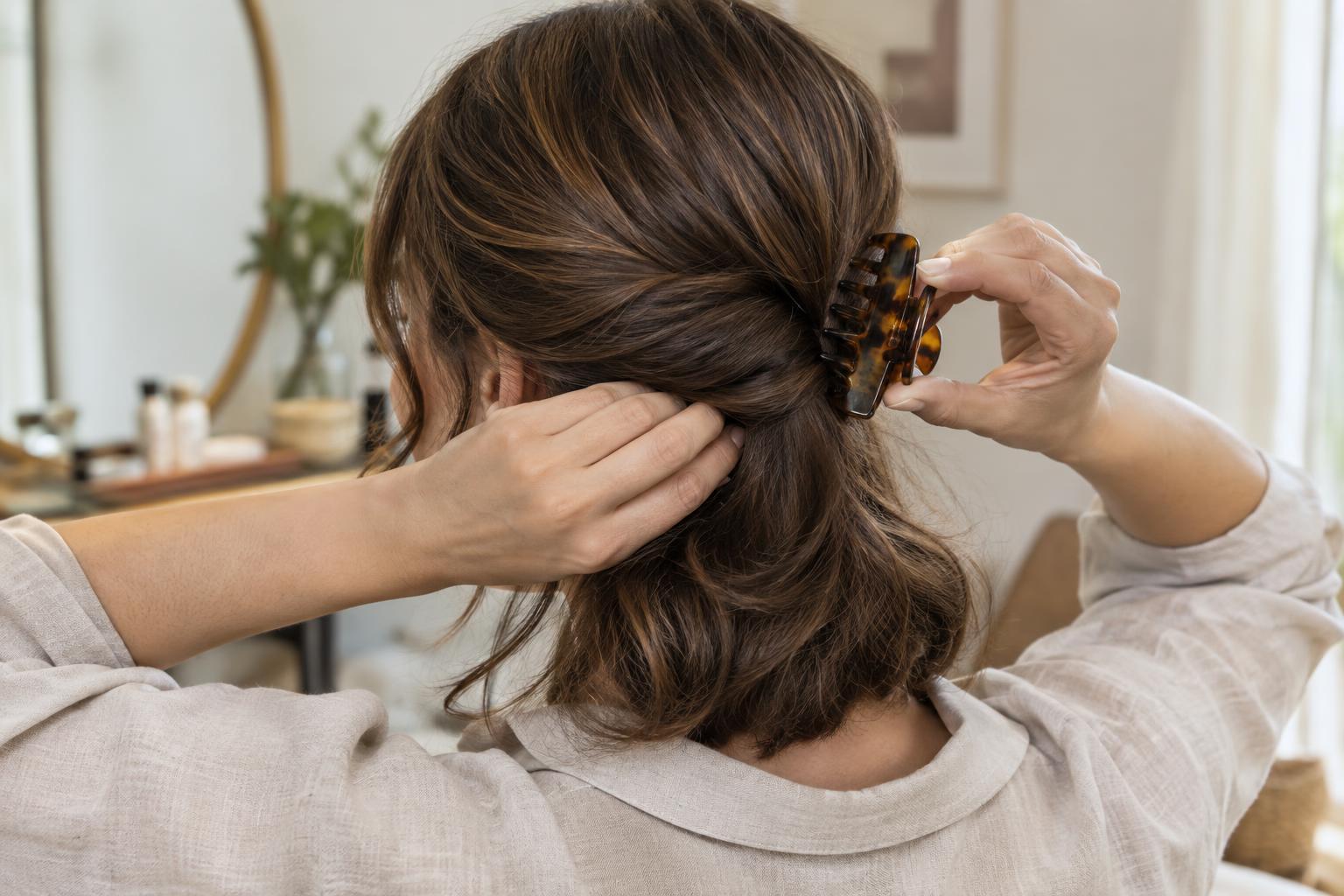
For a simple half-up look, take a modest section from each side and bring them together at the back. Hold the hair slightly away from the cap, open the clip and place its teeth around the hair you are holding. Close it gently; do not push it inward to make it grip more firmly. A loose twist can add thickness for the clip to hold, but avoid twisting so tightly that it pulls at the hairline or at individual wefts.
For a fuller twist, gather the hair low, turn it upward and fold the ends into the twist before clipping over the folded hair. Leave a little ease at the roots. If the wig shifts when you lift the hair, pause and adjust the fit rather than using the clip to anchor it. A claw clip is a styling accessory, not a substitute for a secure, comfortable wig fit.
Check the hold and remove the clip safely
Once the clip is closed, move your head gently and check whether the style feels balanced. You should be able to feel the clip holding the gathered hair without a sharp pull at one spot. If you can see teeth resting against lace or slipping between weft rows, open the clip and try again with more hair between the teeth and the base. If the clip slides out unless you press it against the cap, it is probably not the right clip or style for that section.
To take it out, support the gathered hair with one hand and fully open the clip with the other. Lift it away slowly rather than dragging it down through the strands. If a tooth has caught a strand or part of the construction, stop and free it gently before moving the clip. Pulling harder can turn a small snag into damage.
Adapt the style to your wig
Wig construction affects where a clip can sit comfortably. On a wefted wig, avoid placing teeth where the hair parts and the weft rows are easy to reach. On a lace-front wig, keep the clip and any tension away from the delicate front edge. A monofilament area may offer a natural-looking part, but it still deserves gentle handling. These are placement considerations, not reasons to rule out every clipped style.
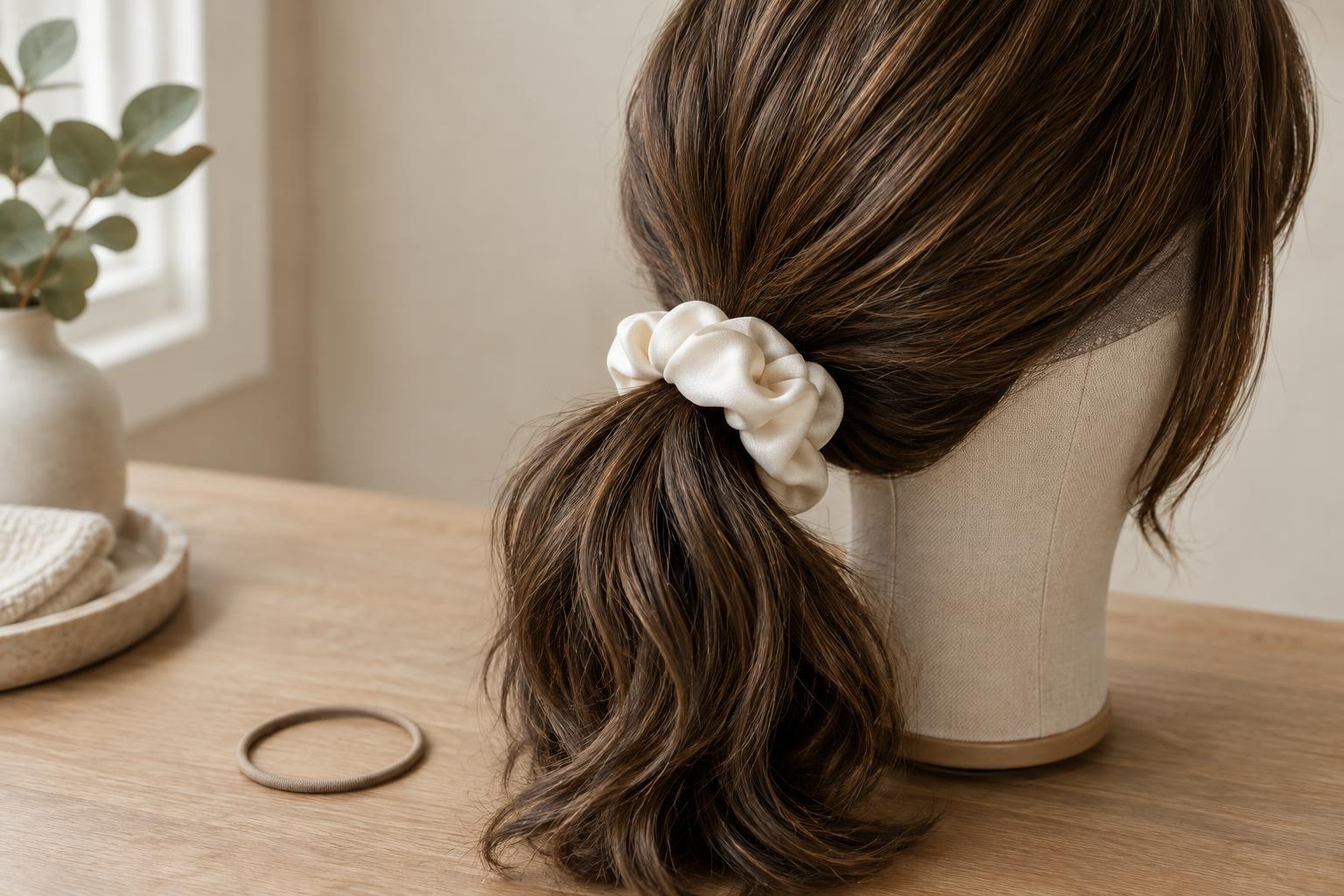
If a claw clip repeatedly catches despite a lighter touch, try clipping a smaller section, lowering the placement or choosing a soft hair accessory that does not use teeth. The best result is one you can put in and take out without tugging, readjusting the wig or worrying about what the clip is gripping.