Start with a secure, comfortable wig fit
A scarf should be an accessory, not the thing holding your wig on. Before tying it, put on your wig as you normally would and check that it feels stable when you gently turn your head. If the wig slides, adjust its straps or placement according to its construction rather than tightening a scarf over it. A scarf pulled firm enough to secure a loose wig may press on the hairline and still shift as you move.
Check that any lace front lies comfortably before you add fabric. If you use adhesive, tape or a wig grip, follow the product’s instructions and make sure the wig is settled first. Avoid using the scarf to flatten a lifting edge: the pressure can feel uncomfortable, and removing the scarf may disturb the lace.
Choose a scarf that does not need a tight knot
A lightweight, flexible scarf is usually easier to arrange than a thick, stiff one. A long rectangular scarf gives you room to tie the ends away from the front hairline; a square scarf can also work when folded into a broad band. Very narrow folds concentrate pressure in one strip, so start with a band wide enough to sit gently across the top of the wig.
Fabric texture affects how the scarf behaves. A smooth scarf may slide more readily, while a textured one may catch on wig fibres, especially if they are delicate or prone to tangling. Neither needs to be ruled out: try the scarf with your wig at home, and look for a balance between comfort and staying power. Remove jewellery or pins that might snag the hair before you begin.
Tie a simple band with the knot away from the front
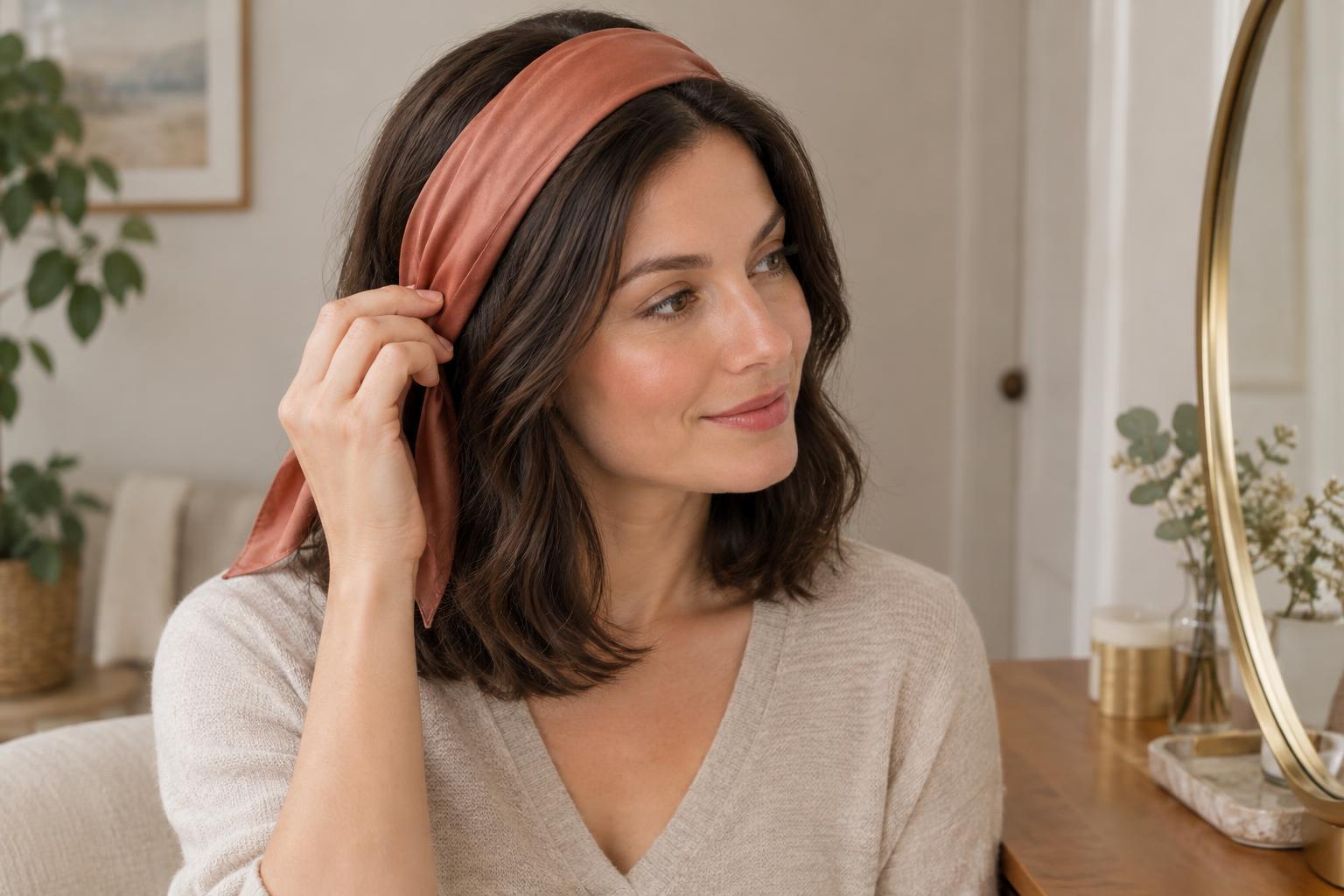
Fold the scarf into a broad band. Place its middle on top of the wig, a little behind the front edge rather than directly on the lace or the first row of hair. Lead both ends towards the back of your head, keeping the band flat and smoothing out twists. Cross the ends at the nape and tie one gentle knot, or bring them to one side and tie them there if that feels more comfortable.
As you tie, keep one or two fingers under the band to gauge the tension. You should be able to slip them out easily. The scarf should rest in place without making the wig shift backwards or pressing its front edge into your skin. If the ends are long, tuck them into the band or make a loose bow rather than pulling a second knot tight. If the band moves, adjust its position or try a different scarf instead of repeatedly tightening it.
For a fuller head-wrap look, begin with a wider folded scarf placed behind the hairline, then bring the ends around the sides and tie them above the nape or to one side. Arrange any extra fabric loosely over the crown. This gives the scarf shape without relying on tension at the front of the wig.
Protect the wig while you arrange the fabric
Hold the wig steady with one hand when sliding or repositioning the scarf, particularly around a lace front. Lift the fabric and set it down again instead of dragging it across the hairline. Keep knots, pins and bulky folds off areas that feel sensitive, and avoid tying the scarf into wig hair unless you intend to style and detangle that section afterwards.
A quick mirror check from the front and both sides can reveal a fold caught under the wig edge or a band that is pushing the hair back. Then move your head gently and notice how it feels. Pressure, itching or a shifting wig are reasons to retie the scarf more loosely. Comfort matters more than making the wrap look perfectly symmetrical.
Take it off as carefully as you put it on
Untie the ends first, then lift the scarf away rather than pulling it forward over the hairline. If fibres have caught in the fabric, free them gently with your fingers. After wearing a scarf, lightly smooth or detangle the wig as appropriate for its fibre and style, paying attention to the areas beneath the band.
There is no single scarf placement that suits every wig or head shape. A broad band behind the front edge, a loose knot away from the hairline and a wig that fits without the scarf are useful starting points. Small adjustments can give you the look you want without asking the hairline to bear the load.