Why loose accessories cause snags
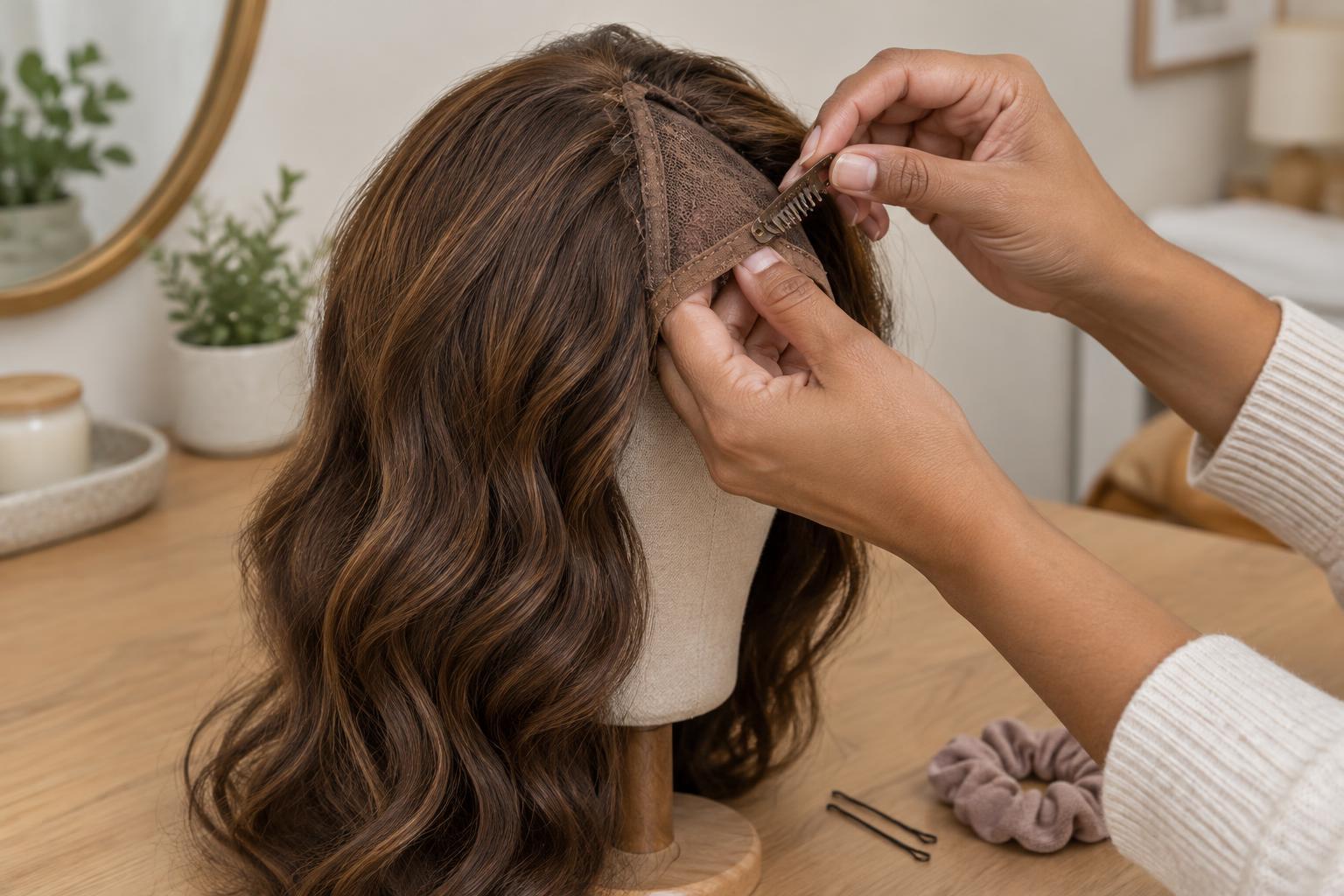
A hair accessory can be gentle while you wear it but troublesome when it is loose in a drawer. Clip teeth, the open ends of hairpins, hook-and-loop fasteners and raised decorations can catch on nearby strands. On a wig or hairpiece, they may also catch on lace, netting or stitching. Pulling the two items apart in a hurry can loosen fibres or make an existing tangle worse.
The goal is not to buy a special container for every accessory. It is to stop exposed parts from touching anything they can catch. Start by looking at each item when it is not in use: is the fastening open, is a pin tip uncovered, or does an embellishment have an edge that feels rough? Those details tell you what needs a cover and what needs its own space.
Close, cover and group fastenings
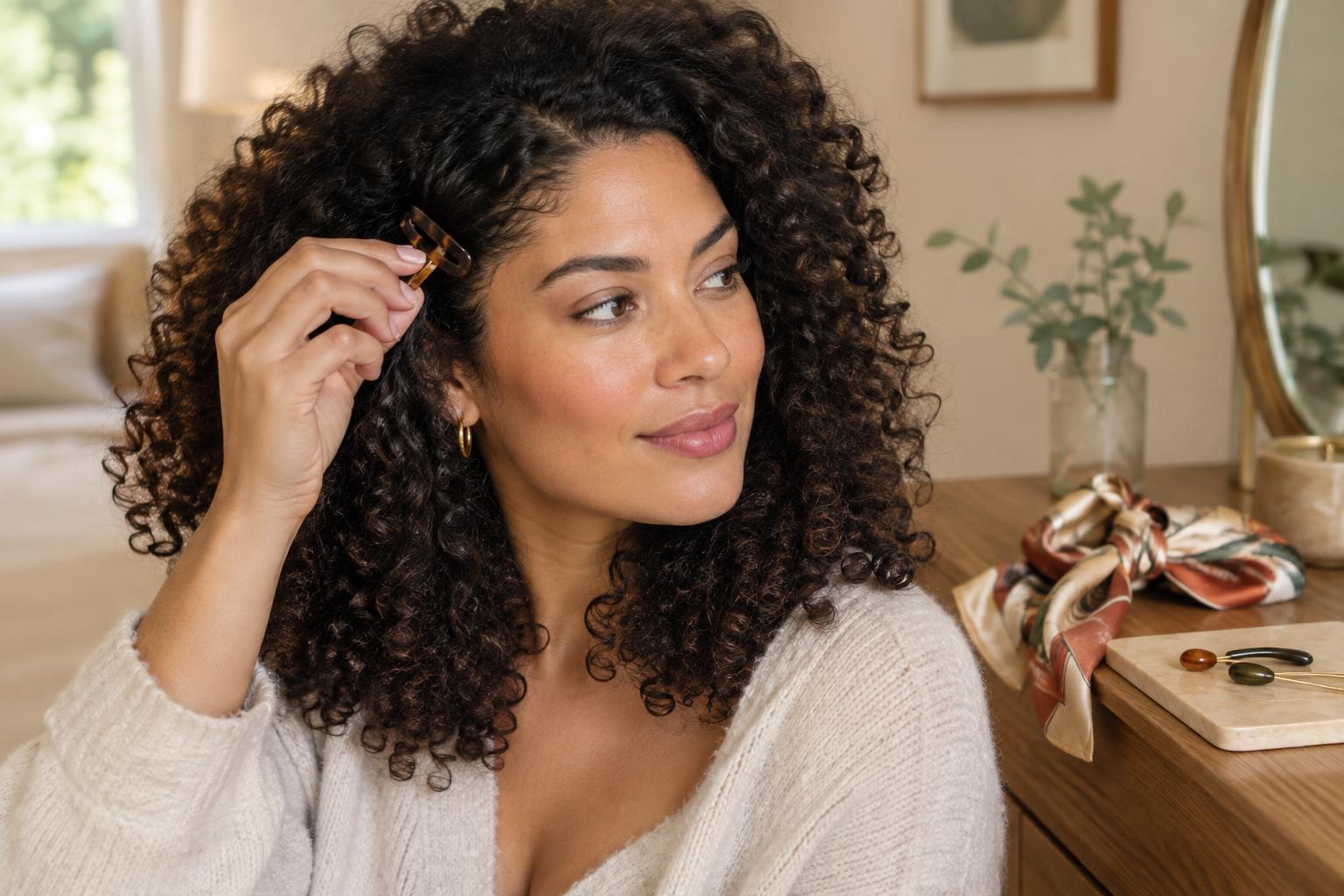
Close snap clips and barrettes before storing them, provided they close without strain. Pair bobby pins on a small card or slide them into a narrow pouch so their ends cannot work into loose hair. Keep claw clips in a compartment where their teeth will not press against a hairpiece. If a clip has a particularly sharp or uneven edge, set it aside until you can check whether it is suitable to use at all.
Hook-and-loop fasteners deserve extra attention because the hook side can grip fibres and lace. Press the two sides together for storage when possible. If they cannot meet, cover the hook side with a spare piece of the matching loop material or keep the item inside its own fabric pouch. Wrap decorative headbands or combs with protruding details in a soft cloth, taking care not to bend them out of shape.
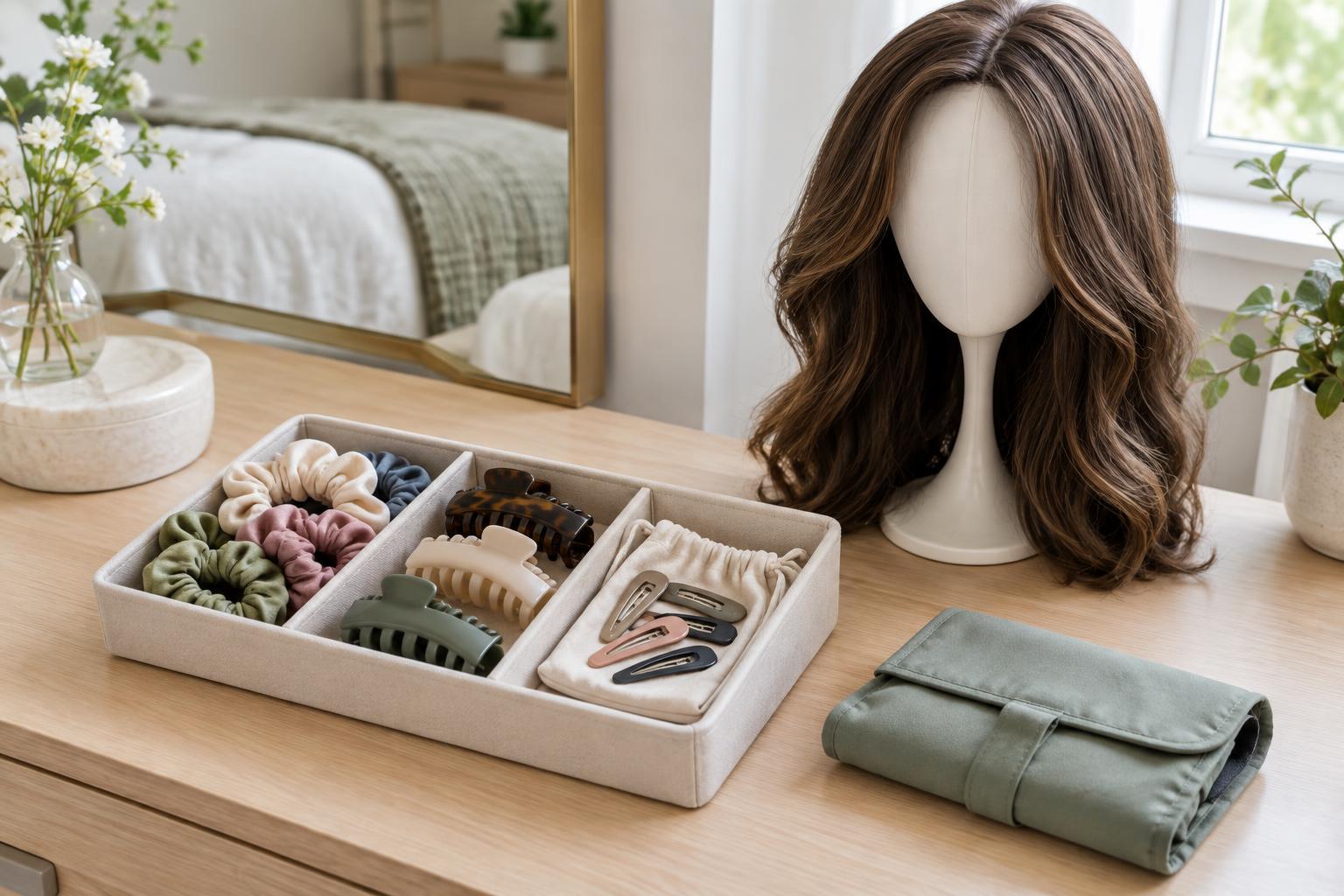
Group accessories by how they fasten rather than dropping everything into one container. Soft scrunchies can share a section; pins, combs and clips benefit from separate sections or small bags. Clear compartments make it easier to find what you need without rummaging through pieces that could snag one another.
Give wigs and hairpieces a separate space
Do not use a wig bag or storage box as a catch-all for accessories. Even a closed clip can shift during handling and press against strands or a delicate cap. Store accessories alongside a wig only if they are enclosed in a separate pouch or compartment that cannot spill into the hair. This matters especially around lace fronts and fine netting, where a caught fastening can be difficult to release without pulling.
Before putting away a wig or hairpiece, remove every pin and clip used to secure or style it, unless the item's care instructions specifically say otherwise. Check near the parting, hairline and underside of the cap; small pins are easy to miss. Put the hairpiece away using a storage method suited to its construction, then place the accessories in their designated container. Keeping those steps separate makes it less likely that a stray pin will be folded into the hair.
Make everyday storage easy to maintain
Choose a setup that suits your routine: a divided drawer insert, a lidded box with compartments or a few labelled fabric pouches can all work. Smooth interior surfaces are preferable to rough baskets that may catch loose fibres. Leave enough room that you can lift out one accessory without dragging several others across it.
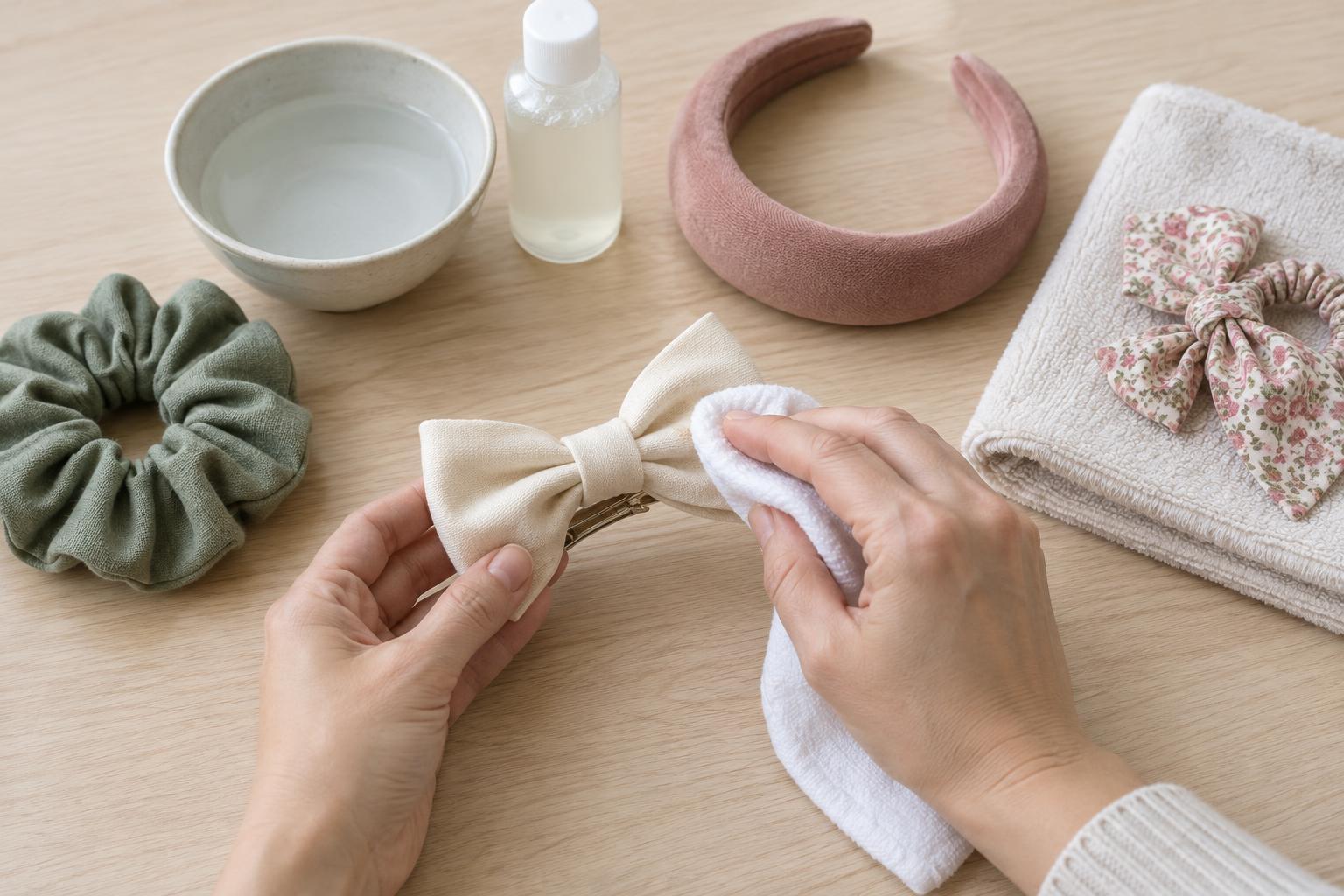
Create a small landing spot for accessories you take off at the end of the day. Before returning them to storage, close fastenings and remove any shed hair wound around hinges or teeth. If an item is damp from washing or styling products, let it dry as appropriate for its materials before enclosing it. A quick check also gives you a chance to notice loose decorations, damaged coatings or bent pins.
Pack for travel without creating a tangle
In a travel bag, accessories move more than they do at home. Put pins in a holder, close clips and contain hook-and-loop pieces before packing them in a small case or pouch. Keep that case apart from a wig or hairpiece, even if both go inside the same larger bag. Avoid placing heavy clips where they could press into a cap or crush a styled section.
When unpacking, take out the accessory case first rather than reaching through stored hair to find a clip. The same simple rule works at home and away: cover what can catch, contain what can spill, and give delicate hair and cap materials room of their own.