Make a quick inspection part of your routine
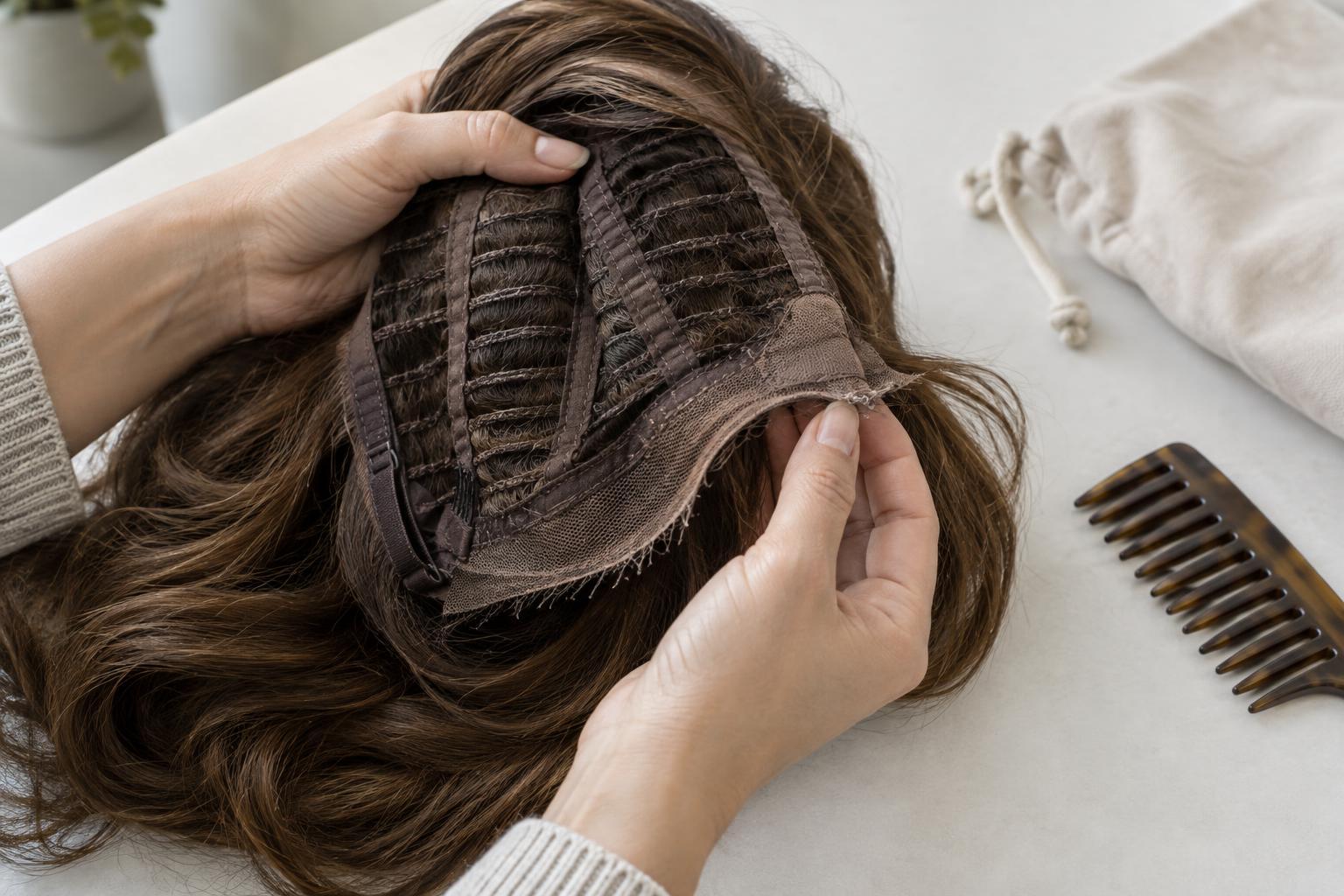
A wig does not need a detailed examination after every wear, but a brief look while you detangle or put it away can reveal small changes. Place it on a suitable stand or lay it on a clean surface in good light. Look at the outside first, then turn the cap inside out without stretching it. Compare anything unusual with how the wig normally looks and feels; a visible seam or a few shed strands are not automatically signs of damage.
Pay particular attention to places that experience handling and friction: the front hairline, parting, nape, ear tabs and areas that rub against collars or headwear. Use your fingertips rather than pulling on individual hairs or seams to test their strength. If the wig is damp, let it dry according to its care instructions before judging its shape or storing it.
Recognise a loose weft before it opens further
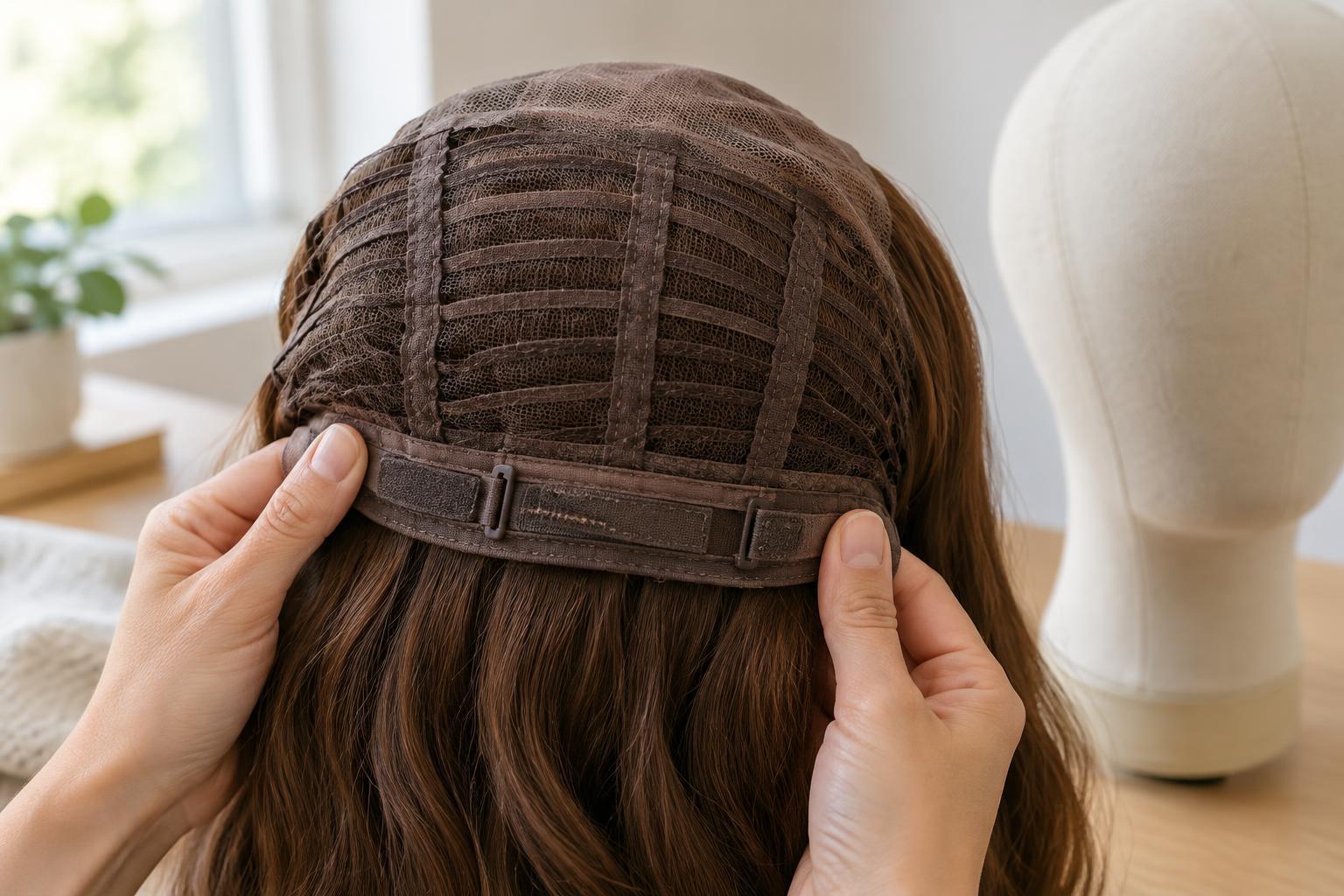
Wefts are strips of hair attached to many wig caps in rows. A loose weft may sit away from the cap, form a small loop or leave a gap where its stitching has come free. Check the underside of the cap for broken or dangling threads, especially where rows meet the nape or sides. From the outside, a newly visible track may point to a shifted weft, though it can also appear if the hair has simply been parted differently.
Do not tug the strip to find out how loose it is. Note where it has lifted and avoid brushing firmly across that spot. A small area may be repairable with careful stitching suited to the cap construction, but an unstable seam or several loose rows are better assessed by someone experienced in wig repairs. Glue can make later repairs harder and may leave a stiff, visible patch.
Check lace, knots and high-friction edges
Lace fronts and lace partings can show wear as fuzzy edges, tiny holes, stretched areas or a tear that changes shape when the lace lies flat. Inspect the front edge and any area where clips, adhesive or tape have been used. A little unevenness at a trimmed hairline may be normal; new gaps or a snag that catches your finger deserve closer attention. Avoid pulling the lace taut to inspect it, as that can enlarge a weak spot.
Look at the hair attached to the lace as well. Sparse patches or clusters of missing hairs may indicate shedding around the knots, particularly if the area is also handled often. Clean adhesive residue only with products and methods appropriate for that wig, and let it soften rather than scraping it away. If lace has torn near the hairline or a fastening point, pause adhesive use and styling there until you know whether it can be reinforced.
Notice changes beyond the cap
Wear can also appear as persistent tangling, rough ends, matting at the nape or hair that no longer falls as it usually does after gentle care. These signs do not always mean the wig is beyond use. Product build-up, friction and an unsuitable brushing method can look like damage. Follow the maker’s guidance for the fibre before washing or applying heat: synthetic and human-hair wigs can have different limits, and not every synthetic fibre is heat-friendly.
Check adjustable straps, hooks, combs and clips for looseness or sharp edges. A fastening that slips can put extra strain on the cap; one that catches hair can create avoidable tangles. If the wig suddenly feels less secure, inspect both the fittings and the cap around them rather than tightening everything further. A snug fit should not rely on pulling fragile lace or seams into place.
Decide what to do, then store it gently
When you find a problem, take a clear photo and make a note of its location. This gives you a useful comparison later and helps if you ask a wig retailer or repair specialist for guidance. Stop any styling step that catches, stretches or heats the affected area. Small tangles can often be addressed patiently with the recommended tool, working from the ends upward; torn lace, widespread shedding and failing seams call for a more cautious approach.
Before storage, make sure the wig is clean and fully dry, with fastenings closed so they cannot snag the hair. Keep it supported or in a breathable container suited to its shape, away from crushing and unnecessary friction. Regular, gentle checks will not prevent every sign of wear, but they can help you catch a small issue while you still have more options for caring for or repairing the wig.