Start with the base, not the glue
The safest removal method depends on what the residue is attached to. Lace and monofilament bases can be delicate, especially around the hairline and areas where individual hairs are attached. Polyurethane, sometimes called a skin or poly section, has a smoother surface but may still be damaged by harsh products or scraping. Many wigs combine materials, so check the specific area you plan to clean rather than treating the whole base alike.
If you know which tape or adhesive was used, look for its removal instructions and check the wig maker’s care guidance before applying a product. A remover described as suitable for one type of wig is not necessarily suitable for every base, coating or hair fibre. When those details are unavailable, begin with the least forceful approach and test any cleaner on a small, inconspicuous part of the base. Stop if the material changes colour, becomes unusually soft or shows signs of lifting.
Prepare a clean workspace
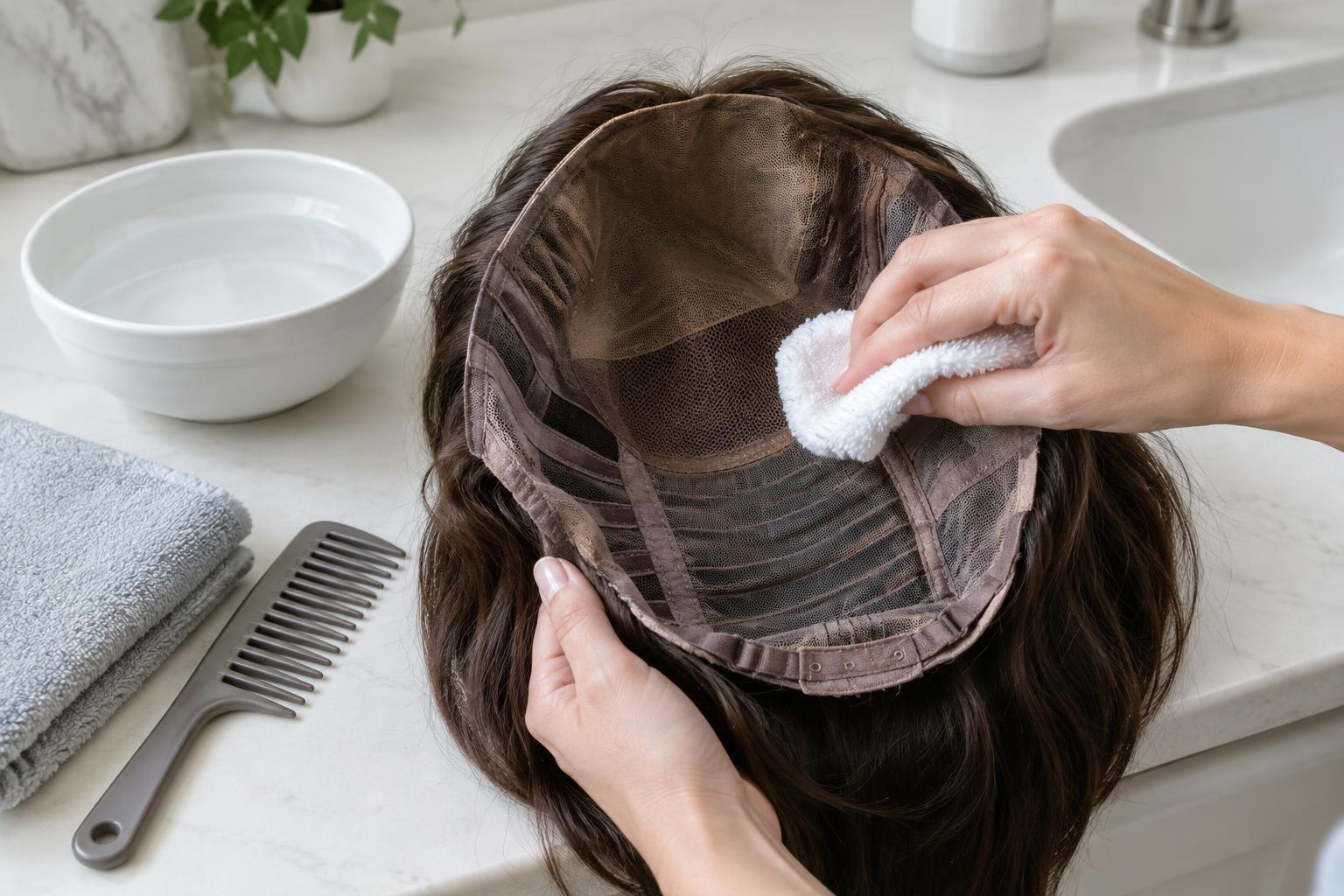
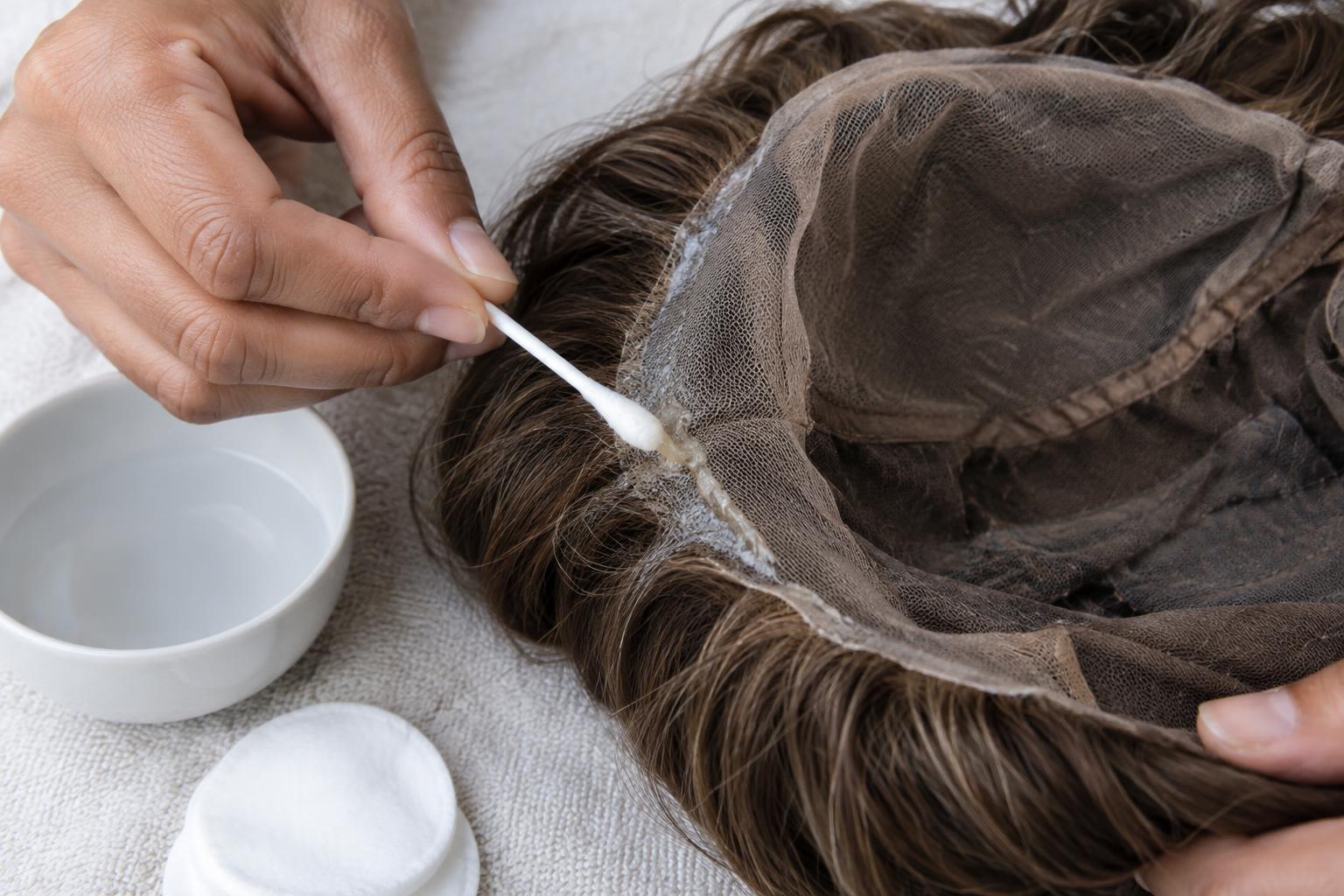
Place the wig on a clean, stable surface with the inside of the base facing up. A wig stand can help, but avoid stretching the base tightly over it. Gather a soft cloth or lint-free pads, cotton swabs for small areas and the remover approved for your wig and adhesive. Follow the product label, including any ventilation or handling directions. Keep the remover away from your eyes and from open flames if the label warns that it is flammable.
Before using liquid, gently lift any loose edge of tape with your fingers. Work slowly and support the base directly beneath the area you are cleaning. Do not pull a firmly attached strip away in one motion: that can stretch lace, disturb knots or damage a bonded section. Avoid fingernails, stiff brushes and sharp tools, even when a small patch of residue seems stubborn.
Soften and lift residue gradually
Apply a small amount of the appropriate remover to the adhesive residue, rather than saturating a large area. Give it the contact time specified on its label. Then use a soft pad to lift or roll the loosened adhesive away with light pressure. For tape, ease up an edge a little at a time, adding remover only where it remains attached. Replace the pad as it collects glue so that you do not spread the residue back over the base.
On lace or monofilament, keep rubbing to a minimum and work from the underside where possible. Repeated friction can roughen fine mesh or pull hairs through it. On a polyurethane section, a soft cloth may be enough to wipe away softened residue, but do not scrape the surface. If glue will not move easily, repeat a short, label-directed application instead of pressing harder. Some residue may take more than one gentle pass.
Clean away remover and let the base dry
Once the adhesive is off, check the remover’s directions for any required follow-up cleaning. If the wig’s care guidance allows washing, use a suitable wig cleanser and lukewarm water to clear away remaining product, handling the base gently. Keep conditioner and oily treatments away from attachment areas unless the wig maker recommends them; a lingering film can make the next application of tape or adhesive less reliable.
Rinse according to the wig’s care instructions, then blot with a towel rather than wringing or twisting. Let the base dry fully before storing the wig or applying fresh adhesive. Pay particular attention to seams, edges and layered sections where moisture can linger. Avoid using high heat to speed drying unless the wig’s material and care instructions explicitly permit it.
Know when to pause
If the base begins to fray, a coated area peels, hairs start coming loose or a stain remains after gentle cleaning, stop rather than trying a stronger solvent. The same applies when you cannot identify the base material or the product already on it. A wig retailer or repair specialist may be able to advise on that particular construction.
For easier cleaning next time, remove adhesive before it accumulates in thick layers, use only as much as the attachment requires and keep a note of which products work with your wig. Regular, gentle removal is usually kinder to a base than a forceful attempt to clear heavy buildup.