Why a synthetic wig becomes static
Static often shows up as flyaway strands, fibres that cling to clothing, or ends that seem to repel one another. Synthetic hair can build up an electrical charge as it rubs against a brush, coat collar, hat or even other strands. Dry indoor air may make the effect more noticeable. Static does not necessarily mean that your wig needs washing.
Before reaching for a product, notice where the problem occurs. Flyaways across the whole wig may be linked to dry conditions or brushing. Tangling and cling at the nape may have more to do with contact against a collar or scarf. Addressing that source of friction can help as much as smoothing the fibres.
Start with gentle detangling
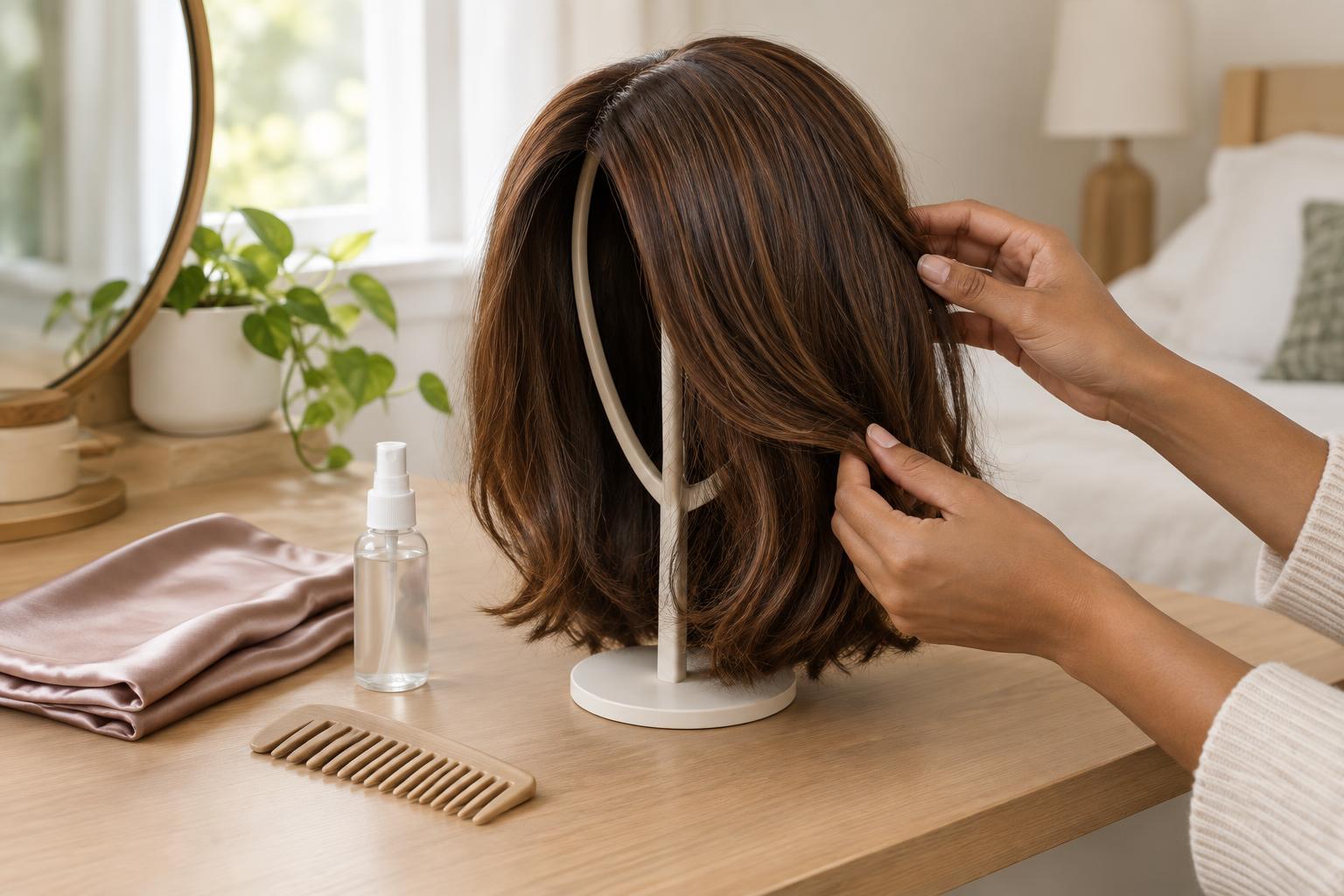
Take the wig off if you can, and place it on a stand or hold the cap securely. Separate obvious tangles with your fingers before using a wig comb or a brush suitable for synthetic fibres. Work in small sections from the ends upwards, supporting the hair above the area you are detangling. This puts less strain on the fibres and the cap than pulling a tool from roots to ends.
Use light, deliberate strokes rather than repeated brushing. Too much brushing creates more friction and can disturb the style, especially on curled or textured wigs. For a curly wig, finger-separating a troublesome section may preserve the curl pattern better than combing it through. If the fibres snag, stop and ease the tangle apart rather than forcing the tool through.
Use a small amount of wig-suitable product
A detangling or anti-static spray labelled for synthetic wigs can help calm flyaways between washes. Follow its directions and begin with a small amount, concentrating on the lengths and ends rather than soaking the cap. Smooth the treated section gently with your hands or a suitable comb, then let it dry as directed before wearing. If you are unsure how a product will affect the finish, try it first on a less visible section.
More product is not always more effective. Heavy application can leave fibres feeling coated, attract dirt or flatten the style. Household fabric softener, dryer sheets and products intended for natural hair are not reliable substitutes for wig care products; they may leave residue or produce an unwanted finish. Plain water may briefly settle flyaways, but it may not control static for long. Avoid saturating the wig simply to deal with a few lifted strands.
Reduce friction while you wear it
Clothing is an easy place to look for preventable friction. If the ends continually catch on a high collar, try moving them clear of it or choosing a different neckline when practical. A smooth scarf between the wig and a rough coat may also help. Check that hats and accessories do not tug at the fibres when you put them on or take them off.
Try not to keep handling flyaways throughout the day. Repeatedly rubbing or brushing the same area can make it harder to settle. If you carry a wig comb, use it sparingly and focus on the section that needs attention. In a dry room, improving general room humidity may help reduce static, but avoid dampening the wig or storing it in a humid, enclosed space.
Store it to prevent the next bout of static
After wearing, check the nape and ends for small tangles before they tighten. Let the wig dry fully if it has become damp, then store it according to its construction and the maker’s guidance. A suitable wig stand can help maintain the shape during regular use; for longer storage, a clean, roomy container that does not crush or rub the fibres may be more practical. Keep it away from direct heat and prolonged strong sunlight.
Static control is a between-wash measure, not a replacement for cleaning. If the wig feels coated, looks dull or no longer responds well to gentle detangling, it may be time to wash it using the care instructions for that wig. A light touch, less friction and appropriate products are usually a better routine than trying to eliminate every flyaway at once.