Start with the chart, not the size label
A “medium” wig from one brand may not fit like a “medium” from another. Size names are useful shorthand, but the measurements behind them matter more. Before choosing a size, check which dimensions the brand lists, where it tells you to measure, and whether the figures describe a head measurement or the wig cap itself.
Some charts give only head circumference. Others also include front-to-nape length, ear-to-ear distance or measurements across the crown. A chart with more dimensions can help you spot a likely fit issue that a circumference figure alone might hide. If the product page and a general brand chart differ, use the guidance for the specific wig and ask the seller which chart applies before ordering.
Measure your head the same way each time
Use a flexible tape measure and keep it comfortably close to your head without pulling it tight. Measure over the hair, wig cap or protective style you expect to wear under the wig. If your hair can be worn in different ways, measure with the arrangement that best reflects everyday use. Bulky braids or a thick cap can change how a wig sits, even when the underlying head measurement stays the same.
For circumference, follow the brand’s illustrated route if it provides one. A common route goes around the hairline area, above the ears and around the back of the head. Front-to-nape usually runs from the centre of the front hairline over the top of the head to the nape. Ear-to-ear measurements may go over the top of the head or across the forehead, so the name alone is not enough: check the diagram.
Write down each result with its unit, such as centimetres or inches, and repeat any measurement that seems surprising. If you switch units, convert the number rather than rounding it to the nearest whole unit before comparing it with a chart.
Compare dimensions, not just one number
Place your measurements beside each brand’s chart and compare like with like. “Ear to ear over the top” should not be compared with “ear to ear across the forehead”. Likewise, a cap’s stated dimensions may not translate directly into the head size it is designed to fit. Look for an accompanying recommended head-size range or fitting note.
Circumference often gives the first indication of size, but the other dimensions help explain where a cap might feel wrong. A short front-to-nape measurement could make a wig feel as though it rides up, while an unsuitable ear-to-ear dimension could affect where the ear tabs sit. Hair density, cap construction and the amount of stretch in the materials can also influence the feel. These factors are reasons to treat chart measurements as a guide to fit, not a guarantee of comfort.
What to do when you fall between sizes
If one measurement points to a small and another to a medium, do not assume the larger size is automatically safer. Check which part of the fit you are least able to adjust. Many wigs have straps or hooks at the nape that can fine-tune snugness, but they cannot fully change the cap’s shape, front-to-nape length or ear-tab placement. An oversized cap may bunch; an undersized one may feel tight or shift out of place.
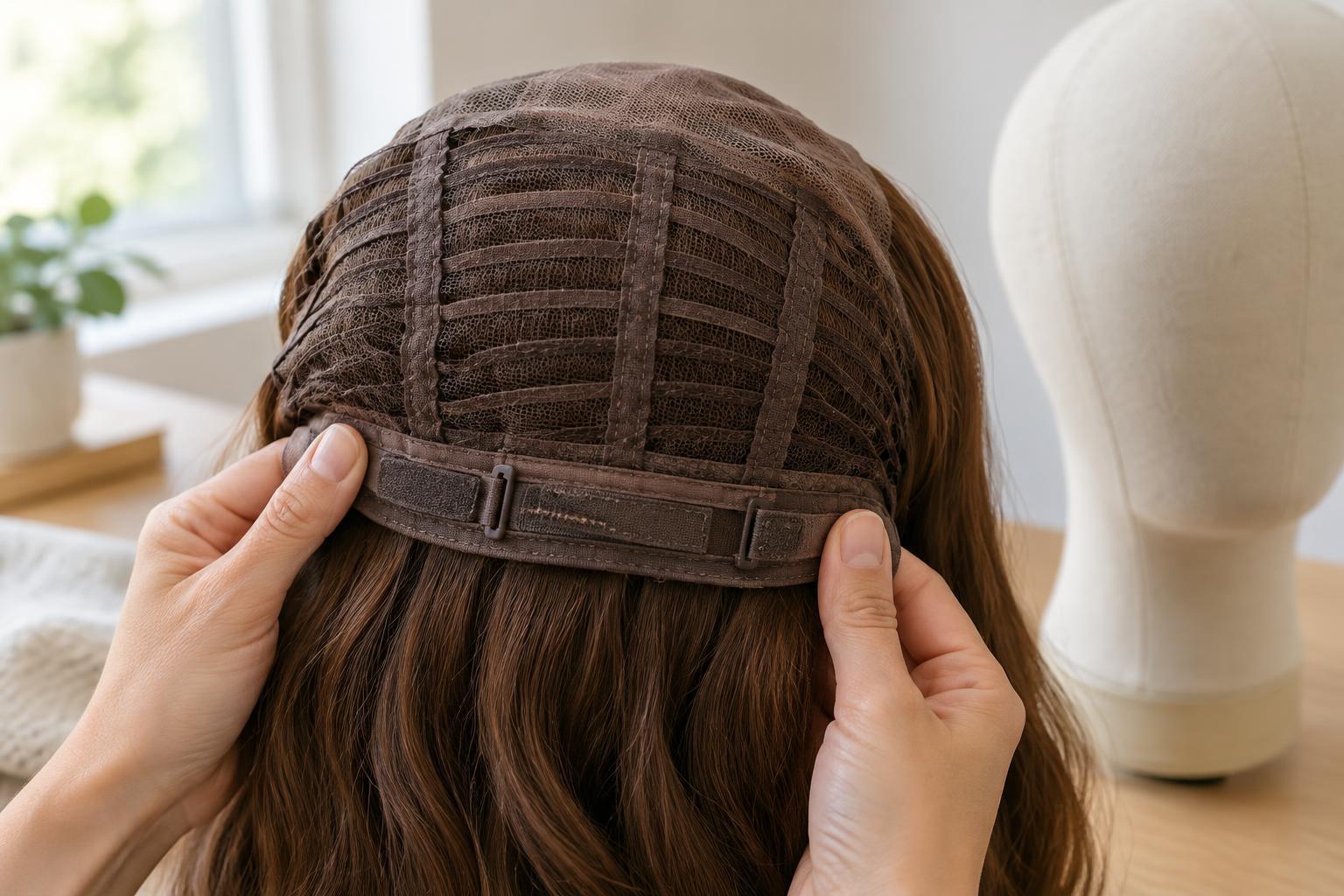
Read any brand notes about stretch and adjustment, then look for guidance specific to the construction you are buying. A lace-front wig, for example, needs a front edge that can sit where you want the hairline; tightening the back will not necessarily correct a front that sits poorly. If you can try a wig on, check it after moving your head naturally, not only while standing still. It should feel secure without pressure you expect to have to endure.
Check the practical details before ordering
Keep a short record of your measurements, how you took them and the sizes that have worked for you. This is more useful than remembering only a size label, especially when shopping across brands. If a listing lacks a measurement diagram, ask where each dimension begins and ends. You can also ask whether the recommended range accounts for hair worn beneath the cap.
Finally, read the retailer’s return and exchange conditions before altering or wearing a new wig beyond a try-on. Policies may depend on its condition, packaging or whether lace has been cut. When it arrives, check the fit while you can still assess your options: position the front, settle the cap at the nape, locate the ear tabs and test the adjusters gently. A size chart helps you narrow the choice; those fit checks tell you whether the particular wig works for you.