Start with the wig, not the bottle
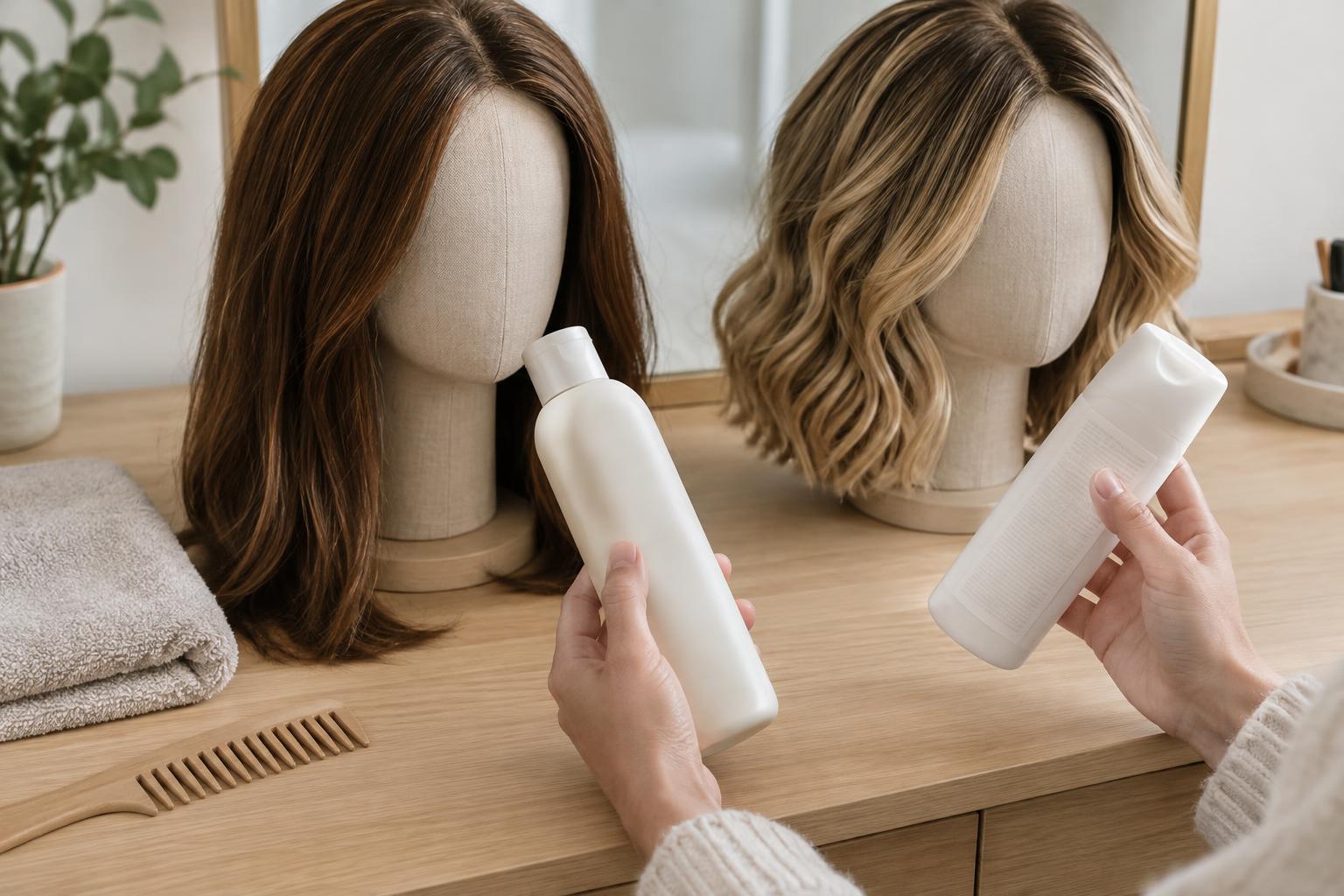
Before comparing products, check what your wig or hairpiece is made from. Human hair and synthetic fibre have different care needs, even when they look similar. A blend needs guidance that is suitable for every fibre it contains. If you have the original packaging or a maker’s care card, keep it handy: construction and fibre type can affect washing instructions as much as the hair’s appearance does.
Labels such as “for wigs,” “salon quality” or “gentle” are a starting point, not a guarantee of compatibility. Read the fuller directions. Do they name human hair, synthetic hair or both? Do they tell you to soak, rinse, spray on or leave the product in? If the label does not identify a suitable fibre type, check the wig maker’s guidance or test the product on a small, less visible area before using it throughout the piece.
Choosing shampoo for human hair wigs
Human hair wigs can often be washed with a mild shampoo intended for human hair. Look for directions that suit the wig’s condition as well as its material. Colour-treated hair may benefit from a product labelled for coloured hair, while dry lengths may feel better with a moisturising formula. Neither label promises a particular result: the finish also depends on the hair’s processing, previous care and the products left on it.
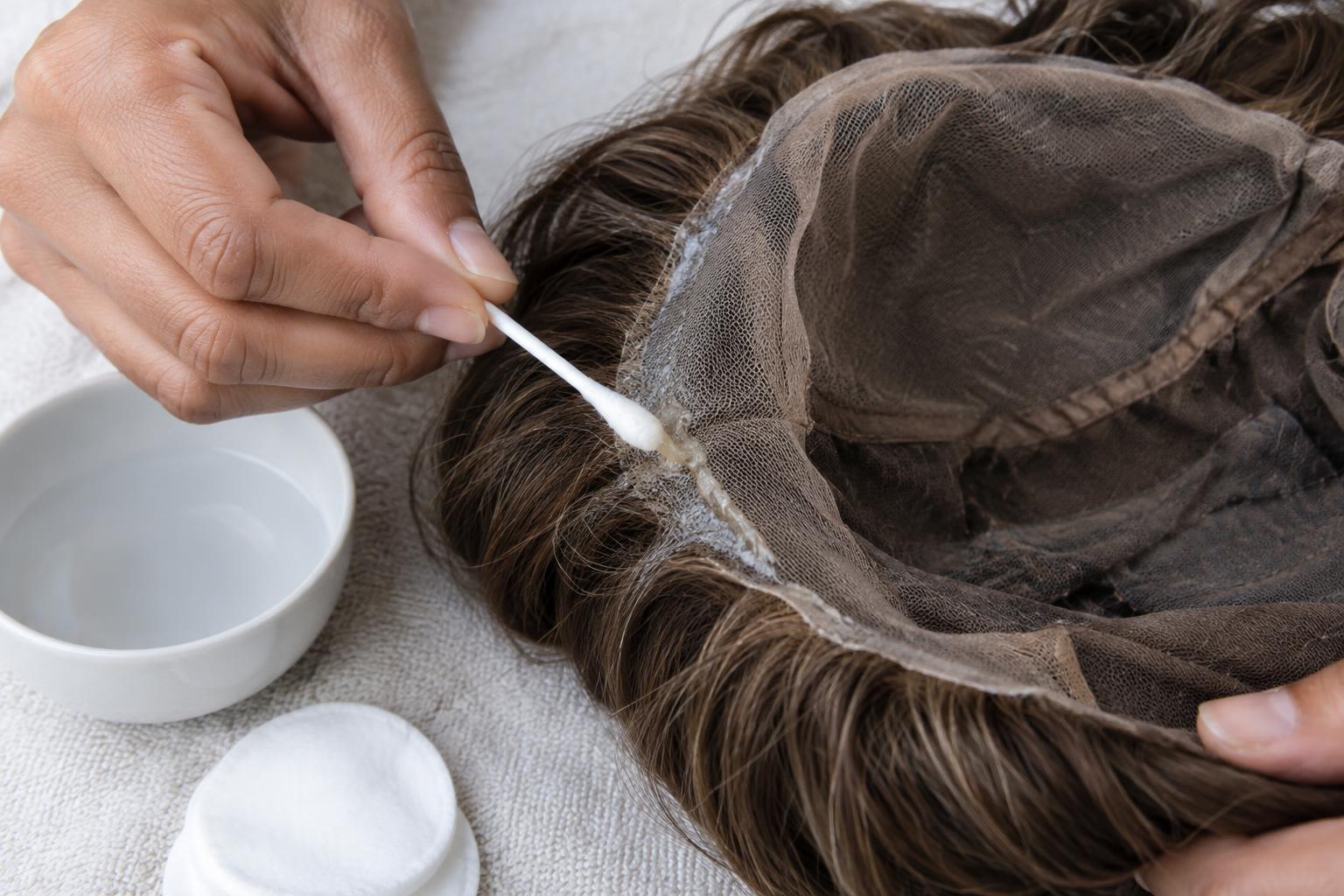
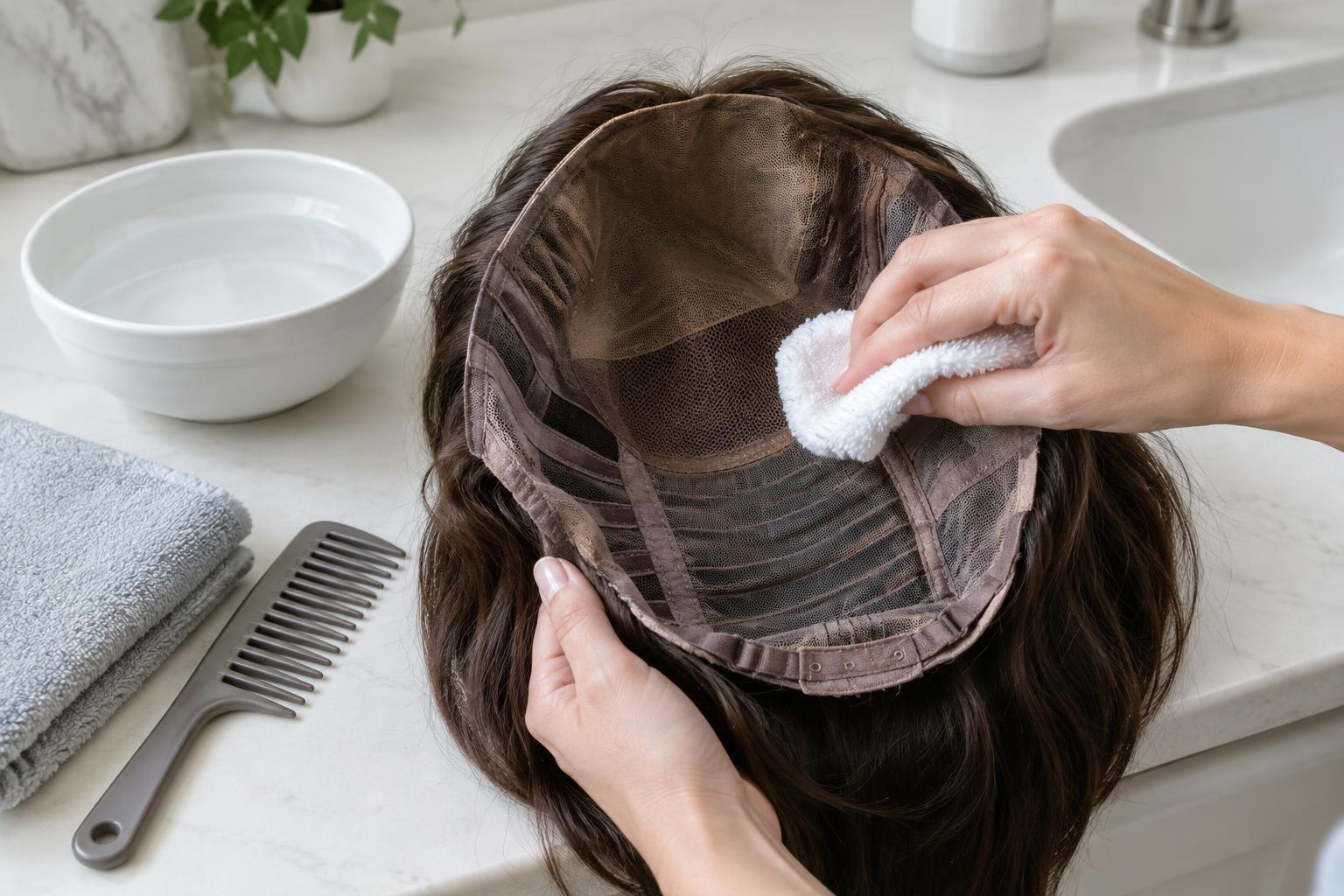
A clarifying shampoo may help remove heavy buildup, but it can leave processed hair feeling dry if used too often. At the other extreme, a rich shampoo can weigh down a fine or low-density wig. Start with a small amount, work it through the hair gently in the direction it lies, and rinse thoroughly. Avoid scrubbing the cap as though it were a scalp; friction can tangle the hair and put unnecessary strain on the construction.
What to look for on synthetic-hair products
Synthetic fibre does not respond to conventional hair care in the same way human hair does. A shampoo specifically labelled for synthetic wigs is usually the clearest choice. Check whether its instructions call for dilution or soaking, and follow the wig maker’s water-temperature guidance. Heat-friendly synthetic hair is still synthetic: the fact that it tolerates some styling heat does not mean it should be washed or conditioned like human hair.
Ordinary shampoos may leave synthetic strands coated or harder to manage, depending on the formula and fibre. Heavy oils and intensive repair treatments are unlikely to provide the benefits their labels suggest for natural hair. If a synthetic wig develops persistent frizz or rough ends, more conditioner may not solve it; friction, wear or heat exposure may be involved. Treat product claims such as “restores fibres” as descriptions of the intended cosmetic effect, not a promise that worn strands can be returned to new condition.
Reading conditioner and detangler directions
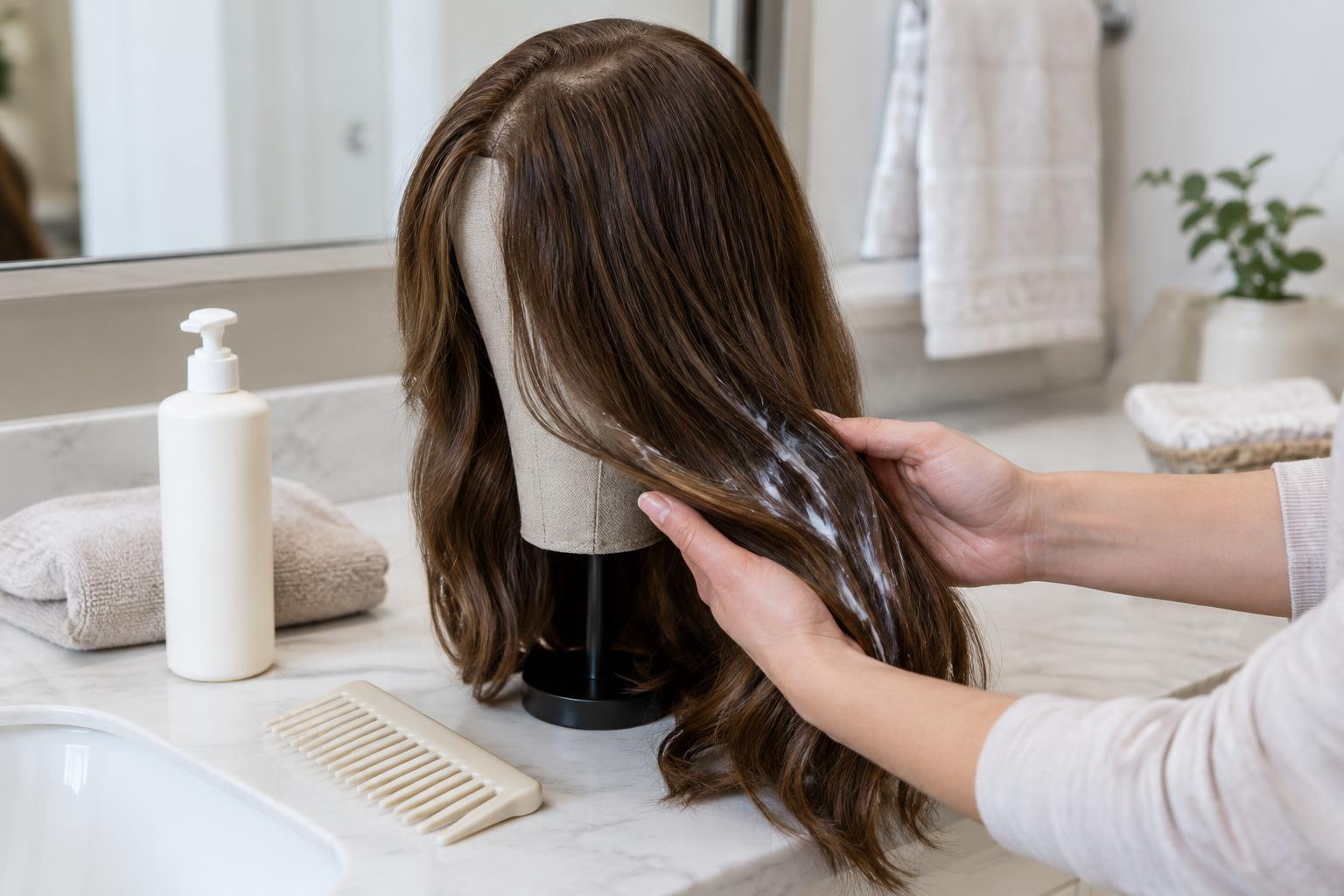
For a human hair wig, a rinse-out conditioner can help the lengths feel smoother and easier to detangle. Apply it mainly from the mid-lengths to the ends unless the wig maker advises otherwise. Keeping rich products away from the base helps limit buildup around lace, knots and other cap materials. Rinse-out, leave-in and deep-conditioning products are not interchangeable, so check how long the label says to leave each one on.
For synthetic wigs, choose a conditioner or detangling spray that explicitly names synthetic fibre and use it as directed. Some are meant to be rinsed out; others are light sprays for use between washes. Apply sparingly at first, especially near the roots, where excess product can flatten the style or collect on the cap. A product that makes the hair feel slippery is not necessarily cleaning it—shampoo and conditioner do different jobs.
A simple label checklist before you buy
Match the stated fibre type first. Then check the method of use, whether the product needs rinsing, and whether it is suitable for any colour treatment or cap features that matter to your piece. “Sulphate-free,” “silicone-free” and “natural” may be useful preferences, but none of those terms alone tells you whether a formula suits a particular wig. Clear compatibility and usable directions are more valuable than a long list of attractive claims.
If you are unsure, buy the smallest practical size rather than building a full routine at once. Wash only when the wig needs it, detangle gently before and after according to its care instructions, and allow it to dry as recommended. Keep a note of which products leave the hair clean without stiffness, dullness or excess residue. Your wig’s maker instructions, followed by how the piece responds over time, offer a better guide than the front label alone.