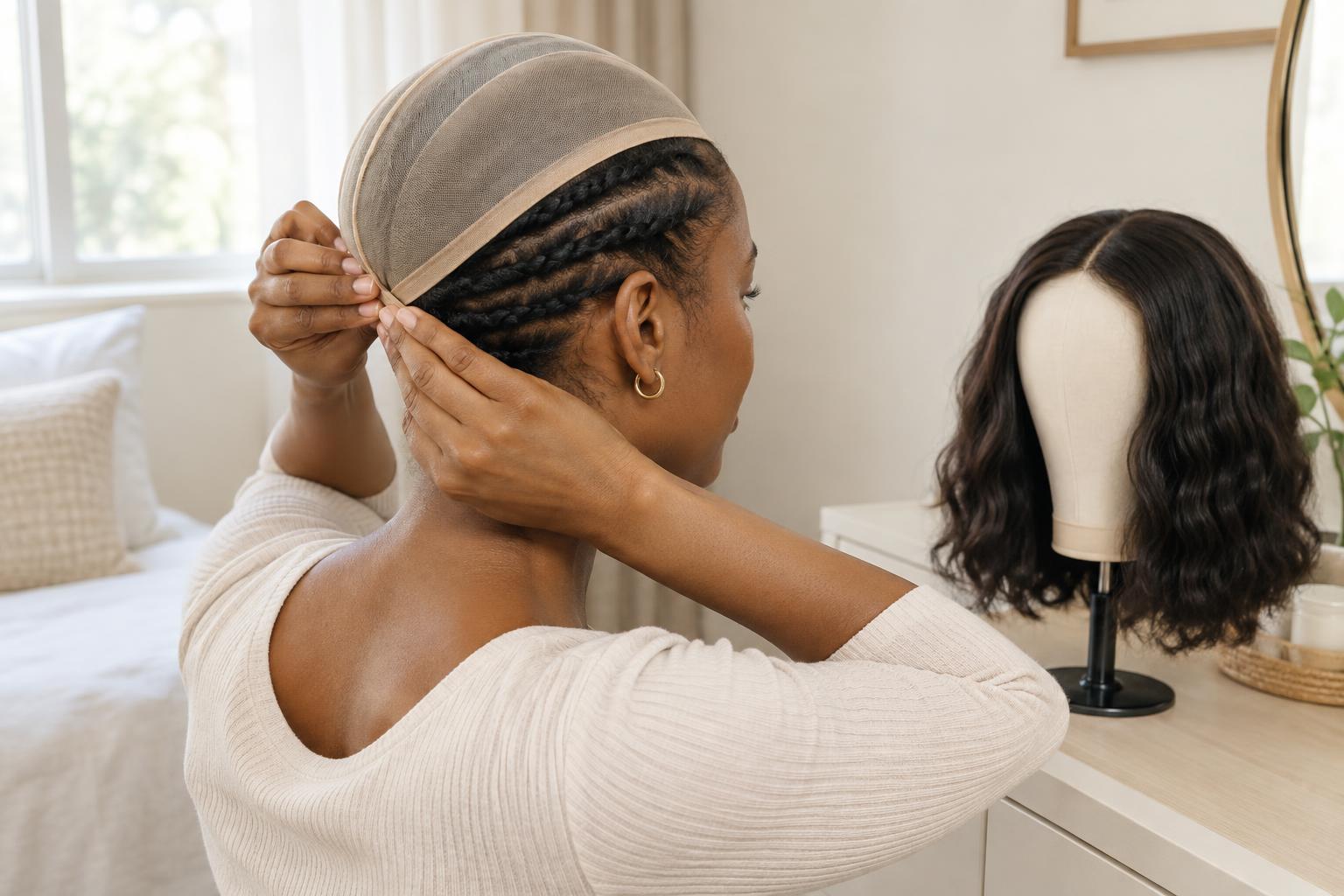
Start with a clean wig
A wig is easier to store well when it is free of product build-up, skin oils and dust. Even if it looks clean, think about when you last wore it and whether it has hairspray, gel or adhesive residue on it. Residue left in place may be harder to remove later. Follow the maker’s care instructions where available, especially for a heat-friendly synthetic wig, a delicate lace front or a cap with bonded parts.
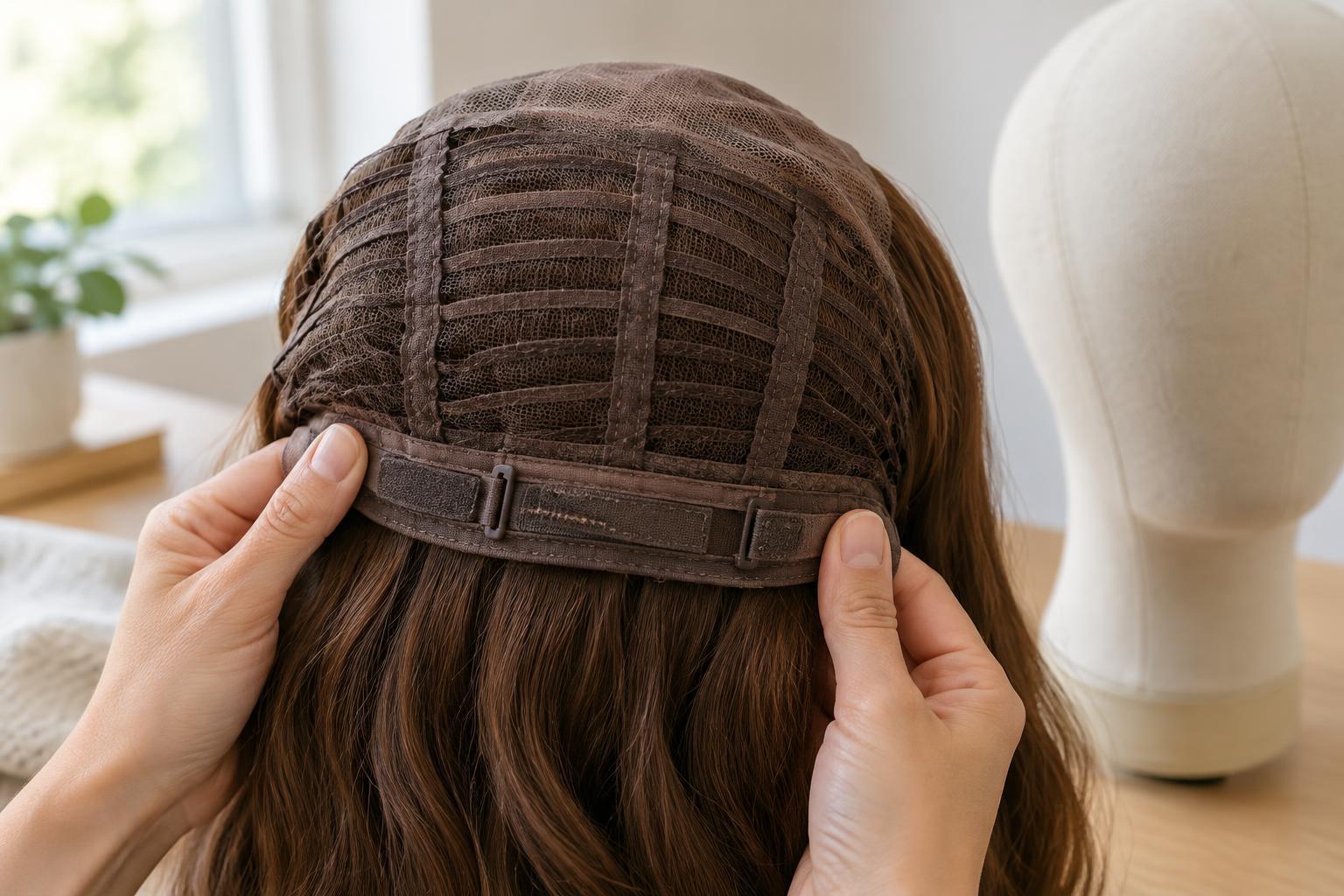
Wash only if the wig needs it; unnecessary washing can add wear. Use a product suited to its fibres and rinse thoroughly without rubbing or twisting the hair. If you have used adhesive, remove it from the lace with a method appropriate for that wig rather than pulling at the edge. Handle wet lace and seams gently. Before packing, check that the cap and any clips, combs or adjustable straps are clean and intact.
Dry it completely, then detangle
Never seal a damp wig in a box or bag. Moisture trapped around the hair or cap can encourage unwanted odours and may affect the materials. Let the wig air-dry fully, including the roots, cap lining and thicker areas at the nape. Set it on a suitable wig stand or another support that allows air to circulate. Keep it away from direct heat unless the maker’s instructions say otherwise.
Once dry, remove tangles carefully, working from the ends towards the roots while supporting the hair near the cap. Use a tool appropriate for the fibre and style. Curly wigs may be better separated with fingers than brushed, so the curl pattern stays together. Avoid tugging on knots in lace or monofilament areas. If you plan to store a styled wig, favour a loose, simple shape over tight braids, pins or bands that could leave marks.
Protect the shape without crushing the cap
Before packing, bring the hair into its usual parting and smooth it into a relaxed position. You can loosely gather longer lengths with a soft tie or tuck them into a hair net, taking care not to bend the ends sharply. A net can help contain the hair, but it should not squeeze the wig. If the wig has delicate lace, make sure the lace lies flat rather than folding it under a clip or pressing it against a hard edge.
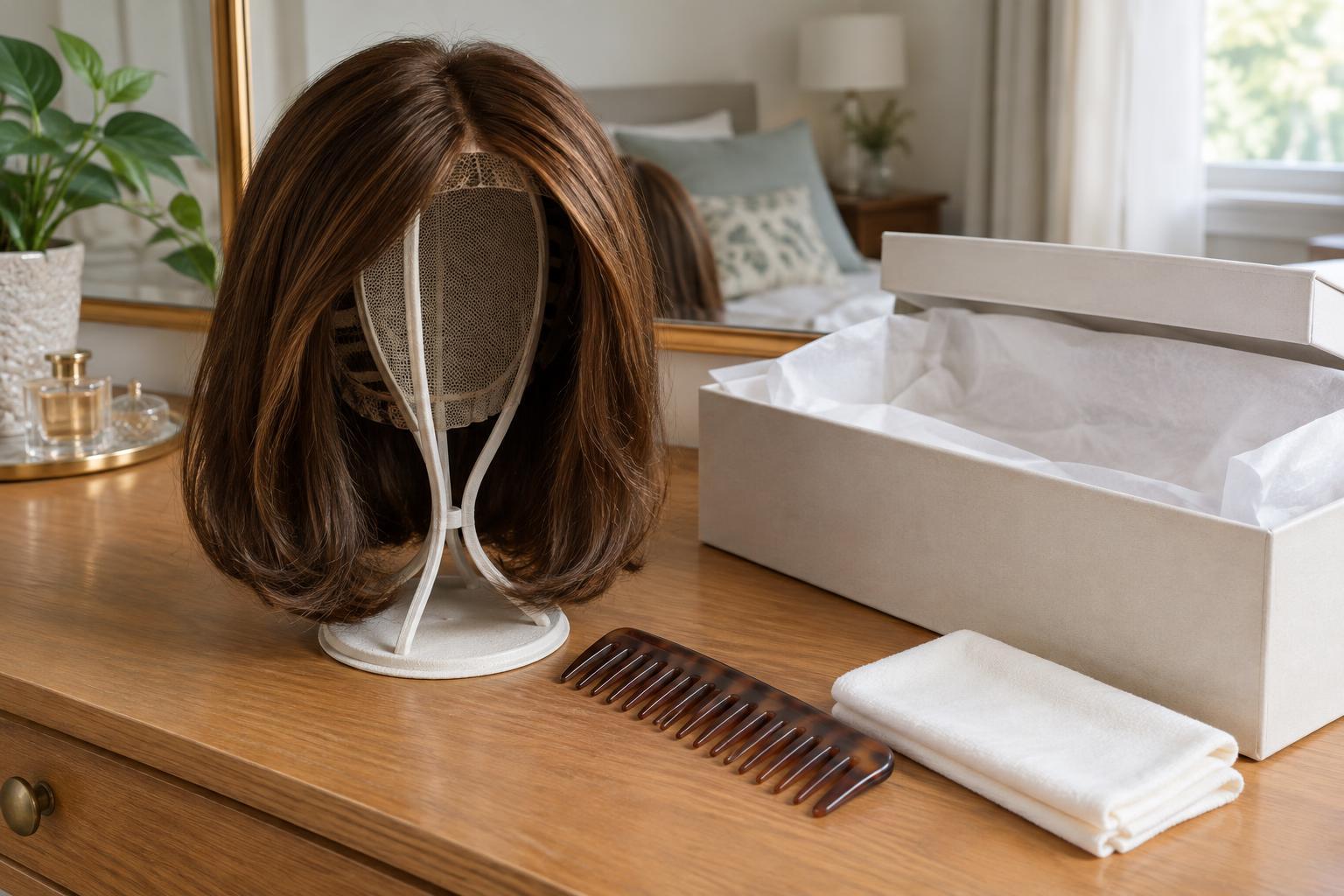
A clean wig box offers protection from dust and accidental pressure. Light, clean tissue placed inside the cap can help it retain its shape; avoid overstuffing it or stretching the cap. If you have the original packaging and it supported the wig well, you may be able to reuse it. A stand is another option when you have a protected space, though an uncovered wig on display may gather dust or be exposed to sunlight. Whatever you choose, do not stack heavy items on top.
Choose a stable place to store it
Keep the packed wig in a clean, dry spot away from direct sunlight, heaters and places where temperatures or humidity change markedly. A bedroom cupboard or drawer may be more suitable than a bathroom or an uninsulated loft. Let a freshly washed wig finish drying in the open before closing a storage box. If you use a bag to keep dust off, avoid trapping moisture inside it.
Keep wigs separated from anything that might snag the hair or lace, including jewellery and hook-and-loop fasteners. If you own several, label their boxes so you do not need to open each one to find the right style. Store accessories such as spare clips and care instructions nearby, but keep loose metal pieces from pressing into the wig.
Check it before wearing it again
For storage over many months, an occasional check can help you notice a problem before it becomes harder to address. Look for moisture, odours, tangles or pressure marks, and confirm that the storage area remains dry. Handle the wig gently, then return it to its supported position. There is no need to wash it simply because time has passed if it is still clean and in good condition.
When you are ready to wear it, let the wig settle out of its packaging and inspect the cap, lace and attachments. Light detangling or a careful restyle may be enough. Human hair and synthetic fibres respond differently to heat and products, so check the wig’s instructions before using styling tools. A little preparation before storage makes it easier to return to a wig you recognise and enjoy.