Prepare for a useful measurement
Wig sizes are often labelled petite, average or large, but those labels do not follow one universal standard. Three measurements give you a better starting point: circumference, front-to-back length and ear-to-ear width. You will need a flexible measuring tape and a mirror. If you do not have a flexible tape, use a non-stretch piece of string, mark the length and measure it against a ruler.
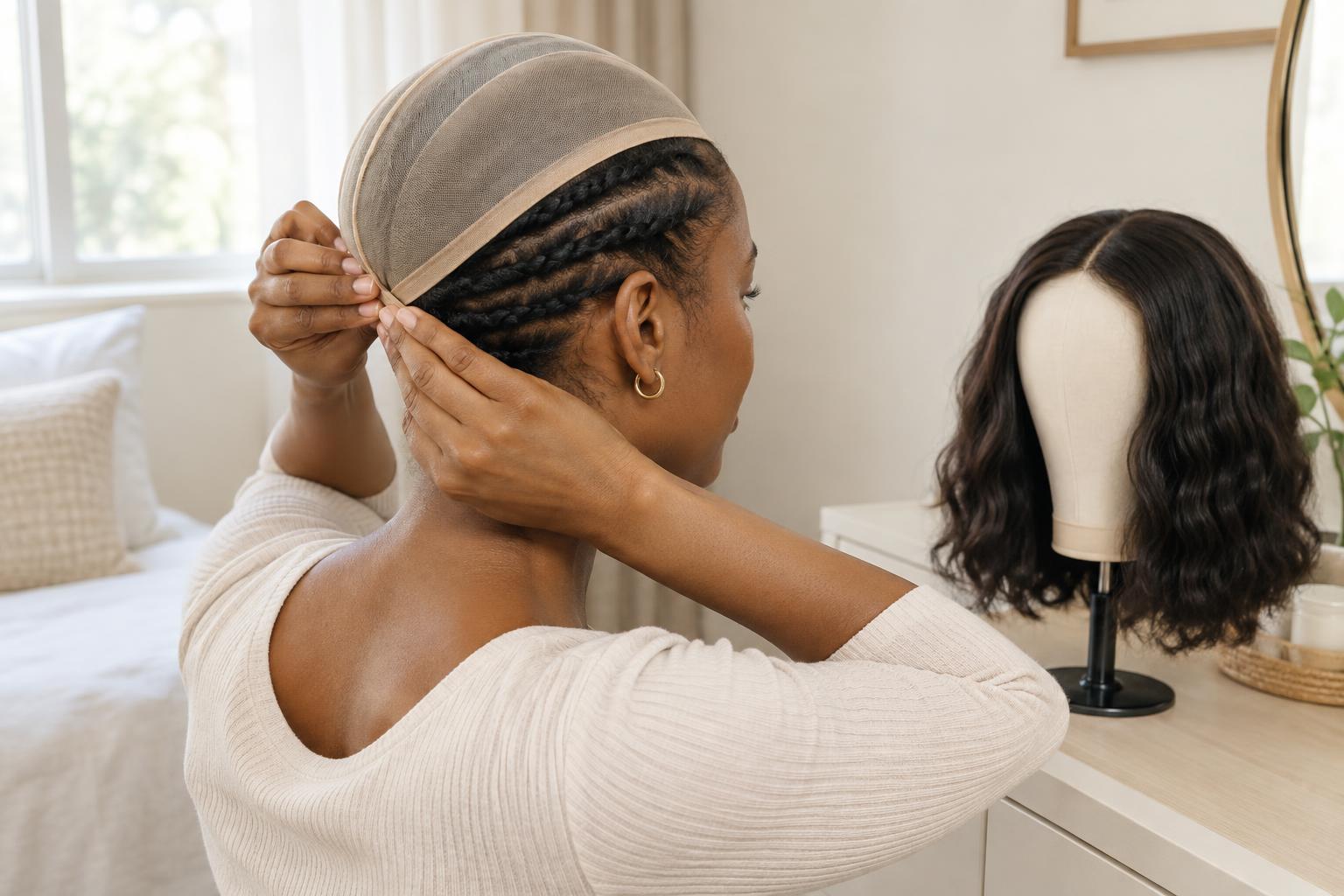
Measure with your hair arranged as you expect to wear it beneath the wig. Smooth it down or secure it in flat sections rather than gathering it into one bulky spot. If you plan to wear a wig cap, try measuring with it on as well, especially if it changes the shape of your hair underneath. Keep the tape close to your head without pulling it tight. Take each measurement twice and note the numbers in the same unit used by the wig maker’s chart.
Measure around your head for circumference
Place the tape at the centre of your front hairline, or where you would like the front of the wig to sit. Guide it around the side of your head, above one ear, across the lower back of your head near the nape, and above the other ear until it meets the starting point. Check in the mirror that the tape has not slipped high at the back or crossed over an ear.
Circumference is usually the main number in a wig size chart. It tells you how much room the cap needs around your head, but it does not describe every aspect of its shape. A cap can match your circumference and still feel too short from front to back or too loose across the crown. Record the actual measurement rather than rounding it toward a size you hope will fit.
Measure front-to-back and ear-to-ear
For front-to-back length, start at the centre of your front hairline or your intended wig hairline. Run the tape over the top of your head and down to the centre of your nape hairline. Follow the curve of your head; do not hold the tape straight through the air. This measurement helps you judge whether a cap has enough depth to sit comfortably at both the front and back.
For ear-to-ear width over the top, place one end of the tape just above one ear, where the edge of a wig cap would sit. Take it across the crown to the equivalent point above the other ear. Try to use matching points on both sides. Some brands also list an “ear-to-ear across the forehead” measurement, which follows a different path. Read the measuring diagram or description on each size chart before comparing your number with it.
Turn your measurements into a fit decision
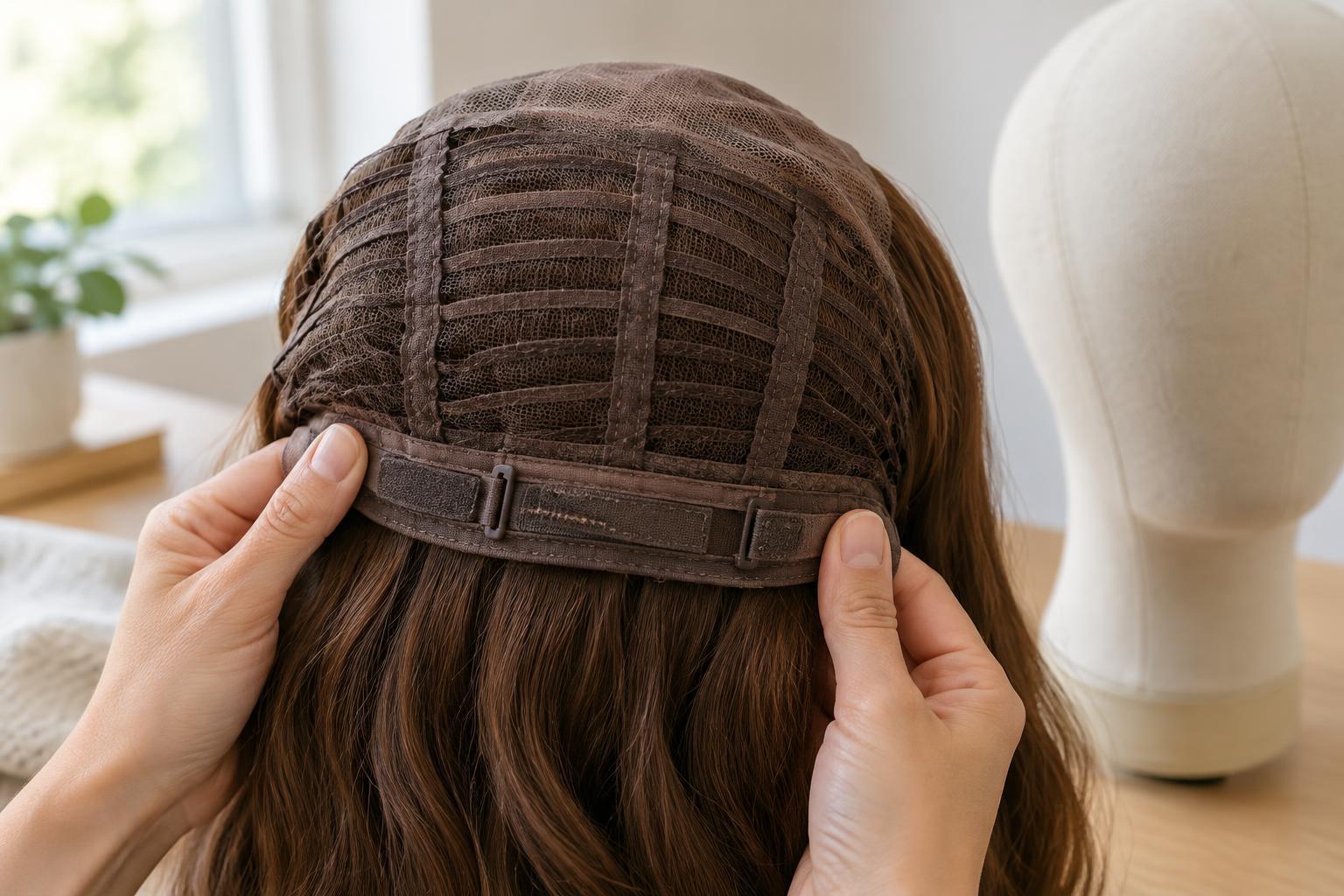
Compare all three numbers with the specific wig’s chart, not only with a general size guide. If your measurements fall between sizes, look at the cap’s construction and the seller’s fit guidance. Adjustable straps can fine-tune the circumference, but they may not correct a cap that is too short or too narrow. Hair tucked beneath the wig also takes up space, so someone with thick hair may need to pay particular attention to how flat it can be secured.
When you try on a wig, position the front where you intend to wear it, then check that the cap reaches the nape without pulling and that the ear tabs sit at a similar height. It should feel secure without pinching, leaving pressure marks or riding upward when you turn your head. If a cap feels uncomfortable, do not assume that tightening or stretching it will solve the problem; a different size or cap shape may suit you better.
Keep a note of your measurements and the fit of any wigs you try. A simple record such as “comfortable around the hairline, loose at the crown” can be more useful for your next choice than a size label alone. Re-measure if you change how you wear your hair underneath or if your usual fit begins to feel different.