Understand what makes wig colour fade
A dyed human-hair wig will not necessarily hold its original shade indefinitely. Cleansing can gradually wash out some colour, while sunlight and repeated heat styling may change how the colour looks. Friction, product build-up and the condition of the hair can also affect its appearance. Pale tones, vivid shades and heavily processed hair may show changes sooner, though results vary from wig to wig.
Wig hair does not receive the natural oils that grow along hair attached to a scalp. That makes a gentle routine especially useful: the aim is to keep the hair clean and manageable without washing, brushing or heating it more than needed. If your wig came with care instructions, check those first. Its construction, dye and any previous processing may call for a different approach.
Wash only when the wig needs it
Frequent washing is not always necessary. How often you wash depends on how often you wear the wig, how much styling product you use and whether it has picked up odours or dirt. Between washes, you can lightly detangle it and let it air out. Avoid adding more product to cover build-up; that can make the next wash harder.
Before washing, gently remove tangles, starting at the ends and working upward. Use cool or lukewarm water and a small amount of shampoo suitable for colour-treated human hair. Cleanse by moving the water and shampoo through the hair rather than scrubbing or twisting it. Rinse thoroughly, keeping the water running in the direction the hair lies. Rough handling can create tangles that require more brushing later.
Apply conditioner mainly to the mid-lengths and ends, unless the wig maker recommends otherwise. Heavy conditioner near the base may leave residue, and some products can affect knots or attachments. After rinsing, press out excess water with a towel rather than rubbing. Let the wig dry as its care instructions advise; do not store it while damp. If you are trying a new shampoo, mask or leave-in product, test a small, less visible area first.
Be selective with heat and styling products
Hot tools can make a dyed wig look smooth quickly, but repeated high heat may leave the hair drier and the colour less vibrant. When styling is needed, begin with a lower temperature and increase it only if the hair does not respond. Make sure the hair is fully dry before using tools intended for dry hair. A heat-protection product suitable for wigs and colour-treated hair may help reduce styling wear, but it cannot prevent all damage.
Consider styles that need less heat: set the hair while damp according to the wig’s care guidance, change the part if the construction allows, or use gentle accessories. Check that sprays, oils and other finishing products do not leave a heavy coating or stain the hair. Use a little at a time and remove build-up during a normal wash rather than cleansing again immediately after every styling session.
Reduce exposure between wears
If you spend long periods in strong sunlight, a hat or scarf can help shield the hair, provided it does not rub tightly against the wig. Sunlight may affect some dyed shades more noticeably than others. Be mindful of friction from collars, bag straps and repeated brushing, particularly at the nape and ends. Detangle patiently with a tool appropriate for the wig, holding the hair above a knot to avoid pulling on the base.
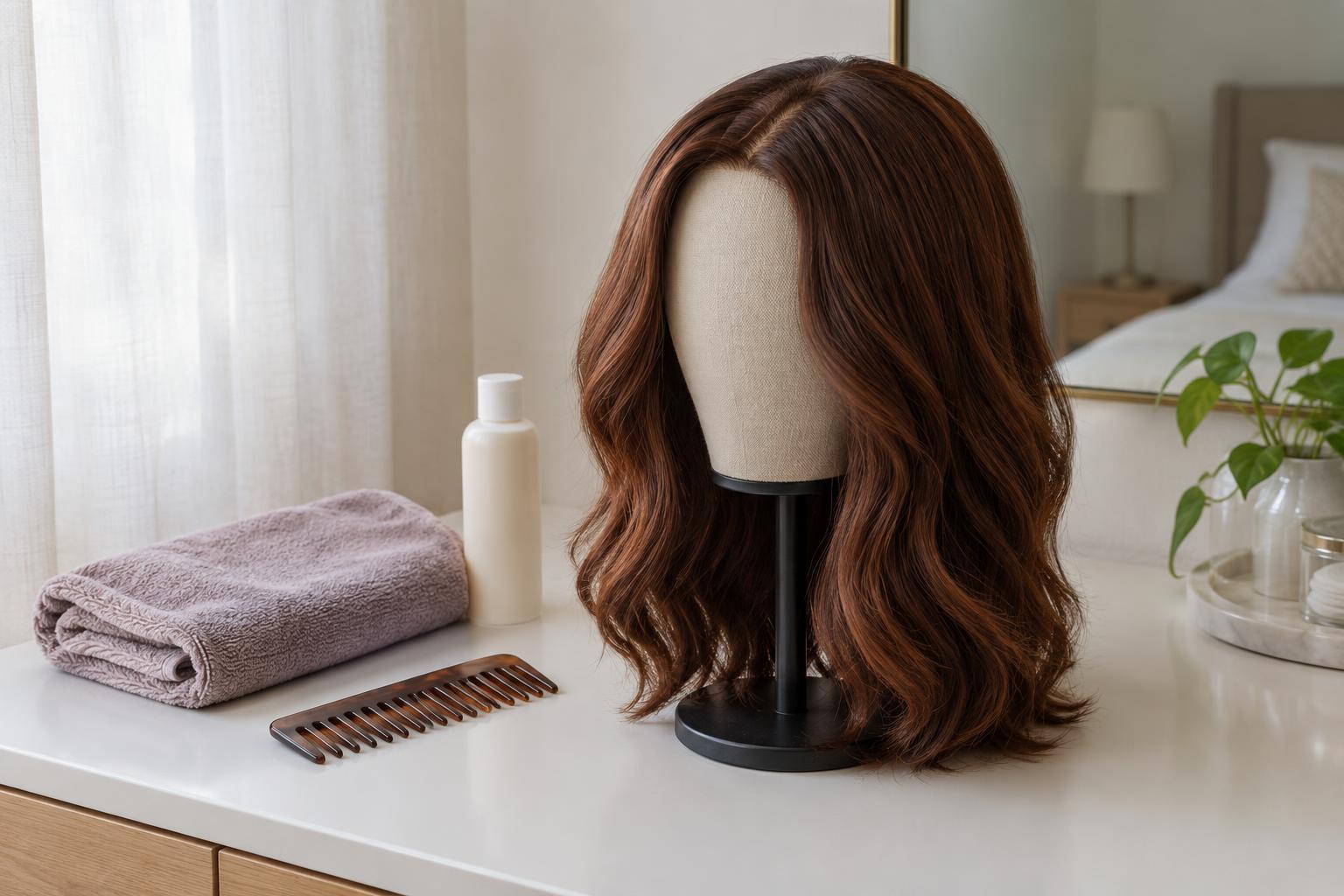
For storage, first make sure the wig is clean enough, completely dry and free of tangles. A stand can help it keep its shape between regular wears; for longer storage, a breathable bag or suitable box can help protect it from dust. Keep it away from direct sunlight, strong heat and damp spaces. If the wig has a styled shape, support it without crushing the hair.
Know when home care is not enough
If the colour has already shifted, washing less often will not restore it. A colour-depositing product may alter the shade, but results can be uneven on a wig with porous or previously processed areas. Permanent dye, bleach and strong toners carry a greater risk of dryness, breakage or an unwanted result. They may also stain the cap or affect lace and knots.
Before recolouring, check the wig’s care guidance and consider asking an experienced wig colourist to assess it. For routine care, the most dependable approach is simple: handle the hair gently, wash when necessary, limit heat and protect it during storage. These steps cannot stop all fading, but they can help you enjoy the colour without putting the wig through avoidable wear.