Start with what you need the wig to do
A striking product photo can make it tempting to buy quickly, but start with your own priorities. Will you wear the wig for a few hours at a time or for much of the day? Do you want a style that is ready to wear, or one you can customise? Think about the length, weight, hairline and level of coverage you would feel comfortable with. These questions give you a way to assess a listing beyond whether you like the colour.
Separate essentials from preferences. A secure fit or a particular fibre may be essential; a specific shade of highlights may be flexible. Keep a short list beside you while comparing products. If a listing does not answer one of your essential questions, treat that as missing information rather than assuming the wig will meet your needs.
Check measurements and cap details
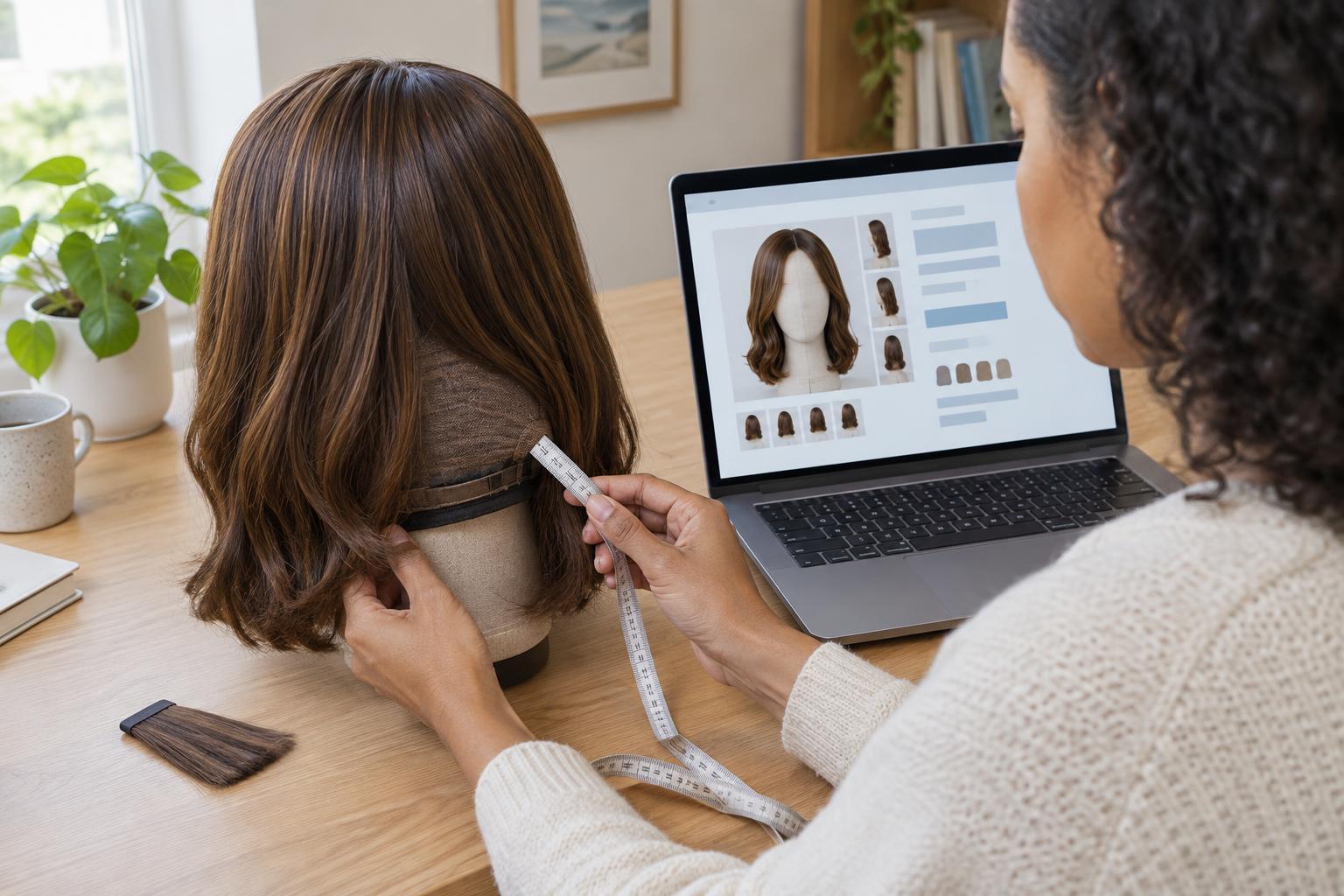
Look for an actual cap-size chart and its measuring instructions, not just a label such as “average”. Measure your head along the route the seller specifies, usually around the hairline and nape, and compare your measurement with the stated range. Adjustable straps can fine-tune some caps, but they are not a substitute for choosing a suitable size. If you fall between sizes, check whether the seller explains how the cap is intended to fit.
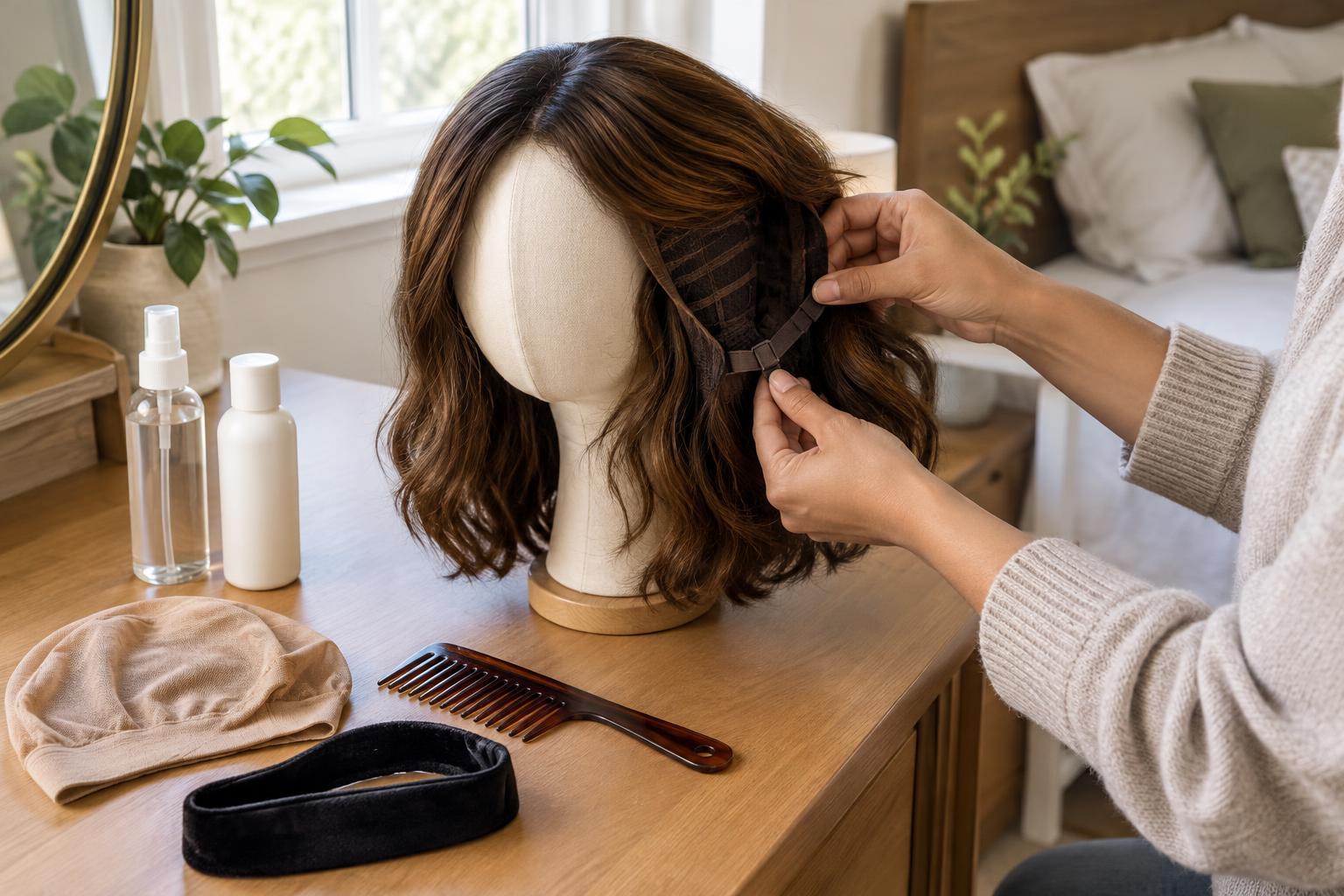
Construction affects both appearance and how the wig feels. A listing might describe a basic wefted cap, a lace front, a monofilament part or top, or a hand-tied area. Check exactly where each feature is located: “lace front” does not necessarily mean the whole cap is lace. Look for clear views of the inside, the hairline and the parting. Also check for combs, clips, an elastic band or adjustable tabs, particularly if you have preferences about how the wig is secured.
Read material and styling claims carefully
Confirm whether the hair is synthetic, human hair or a blend. Each can be a good choice, but care and styling options differ. Some synthetic fibres are designed to hold their set style after washing; others permit limited heat styling. If a listing calls a wig “heat friendly”, look for the seller’s stated temperature limit and care instructions rather than assuming you can use your usual tools. Human hair generally offers more restyling options, but it still needs appropriate washing, conditioning and handling.
Length and density deserve a closer look, too. Check whether length is measured from the crown, the nape or another point, and whether the seller supplies more than one measurement. Terms such as “light density” and “natural volume” can be subjective unless the listing explains them. If low bulk matters to you, compare side and back views rather than relying on a front-facing model photo.
Use photos as evidence, not a guarantee
Useful listings show the wig from several angles, ideally including the cap interior and a close-up of the part and hairline. Read captions to see whether photographs show the exact colour and style option you have selected. A styled model image can help you picture the overall look, but lighting, screen settings and styling can change how a colour or silhouette appears.
Look for details about what has been done to the wig in the photos. Has the lace been trimmed, the fringe cut, or the hair professionally styled? Is the model wearing the wig straight from the package? Customer photos may offer another perspective, but fit and appearance will vary from person to person. If colour matching is especially important, check whether the seller offers a swatch or a way to clarify the shade before ordering.
Review the total purchase, not just the price
Before paying, identify what is included. A listing may picture accessories that are sold separately, or describe a wig that needs lace trimming or other preparation before wear. Check the listed cap size, colour code, length and fibre again in your basket, especially when one page contains several variants. Include delivery charges and any supplies you expect to need when comparing options.
Finally, read the seller’s returns and exchange terms for wigs, including any conditions about trying on, removing tags or trimming lace. Check how to report an incorrect or damaged item and whether you can ask a question before buying. A clear listing will not remove every uncertainty, but it should give you enough information to make a considered choice. If crucial details remain unclear, asking the seller—or choosing a better-documented option—may be more useful than guessing.