Why start at the ends?
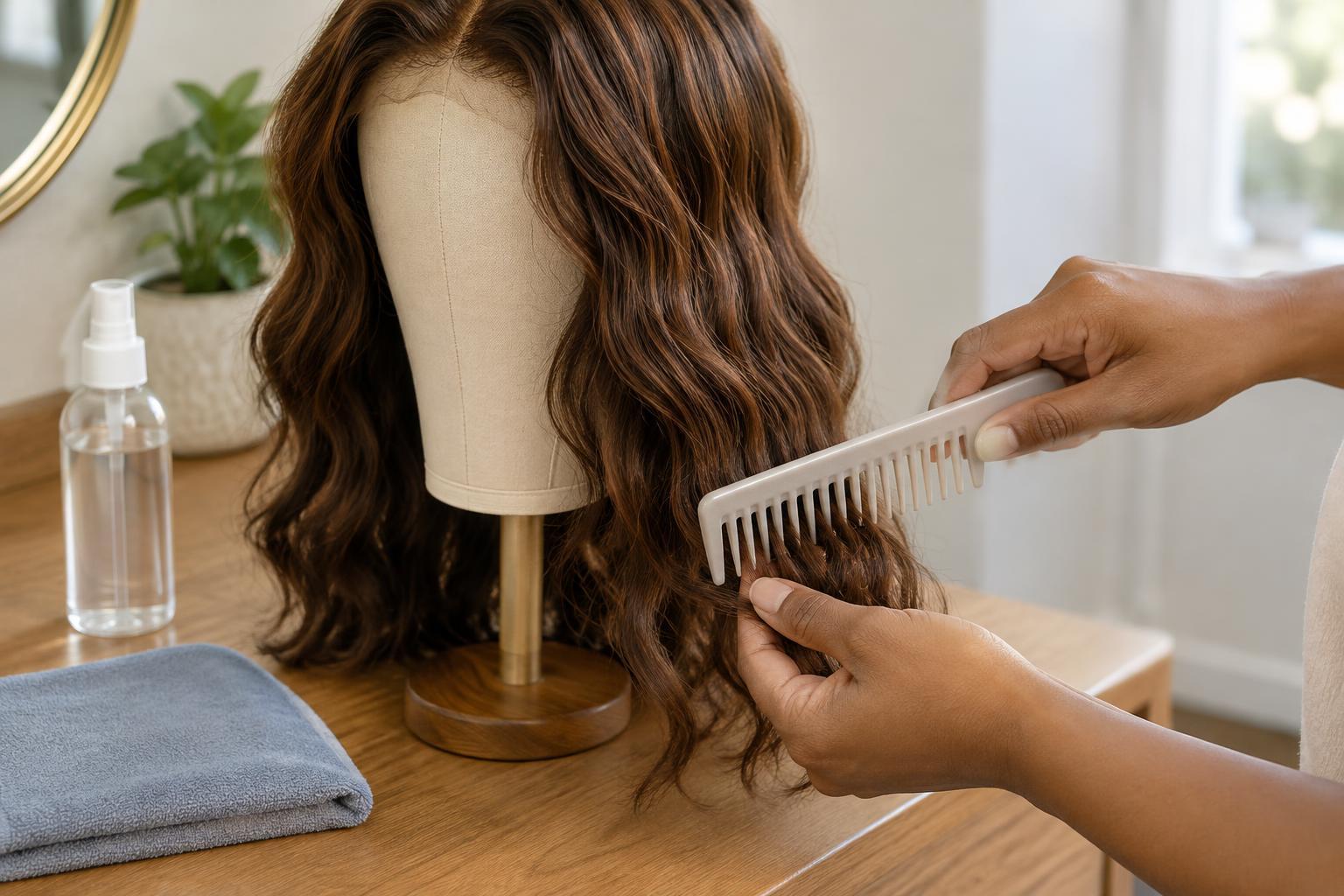
A tangle is easier to loosen when you work on its outer edge. Starting at the roots and drawing a comb down through the full length can push several small knots into one tight knot. It also puts unnecessary tension on fibres attached to the cap. Beginning at the ends lets you clear a short stretch, then move a little higher until the whole section is free.
Before you begin, check any care instructions that came with the wig. Synthetic fibre, human hair, curls and heat-styled textures may need different handling. Detangling gently can help limit avoidable shedding and frizz, but some loose hairs are normal, particularly on a wig that is worn often.
Prepare the wig and choose your tools
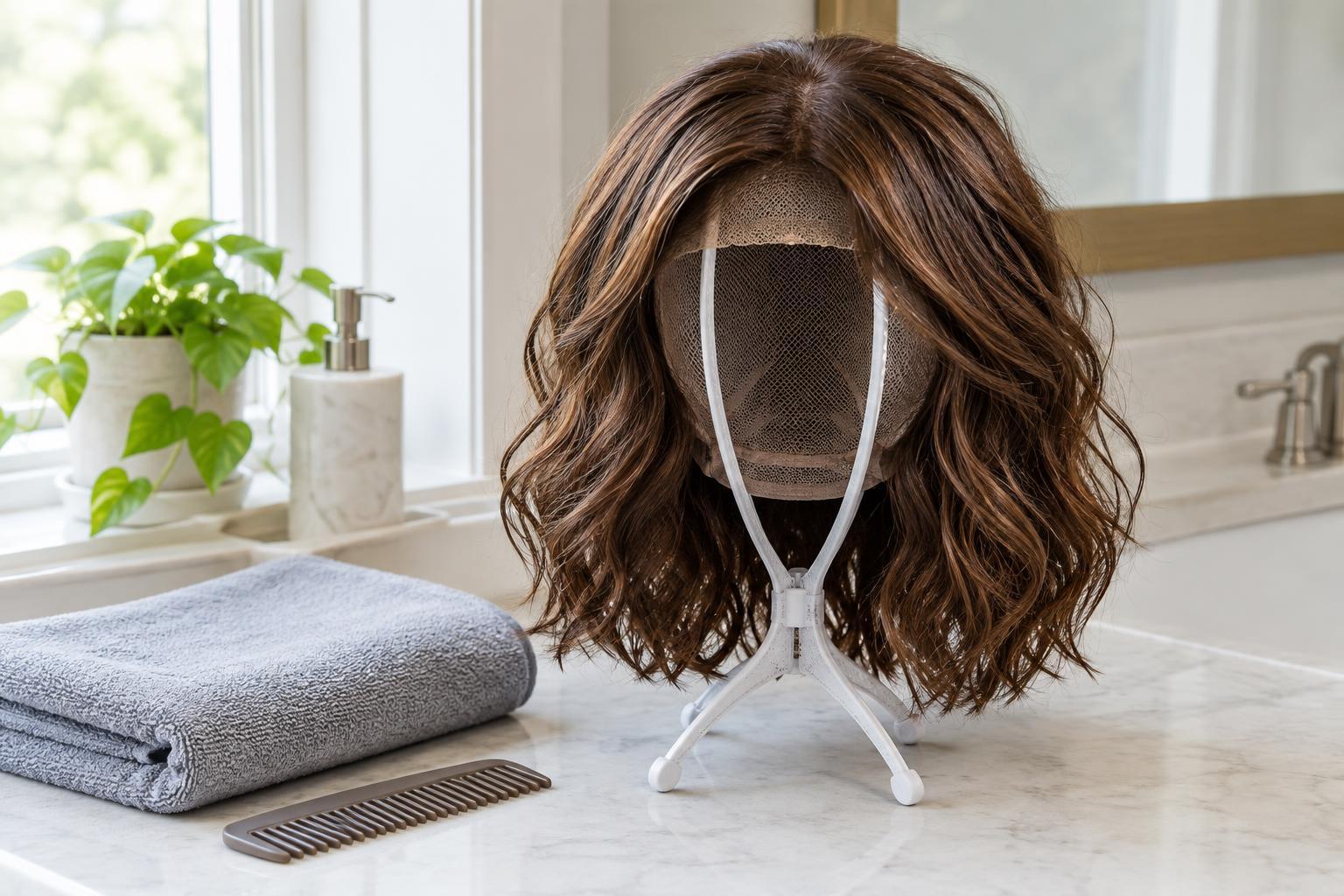
Place the wig on a stable stand or hold it securely in your lap. If you use a stand, make sure the wig will not slide as you work. Gather a wide-tooth comb or a brush intended for wigs, a few clips and, if suitable for your wig, a light detangling product. Your fingers are often the best first tool for finding knots without pulling them tighter.
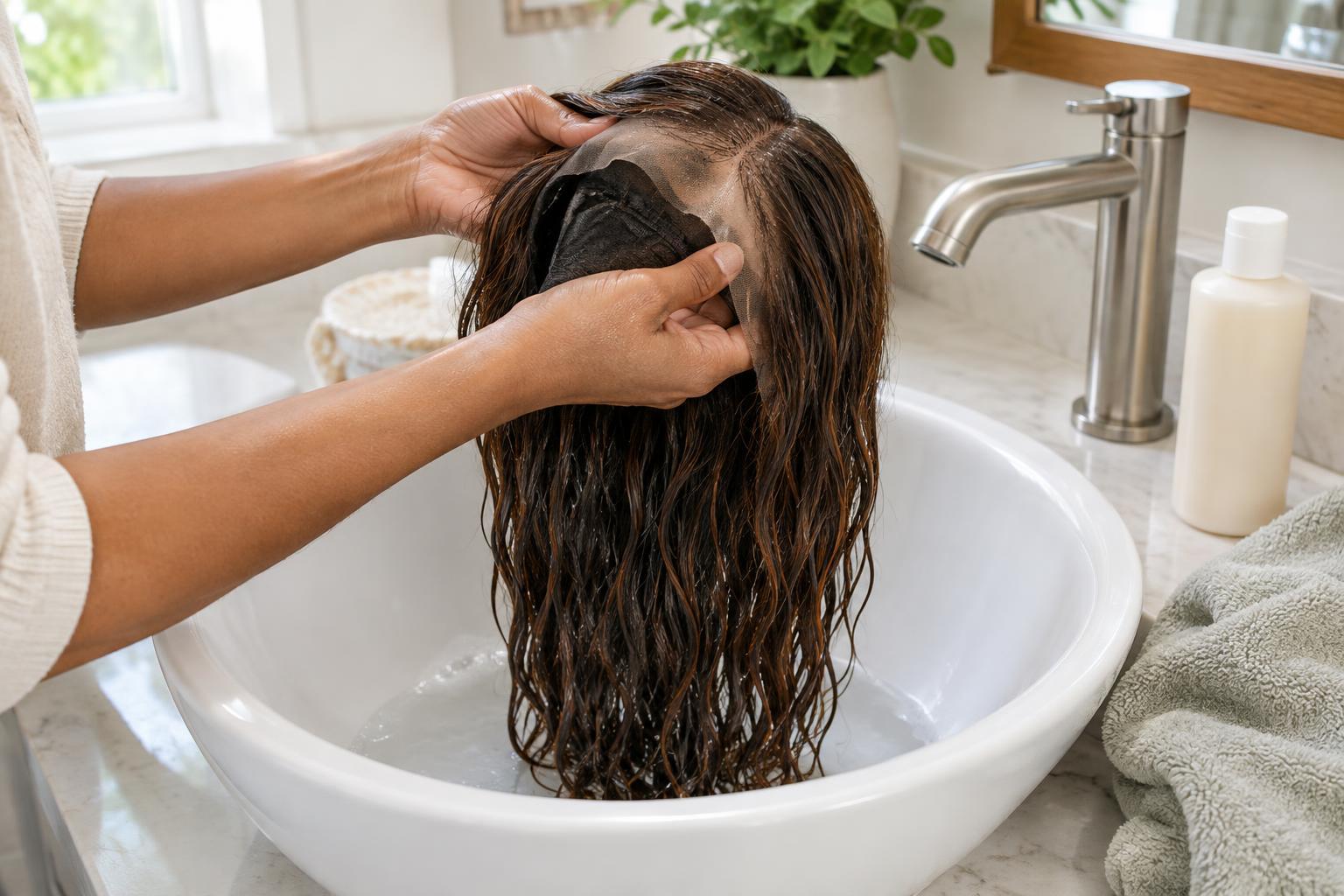
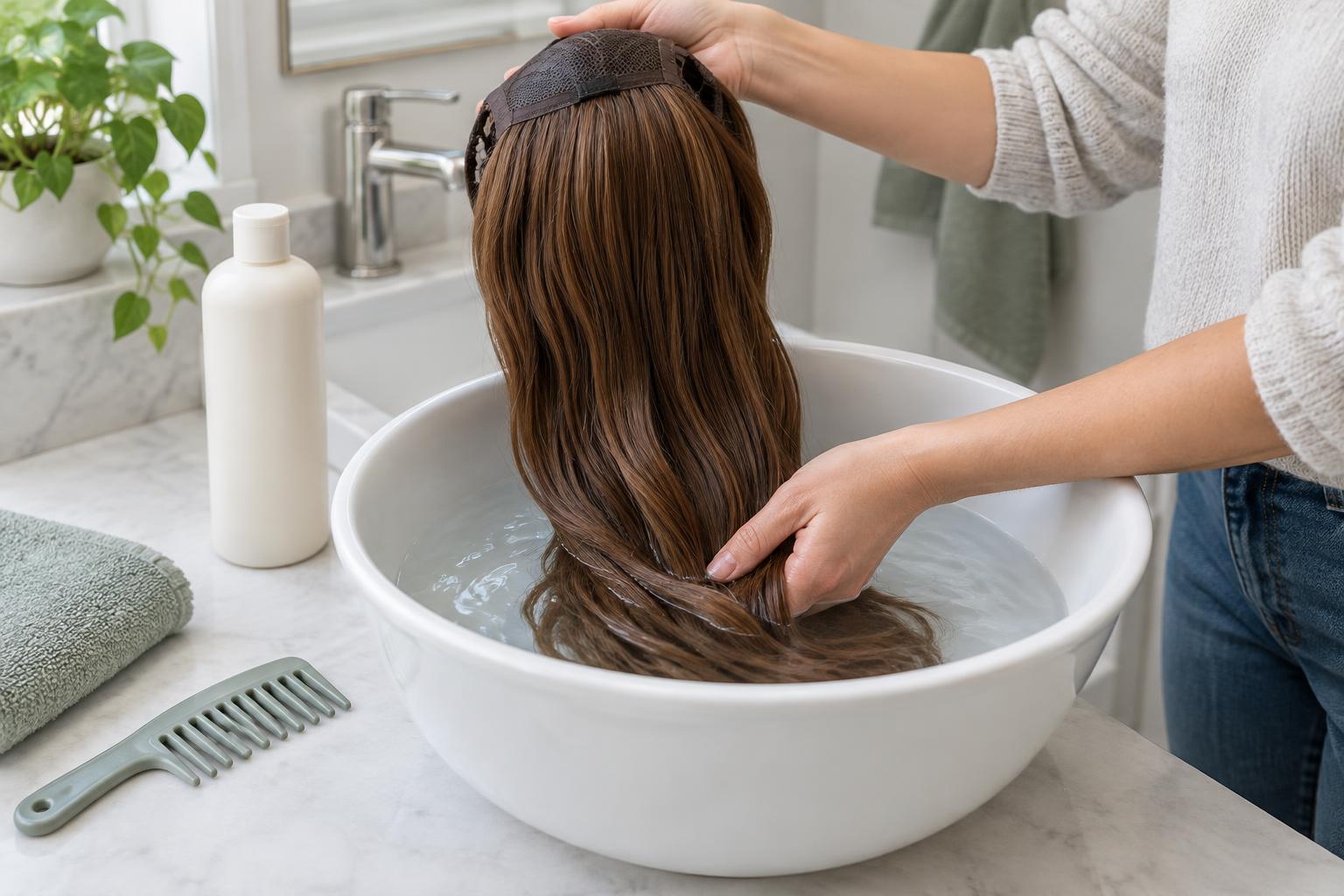
Check whether the wig should be detangled dry or damp. For many straight synthetic styles, gentle dry detangling helps preserve the set style. Human-hair wigs may be easier to detangle with a little moisture and a suitable conditioner or detangler. Curly wigs often benefit from finger-detangling while lightly damp, but brushing a dry curl pattern may make it look fluffy. Follow the maker’s guidance where available, and test any product on a small, less visible area first.
Keep products light, especially near the cap. Too much product can leave fibres coated without freeing a knot. Do not use heat to soften tangles unless the wig is explicitly heat-safe, and remember that heat-safe does not mean heat-proof.
Work upward in small sections
Divide the hair into manageable sections and clip the rest out of the way. Pick up one section and hold it firmly a little above the tangled area. This supports the fibres so that a tug on the ends is less likely to pull directly on the cap, lace or wefts. Use your fingers to separate obvious loops and tease apart any large knot before introducing a comb.
Comb only the last few centimetres of the section with short, gentle strokes. Once the ends pass through easily, begin slightly higher and comb down through the part you have already cleared. Repeat until you reach the roots. If the comb catches, stop and loosen that spot with your fingers rather than forcing the tool through it.
Take extra care around the hairline, parting and nape. Lace and hand-tied areas can be delicate, while the nape often develops friction tangles during wear. Keep your grip on the hair rather than pulling against the cap. For curls, separate small groups of hair with your fingers and let them settle back together instead of repeatedly combing through the finished section.
What to do with stubborn knots
A tight knot needs patience, not more force. Hold the hair above it, ease apart a few fibres at its edge and work inward. If the wig’s care instructions allow it, a small amount of suitable detangler may provide slip; give it a moment to spread before trying again. Avoid soaking the cap or piling on product to compensate for a knot that is not moving.
If a section is badly matted, take a break rather than continuing until the fibres stretch or the cap is strained. Severe matting may not come out without some change to the style or loss of fibres. If the wig is valuable or the tangle is close to delicate lace, a wig-care service may be a better option than attempting to cut the knot yourself.
Finish gently and prevent the next tangle
When each section is clear, make one light pass from higher up to the ends, supporting the hair as you go. Let a damp wig dry as its care instructions recommend before storing it. Avoid brushing repeatedly just to make it look perfectly smooth; that can disturb curls or add wear without improving the result.
After each wear, check the ends and nape for small tangles so they do not have time to tighten. Store the wig clean and fully dry, away from crushing or rubbing. A stand can help maintain its shape, while a breathable storage bag or box may suit longer-term storage if the hair is arranged loosely. A little routine attention is usually easier on a wig than one long session with a stubborn knot.