Find the source before adding a scent
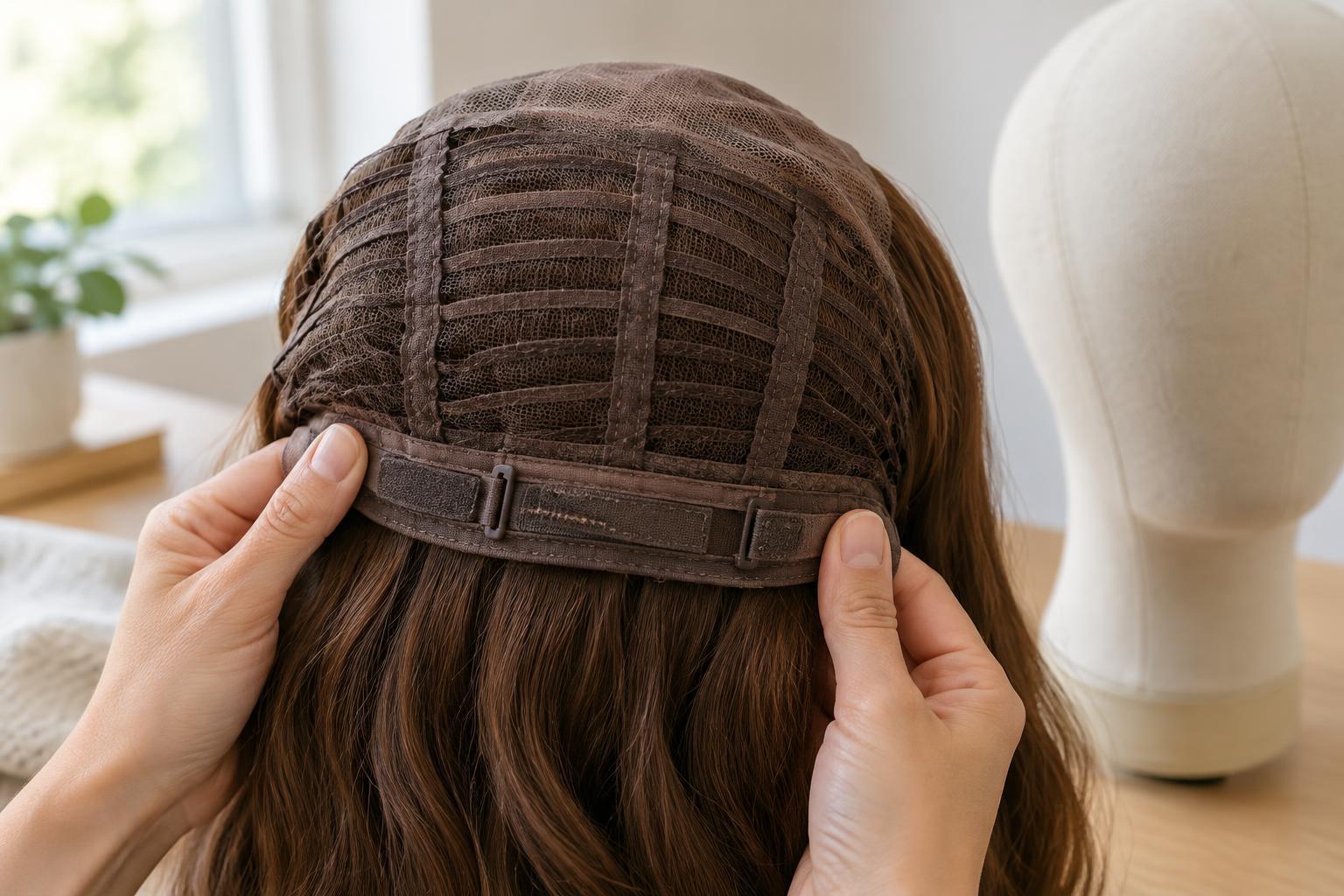
A wig can pick up odours from sweat, skin oils, styling products, smoke, cooking or the place where it is stored. Start by checking where the smell is strongest. Turn the wig inside out and smell the cap, then check the hair and any liner or grip worn underneath. This helps you decide whether a quick refresh is reasonable or whether something needs cleaning.
Perfume and strongly scented sprays may cover an odour briefly, but they do not remove the residue causing it. Adding more product can leave hair dull or sticky and may make the cap less comfortable against the skin. A musty smell deserves particular attention: if the wig was put away damp, let it dry fully and check its storage space rather than trying to disguise the smell.
Air the wig thoroughly and gently
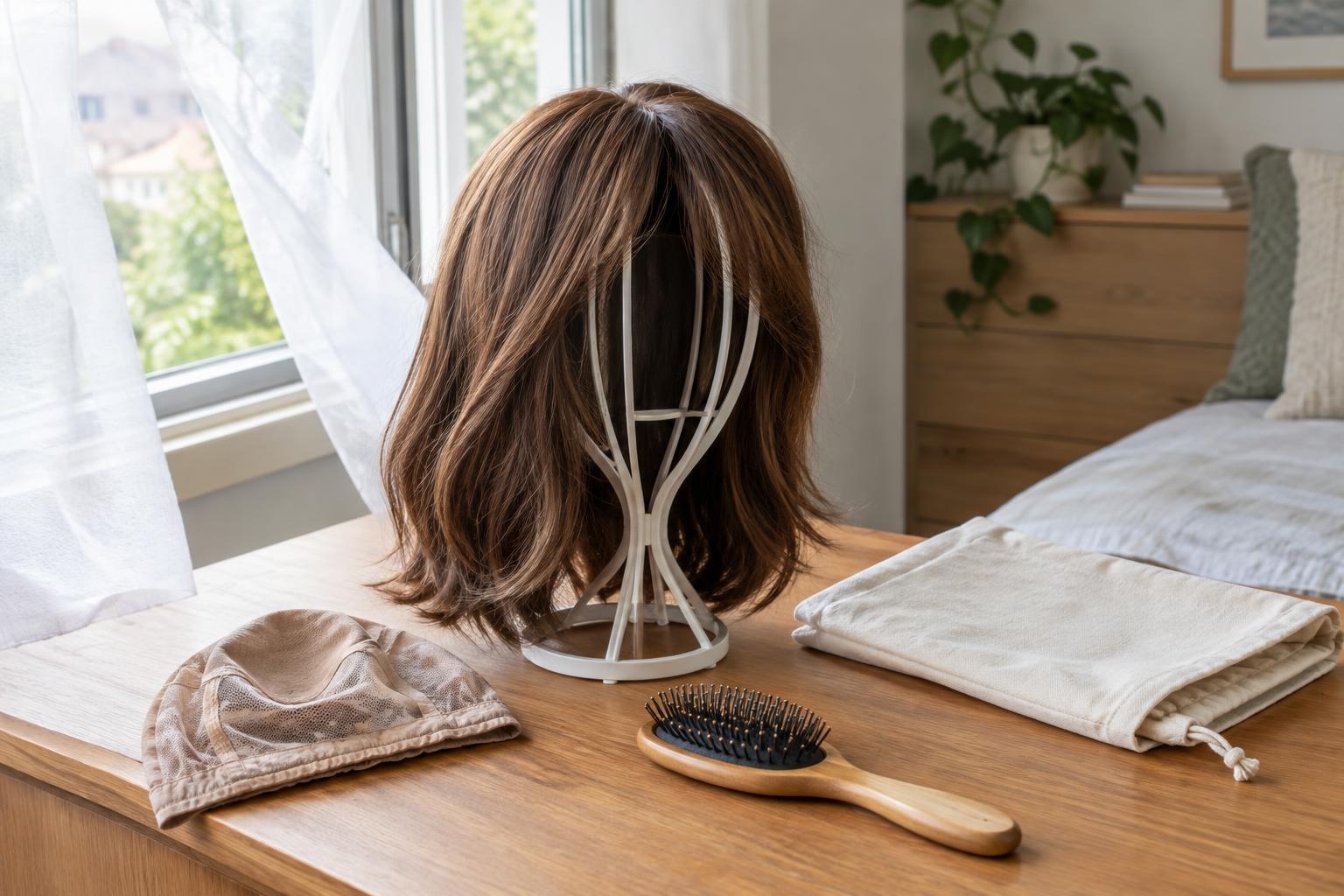
After wear, place the wig on a clean, ventilated stand or another support that lets air reach the cap. Choose a dry spot away from direct heat and strong sunlight. If the cap is damp with perspiration, avoid putting the wig straight into a box, bag or closed drawer. Allowing it to dry before storage is one of the simplest ways to keep stale smells from lingering.
Airing works best for a mild, recent odour, such as one picked up during a short outing. It will not remove oils or product buildup. Resist using a hairdryer to speed things up unless the wig maker’s care guidance permits it: heat can affect some synthetic fibres and may be hard on delicate construction. Gentle airflow and time are the safer default.
Clean what touches the wig
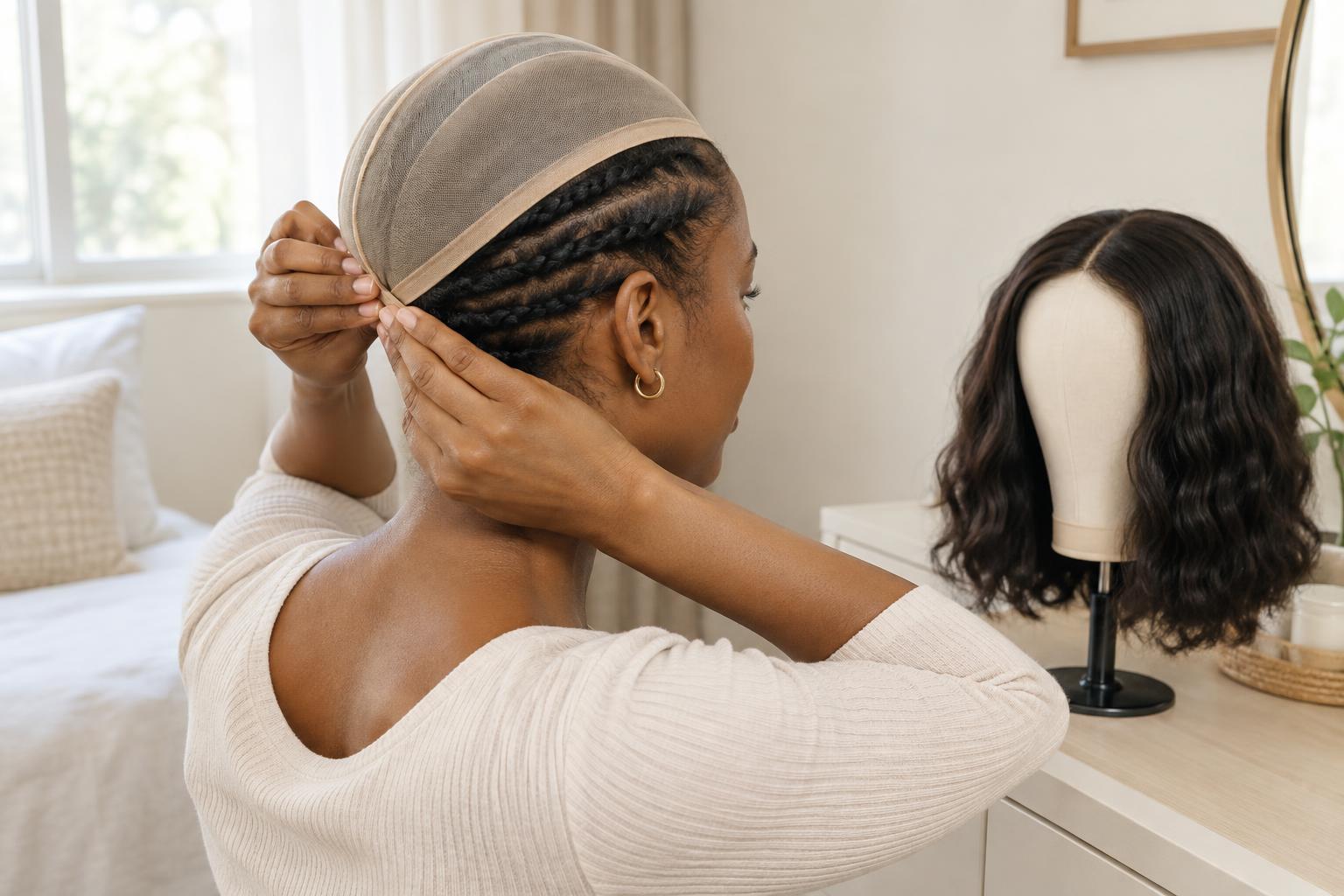
Sometimes the wig is not the only source of the smell. A wig cap, liner, grip band, headband or scarf can hold sweat and transfer it back to freshly cleaned hairwear. Check the care instructions for each item and wash washable accessories as needed. Let them dry completely before wearing or storing them with the wig.
Look at the inside edge of the wig, too, particularly where it meets the forehead and neck. If the maker’s instructions allow spot cleaning, use a small amount of an appropriate cleaner on a cloth to gently address the affected area, keeping the cap from becoming soaked. Test an inconspicuous spot first and allow everything to dry fully. For lace fronts, adhesive, tape or remover residue needs care suited to the wig’s construction; rubbing or picking at lace can damage it.
Know when a refresh is not enough
If the odour remains after airing, returns soon after you put the wig on, or comes with a greasy feel, visible residue or a stiff cap, plan a proper wash. Follow the wig maker’s guidance for water temperature, cleanser and drying. Synthetic and human-hair wigs do not always use the same products or routines, and specialised fibres or cap materials may have additional restrictions.
Washing too often can add wear, but postponing it by repeatedly applying fragrance is not a useful compromise. Your wearing time, activity level, use of styling products and whether you wear a washable liner all affect how quickly a wig needs cleaning. If a wig repeatedly smells musty despite careful washing and drying, inspect its storage conditions and consider asking a wig-care specialist whether the cap can be cleaned effectively.
Set up storage for a fresher next wear
Before putting a wig away, make sure both the hair and cap are completely dry. Remove detachable accessories, and keep the wig in a clean place protected from dust and strong household smells. A breathable storage arrangement can be helpful for a wig worn frequently; for longer storage, follow the maker’s packing advice and avoid sealing in any moisture.
A simple routine can prevent much of the problem: air the wig after wear, launder liners regularly, keep styling products light and wash the wig when airing no longer helps. The aim is not to make a used wig smell perfumed. It is to keep the materials clean, dry and comfortable enough for the next wear.