Start with the look you want to create
A hair accessory can blend into a wig, add a small accent or become the focus of an outfit. Decide which role you want it to play before choosing a colour. For a quiet, coordinated look, pick an accessory close to your wig shade or repeat a colour already in your clothes. For a bolder look, choose a contrasting colour and let the rest of your accessories stay simple.
You do not need an exact match between your wig, clothing and hair accessory. In fact, slightly different shades often look more natural than several items in precisely the same colour. If your outfit has a print, you can pick out one of its less prominent colours for a headband or scarf. This creates a connection without making every element compete for attention.
Use wig colour as a starting point, not a rule
On dark brown or black wigs, pale colours, bright shades and metallic finishes tend to stand out clearly. Deep colours can look subtler, especially in small clips or pins. With blonde, grey or white wigs, darker accessories create definition, while cream and other pale shades can give a softer effect. Red and copper wigs often pair easily with greens, blues, browns and warm neutrals, but these are options rather than rules.
If your wig has highlights, a root shadow or several tones, look at it in the light where you usually wear it. An accessory can echo a secondary shade rather than the dominant one. A tortoiseshell clip, for example, may tie together several brown or golden tones. Clear or neutral accessories are useful when you want the outfit, rather than the hair, to provide most of the colour.
Consider how much contrast feels right to you. A large bright bow creates a different effect from a slim band in the same shade. If a colour combination feels too strong, try a smaller accessory, a muted version of the colour or a position farther back on the head.
Connect the accessory to your outfit
Think about the overall shape and texture of what you are wearing. A smooth, simple outfit can provide a calm background for a patterned scarf or embellished clip. If your clothes already have a busy print, embroidery or several textures, a plain accessory may give the look a place to rest. Repeating a material can also create a connection: a velvet band with a velvet detail, or a satin scarf with a softly draped top.
You can coordinate with one small feature instead of your main garment. An accessory might pick up the colour of your shoes, glasses or bag. Metals are another easy link: if your outfit includes silver-coloured details, a silver-toned pin can feel intentional. Mixing metals is also fine; keeping the shapes or finishes similar can help the pieces feel related.
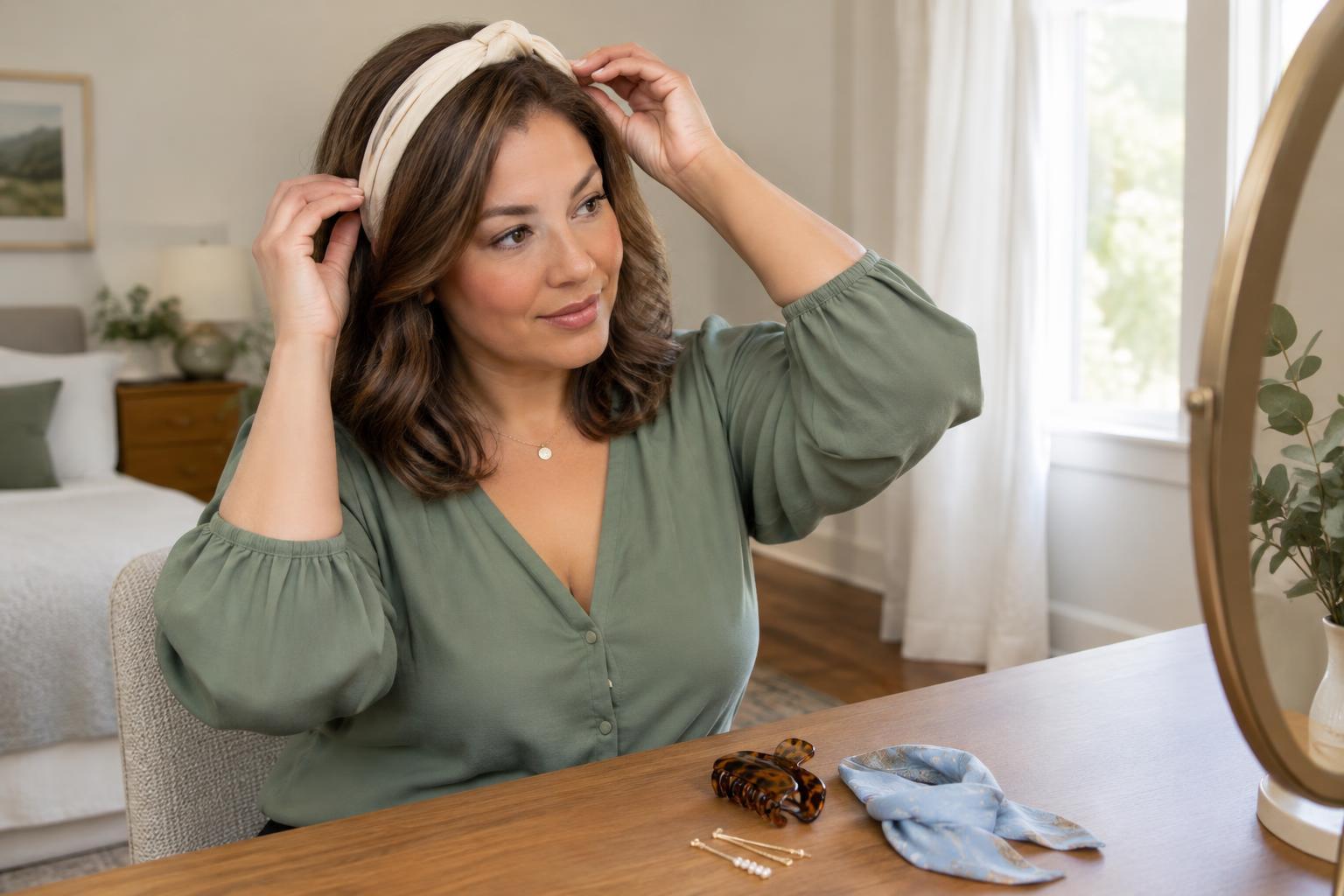
The occasion matters less than your own comfort and the effect you want. A narrow headband may feel understated, while a wide scarf changes the outline of the hairstyle. Try the complete outfit in a mirror if you can. Viewing the colours together is more useful than judging an accessory beside the wig alone.
Choose placement and fastening with the wig in mind
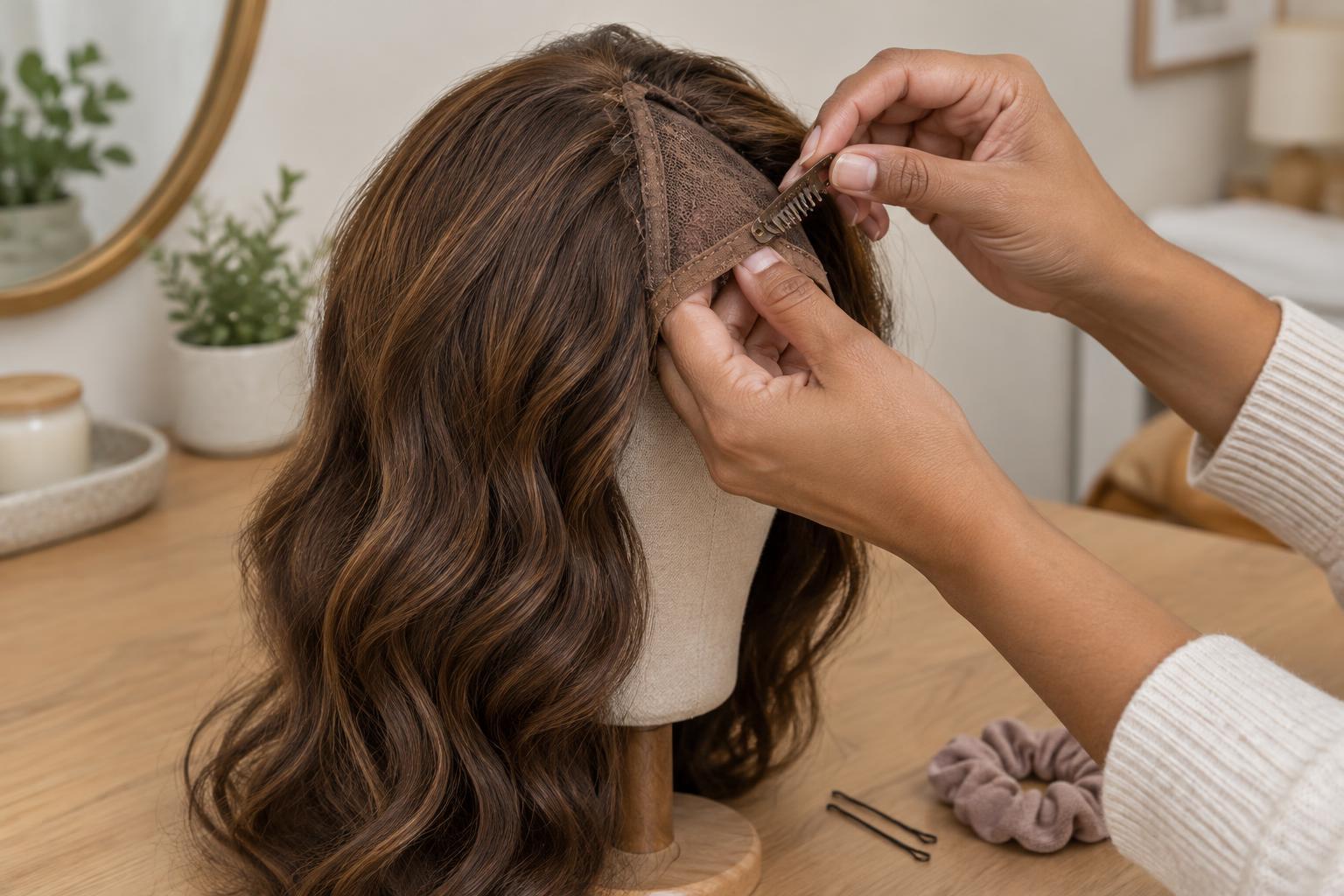
An accessory should stay in place without tugging on fibres, distorting the cap or putting uncomfortable pressure on your scalp. Lightweight clips may be easier to manage than heavy decorations. Place a clip where it can grip a small section of hair securely, and avoid repeatedly fastening it to delicate lace or mesh. If a band feels tight, try a softer or adjustable option rather than relying on pressure to hold the wig in place.
Placement affects colour balance as much as the accessory itself. A clip near your face draws attention to your features and the wig’s front colour. A scarf tied farther back is more visible from the side and behind. Before leaving home, turn your head gently and check that the accessory and wig still feel secure. Remove anything that catches, pulls or causes discomfort.
Build a small, flexible accessory collection
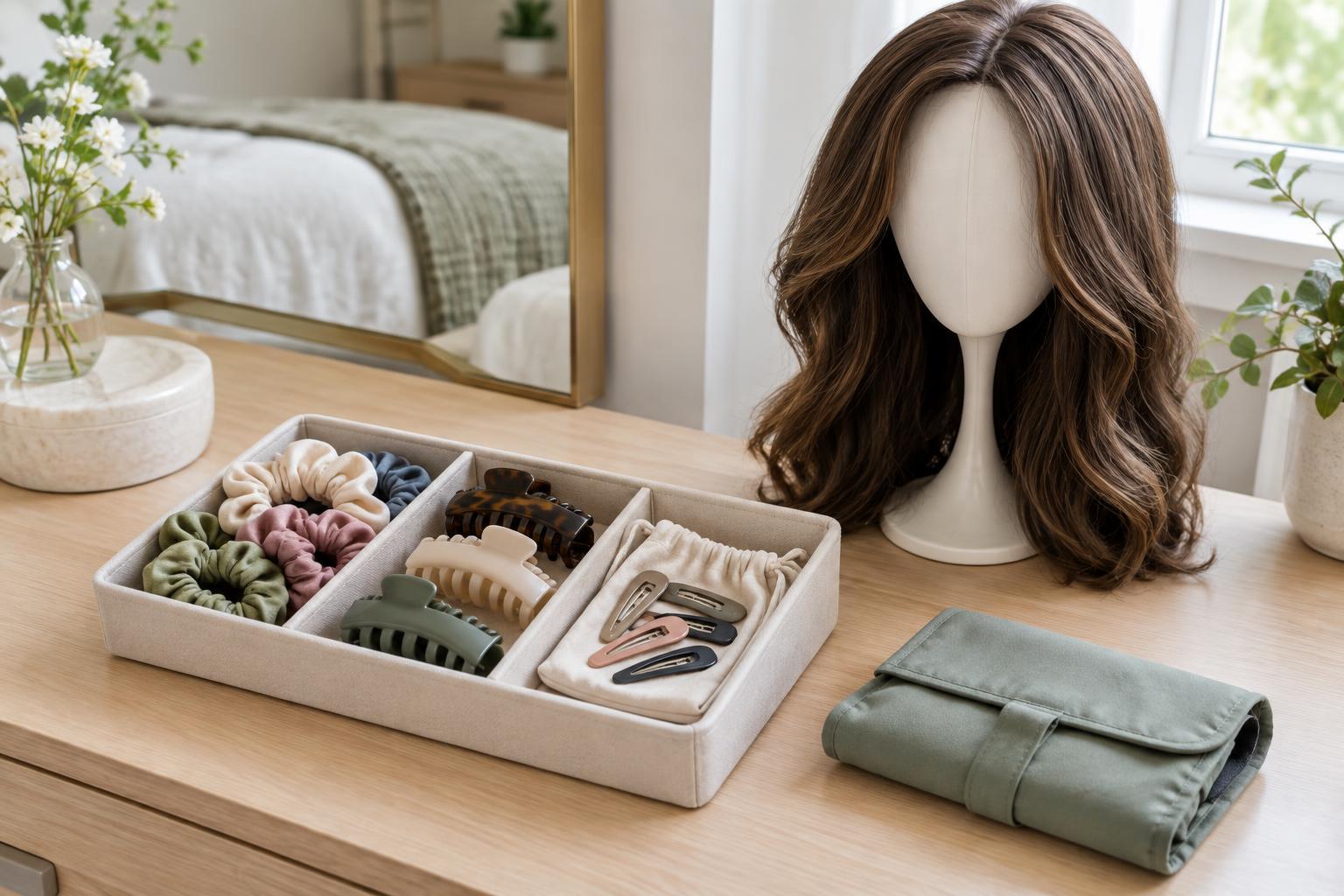
You do not need a separate accessory for every wig and outfit. A few pieces in versatile colours, varied sizes and different textures can cover many looks. For example, one understated clip, one soft band and one scarf with colours you often wear offer more choices than several near-identical pieces. Accessories that work with more than one wig are especially useful if you change hair colours regularly.
When trying a new combination, change one thing at a time: the accessory colour, its size or its placement. This makes it easier to see what you like. The best match is not necessarily the one that follows a colour formula. It is the one that looks balanced to you, stays comfortable and lets you wear your wig with confidence.