Why the roots need a lighter touch
Human-hair wigs can become dry through washing, heat styling and everyday wear, especially at the mid-lengths and ends. Conditioner helps those areas feel smoother and easier to detangle. The hair near the cap often needs less: product can collect at the base, make the roots lie flat and give freshly washed hair a greasy appearance.
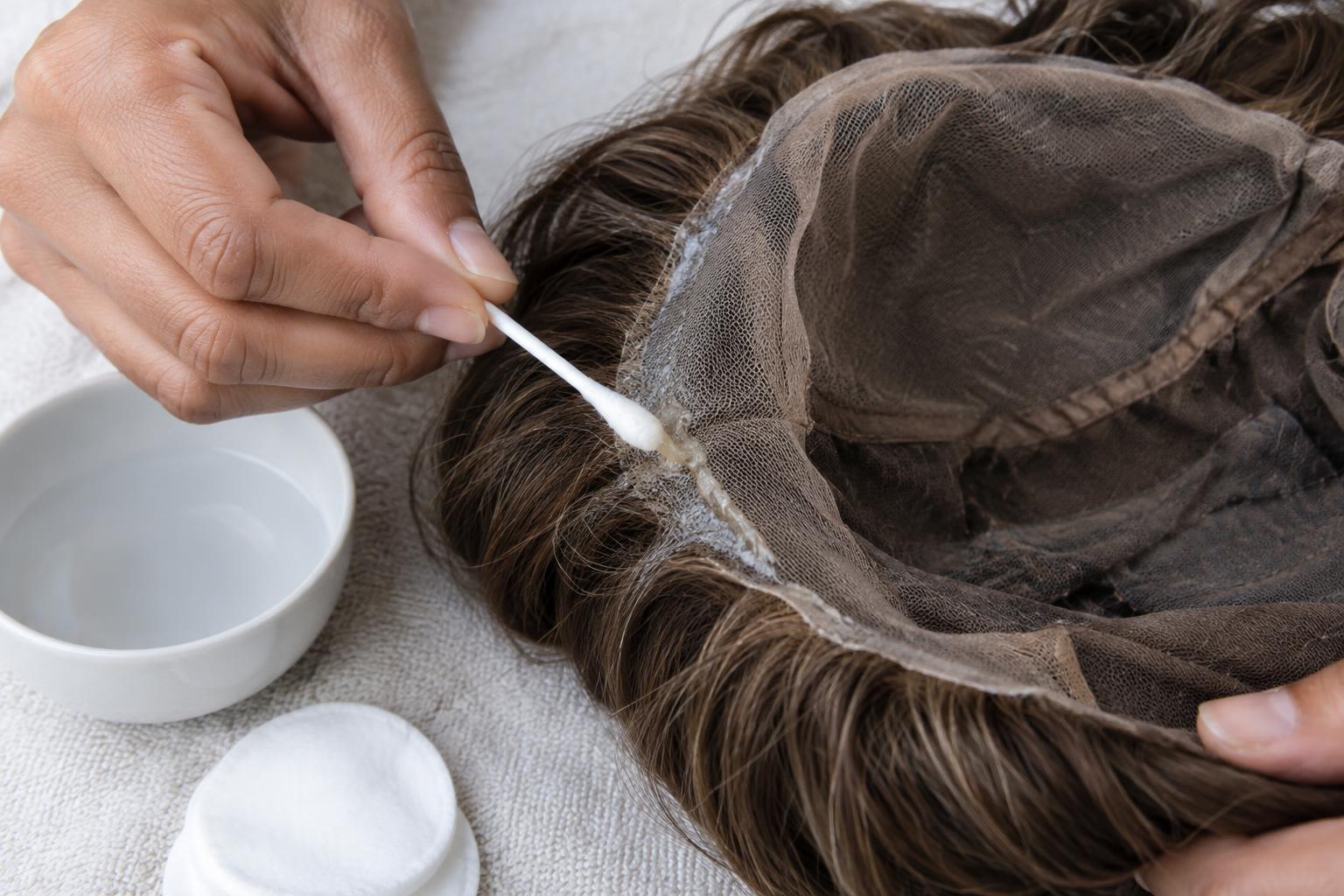
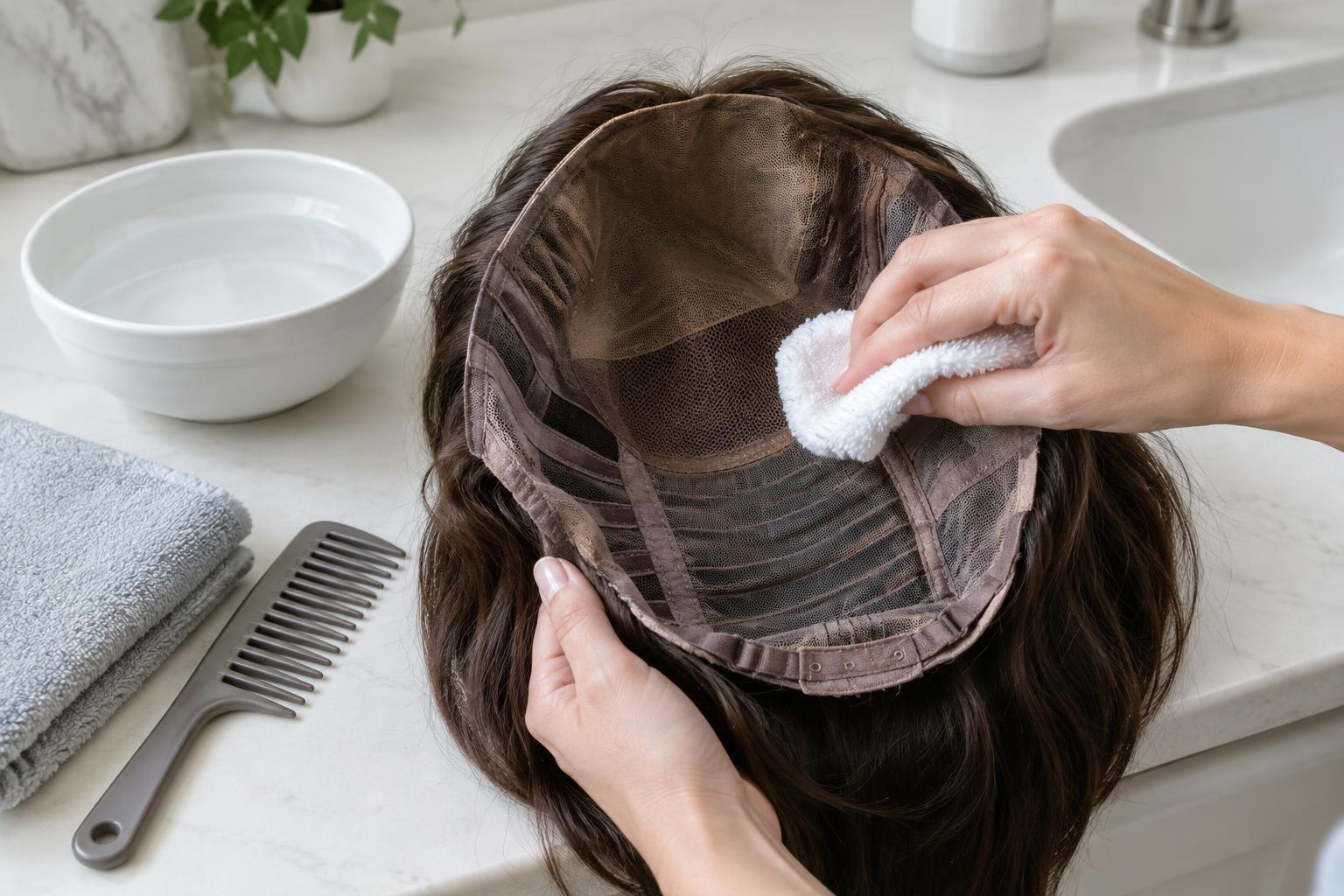
On a lace or hand-tied wig, the hair is secured to a delicate base. Heavy rubbing around the roots may encourage tangling or strain the attachment points. A machine-made wig has a different construction, but conditioner can still be difficult to rinse from its cap and wefts. Whatever the construction, aim to treat the hair that needs softness rather than coating the whole wig.
Prepare the wig before conditioning
Check any care instructions supplied with the wig first. They take priority over a general routine, particularly if the piece has a special finish, colouring or mixed fibres. If you are unsure whether the wig is entirely human hair, confirm its material before choosing products or using heat.
Gently detangle the wig before washing, starting at the ends and working upwards in small sections. Use a suitable wig brush or wide-tooth comb, and support the hair above the section you are working on so you do not pull at the cap. Wash with lukewarm water and a modest amount of appropriate shampoo, following the direction in which the hair falls. Rinse until the shampoo is gone. Conditioner cannot fix a cap that still holds shampoo residue.
Apply conditioner from the mid-lengths down
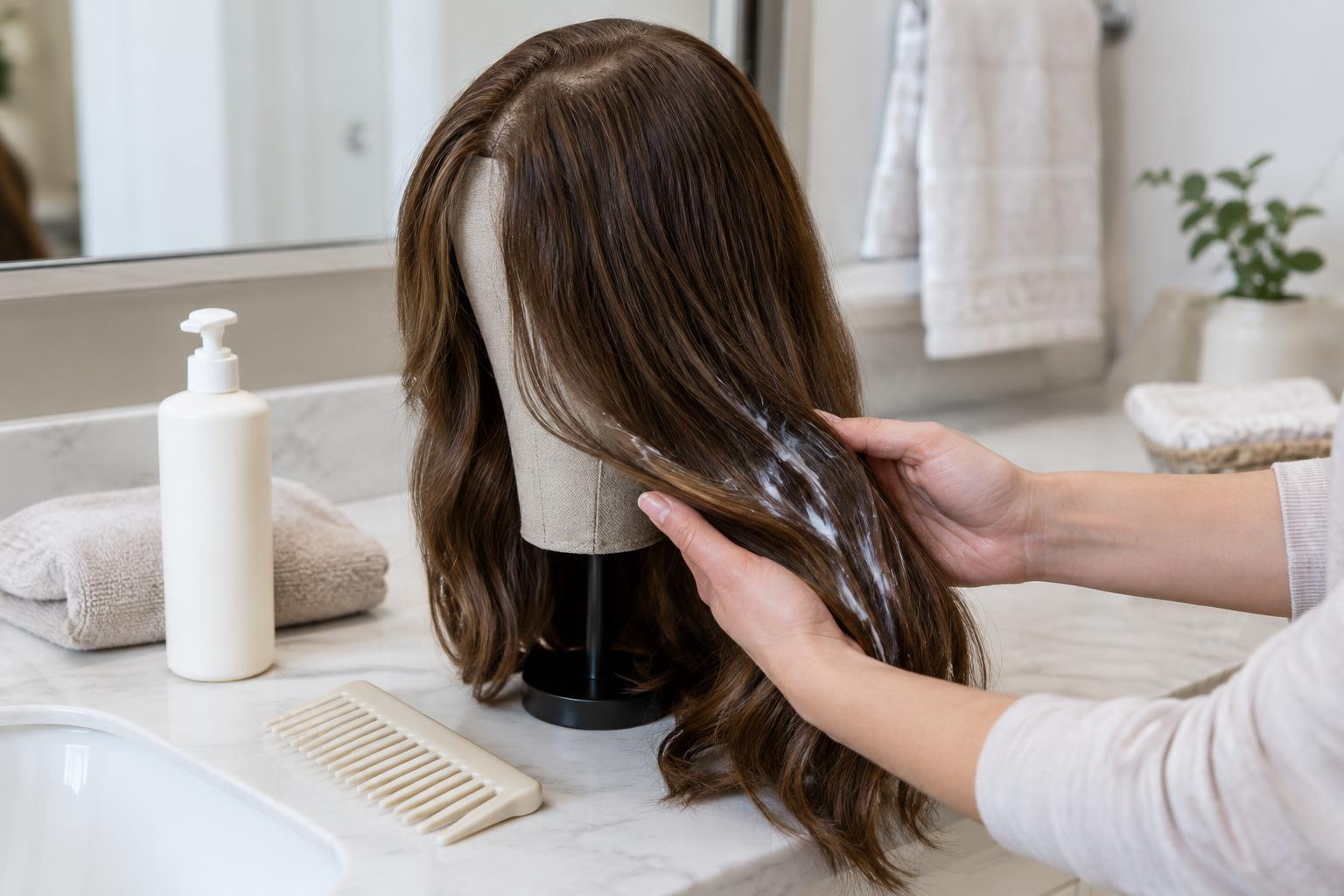
After shampooing, gently squeeze excess water from the hair without twisting it. Put a small amount of rinse-out conditioner into your palms and spread it between your hands. Smooth it over the mid-lengths and ends, concentrating on dry-feeling areas. Keep it away from the cap, knots, wefts and hairline. For a short wig, that may mean conditioning only the tips; you do not need to force a product-covered hand through every strand.
Use your fingers or a wide-tooth comb to distribute the conditioner gently through the treated lengths. Add a little more only if the hair still feels as though the product has not reached it. Follow the product’s directions for how long to leave it on. More product or a longer wait does not necessarily mean a softer result, and both can make rinsing harder.
Rinse well and assess the result
Rinse with lukewarm water, letting it flow down the hair rather than swishing the wig into a tangle. Pay attention to the area just below the cap, where product may have travelled while you worked. Continue until the hair feels clean and slippery rather than coated. Avoid scrubbing the base to chase residue; a careful, steady rinse is gentler.
If the roots look heavy after the wig dries, consider whether conditioner reached the base, whether too much was used or whether the shampoo and conditioner were fully rinsed out. Next time, apply less product and start farther down the hair. If the lengths feel dry but the roots look good, adjust only the lengths rather than changing the whole routine.
Dry and maintain softness without build-up
Blot the wig with a towel instead of rubbing it. Arrange it on a suitable wig stand and allow air to circulate while it dries; keep it away from direct heat. Avoid storing it while the cap is damp. Once dry, detangle gently from the ends upwards and style within the wig maker’s guidance. If you use heated tools on a suitable human-hair wig, a light heat protectant on the lengths may be useful, but avoid saturating the roots.
A leave-in conditioner can help between washes, but use it sparingly. Spray it into your hands or apply it directly to the ends if that gives you better control, keeping it off the cap and hairline. Conditioning needs vary with the hair’s texture, styling and wear, so let the wig’s feel guide you. Soft lengths and roots that move freely are a better goal than making every part of the wig feel equally coated.