Why clean wig tools?
A clean wig can pick up residue from the tools used to style or store it. Shed fibres collect between brush bristles and comb teeth, while hairspray, leave-in products and dust can cling to handles and stands. Regular cleaning keeps those deposits from being transferred back to the wig and makes tools more pleasant to use.
The routine does not need to be complicated. Remove trapped hair after each styling session, then wash or wipe tools when you notice buildup or after using a lot of product. If several people use the same tools, clean them between users. Check the tool’s material before adding water: a solid plastic comb needs different care from a cushioned brush or a fabric-covered wig head.
Start by removing loose fibres
Before washing a brush, lift out any hair or wig fibres caught in the bristles. Use your fingers or the pointed end of another comb, working gently so you do not bend the bristles or pull out their base. For a comb, slide the fibres away from the teeth and check the gaps for product residue. Put the collected fibres in the bin rather than rinsing them down the drain.
Pay attention to the brush pad and the join where bristles meet the base. These spots can hold lint even when the top of the brush looks clean. A dry, soft toothbrush can help loosen debris. If the brush has a cushioned pad, do not press hard or pierce it; an opening can allow water inside during later cleaning.
Wash brushes and combs according to their construction
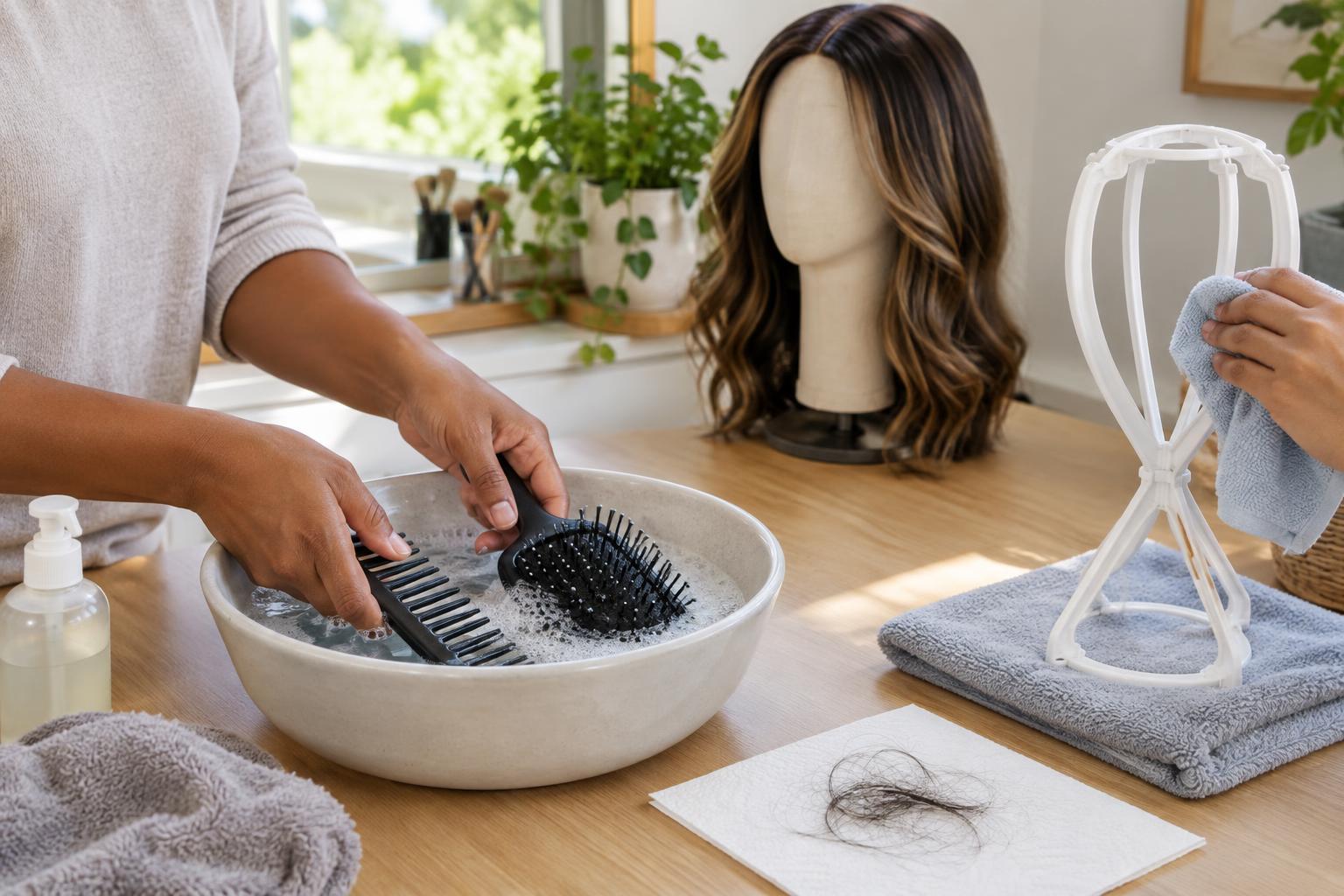
Most plain plastic combs can be washed in lukewarm water with a small amount of mild soap. Rub along the teeth with your fingers or a soft brush, rinse well, and dry with a clean towel. Check the comb for rough edges or damaged teeth while it is clean. A snagging tooth may catch wig fibres even after the comb has been washed.
For brushes, dampen the bristles with soapy water and gently work away residue, taking care not to soak the handle or base. Rinse the bristles without leaving the brush submerged, then shake off excess water. Set it bristle-side down on a towel or in a position that lets water drain away from the cushion. Allow it to dry fully before using or storing it.
Be especially cautious with wooden handles, natural bristles, glued parts and padded bases, which may not tolerate prolonged soaking. A lightly damp cloth is often a better starting point for these areas. Follow any care instructions supplied with the tool. Avoid very hot water and harsh cleaners unless the manufacturer specifically recommends them.
Wipe down wig stands and display heads
A plastic or metal open-frame stand usually needs little more than dusting, followed by a wipe with a cloth dampened with mild soapy water. Clean the points where the wig rests, the joints and the feet. Wipe away soap with a separate damp cloth and let the stand dry completely before placing a wig on it. This is a useful time to check for sharp edges or loose connections that could catch a cap.
Foam and fabric-covered heads need a gentler approach. Remove surface dust with a soft brush or lint roller, then spot-clean marks with a barely damp cloth if the material allows it. Do not saturate the head: moisture may linger inside or affect its covering. Let it air-dry thoroughly. If you pin wigs to a head, remove stray pins and inspect the surface so none are left where your hands or the wig cap could catch them.
Keep cleaned tools ready for the next styling session
Store brushes and combs only when dry, in a clean drawer, pouch or container where they will not gather lint. Keep stands in a dry place away from dust and avoid setting them against surfaces that might transfer colour or residue to a wig. If you use separate tools for wigs with different styling products, keeping them apart can make cleaning easier.
Cleaning removes visible residue, but it will not repair worn equipment. Replace a brush with loose bristles, a cracked comb or a stand that no longer supports a wig securely. A quick check when you put tools away helps ensure that the next time you style or store your wig, the equipment is clean, dry and unlikely to snag it.