Why attachments need separate attention
Clips and combs sit close to the scalp, where they can pick up oil, skin flakes and styling product. Loose strands can also wind around their teeth or hinges. This buildup may make an attachment harder to use, even when the hairpiece itself does not need washing. A quick check after wear helps you spot debris before it becomes difficult to remove.
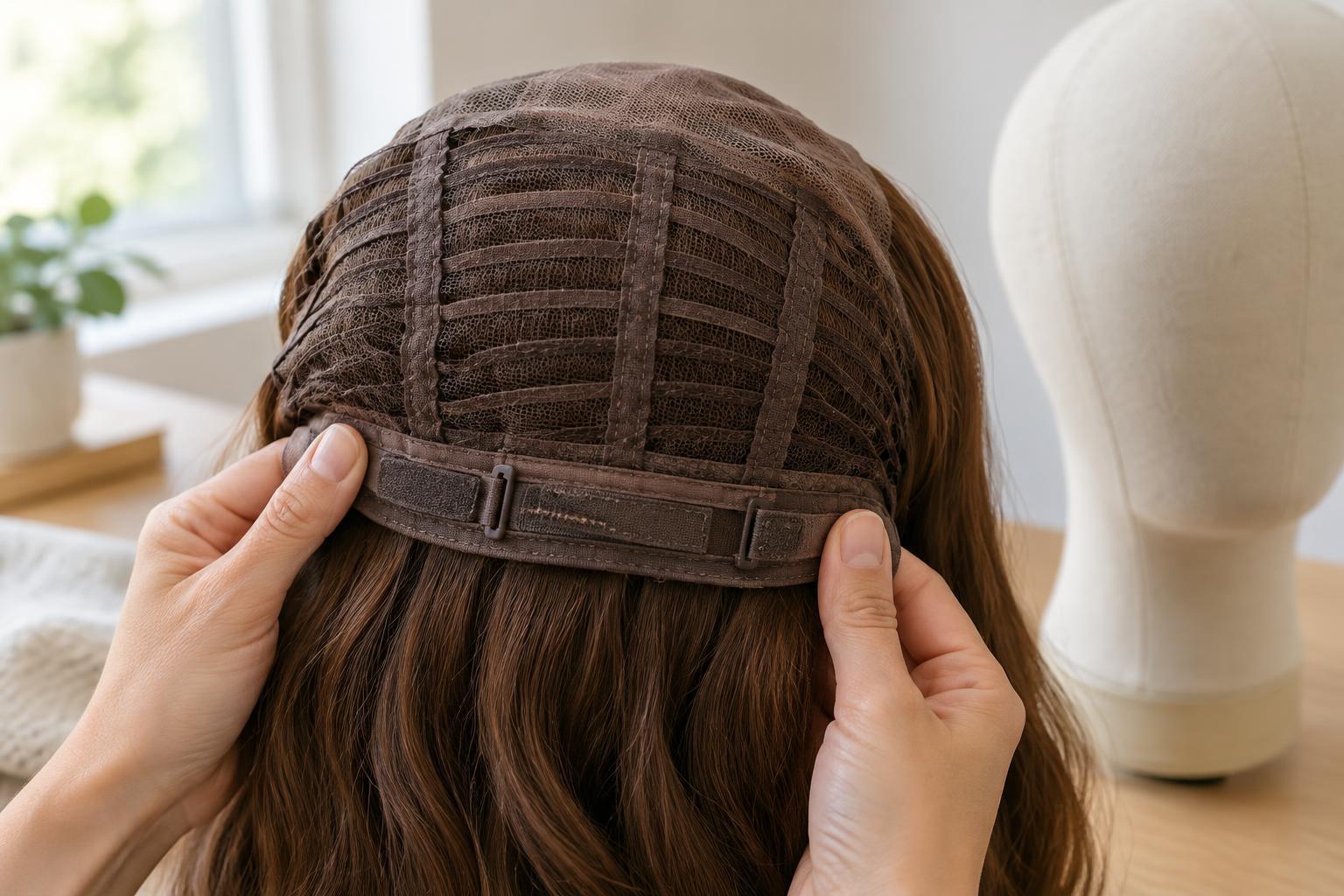
The aim is to clean the hardware without unnecessarily wetting the hairpiece. Materials around an attachment vary: it might be sewn into lace, fixed to a fabric band or positioned near a bonded area. Before cleaning, look at how it is attached and check any care instructions supplied with the piece. If the attachment is loose, bent or pulling at the base, deal with that problem before applying water.
Start with a dry clean
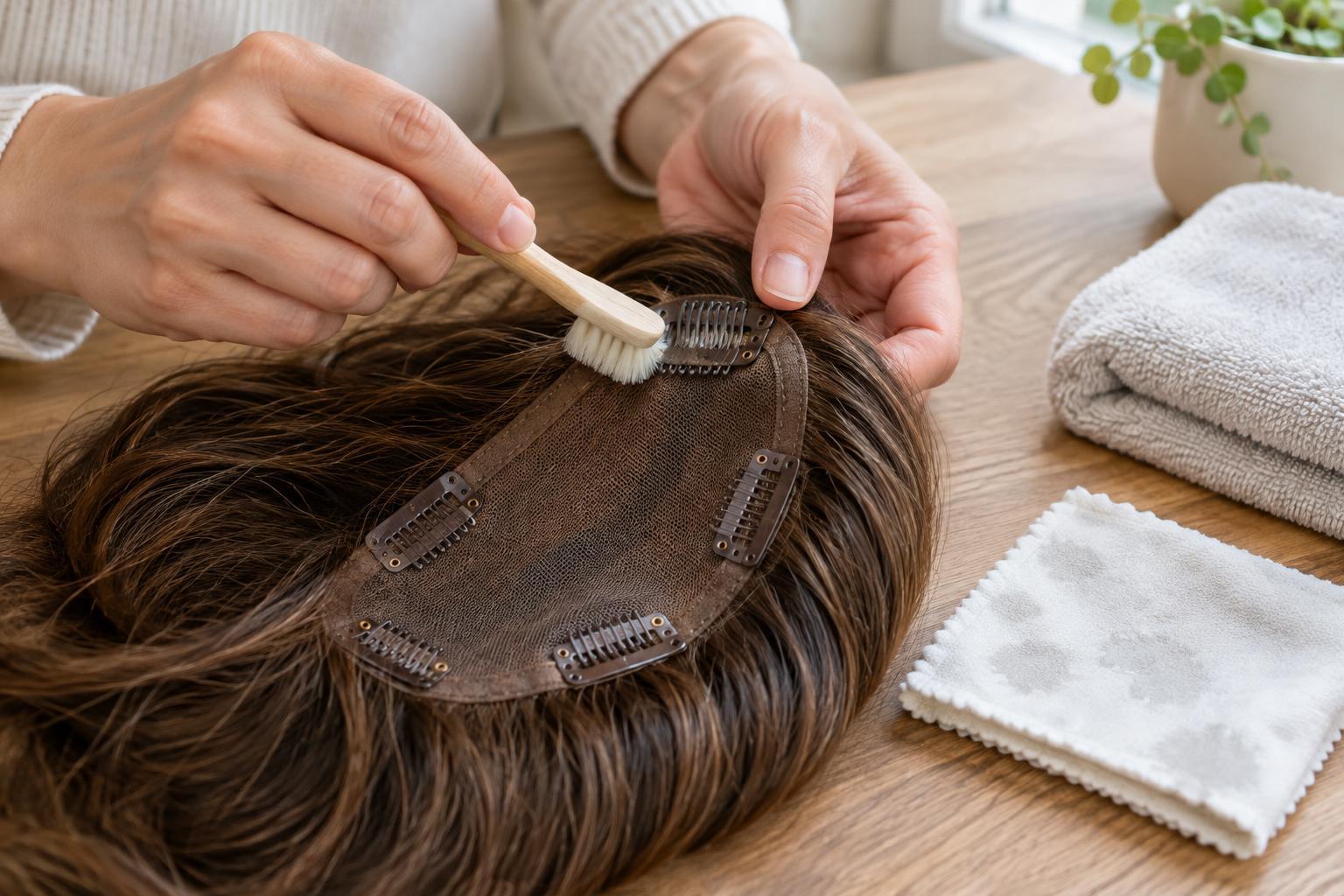
Place the hairpiece on a clean towel with the clips or combs facing up. Open snap clips gently so you can reach the teeth and underside. Use your fingers to lift away loose hair, then work out trapped strands with a soft toothbrush, a clean spoolie or the blunt end of a small comb. Brush away from lace, mesh and stitching rather than dragging the tool across them.
For stubborn debris near a hinge, use a cotton bud to ease it out without forcing the mechanism. Avoid sharp tools that could scratch a coating, snag the base or bend a tooth. Once the visible debris is gone, close and reopen each clip to check that it moves freely. A comb should feel smooth along its teeth, with no caught hair that could tug during wear.
Use a little moisture for oil and product buildup
If the attachments still feel greasy or sticky, add a small amount of mild shampoo to lukewarm water. Dampen a soft cloth or cotton bud with the mixture and wipe the teeth, edges and accessible undersides. Keep the cloth damp rather than dripping. This gives you control around stitching and helps avoid saturating lace, padding, adhesive areas or the hair itself.
Wipe again with a separate cloth lightly dampened with plain water to remove soap residue. For a narrow gap, a damp cotton bud can be more precise than rinsing the whole hairpiece. Do not scrub aggressively or leave metal clips sitting in water: prolonged moisture may affect some finishes or encourage rust. If the manufacturer's instructions call for a particular cleaning method, follow those directions instead.
Dry thoroughly before wearing or storing
Blot each attachment with a dry, lint-free cloth, paying attention to hinges, springs and the point where it meets the base. Leave the hairpiece in a well-ventilated spot until both the hardware and the surrounding fabric feel completely dry. Keep snap clips open while drying if that exposes a damp underside, but support the hairpiece so the open clips do not catch on anything.
Avoid directing high heat at attachments to speed things up. Heat can affect nearby fibres, coatings or bonded parts, depending on the hairpiece. Check for lingering dampness before putting the piece in a box or bag; enclosed storage can trap moisture. Once dry, close the clips gently and store the hairpiece so its comb teeth are not pressed against other items.
Know when cleaning is not enough
Make a habit of checking attachments as you clean them. A clip that no longer closes securely, a rough comb tooth or exposed rust may catch hair or feel uncomfortable. Cleaning will not fix a damaged spring, sharp edge or failing stitch. Stop using an attachment that pulls at the base or scalp, and consider repair or replacement suited to the hairpiece construction.
How often you clean depends on wear and product use. Removing trapped hair after each wear may be enough between more thorough cleanings; visible residue or reduced grip is a sign to clean sooner. A gentle, targeted routine keeps the attachments usable without washing the entire hairpiece more often than it needs.