Start with the cap construction
The inside of a wig sits against your skin, so it can collect sweat, scalp oils, makeup and styling-product residue even when the hair still looks clean. A gentle clean can make the wig more comfortable and help prevent residue from building up. Before adding water, check the maker’s care instructions: the right method depends on both the hair fibre and the way the cap is made.
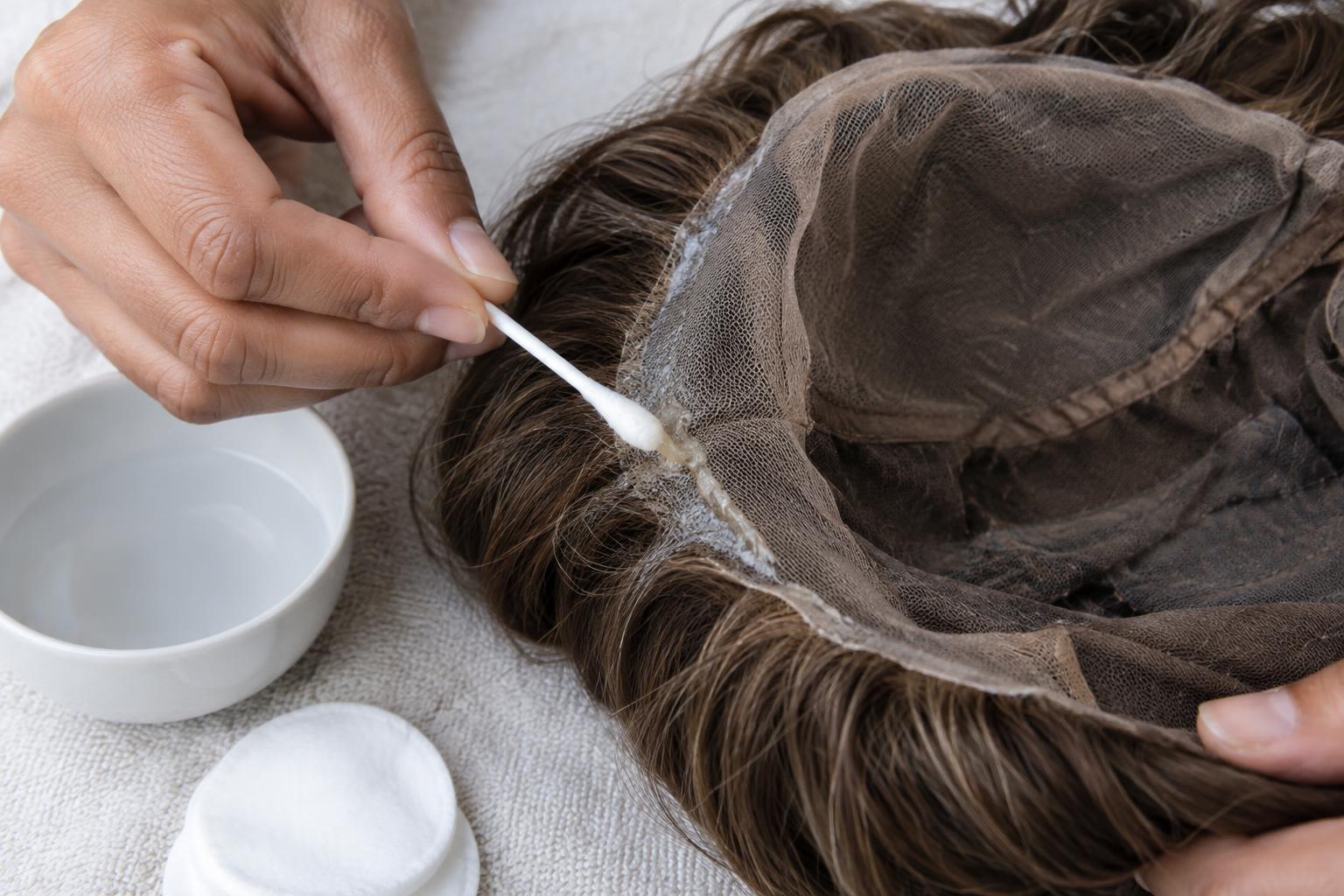
Look inside for features that need a light touch, such as lace, hand-tied areas, silicone grips, clips or adhesive residue near the hairline. These parts may not tolerate rubbing or prolonged soaking. If the wig has a label, follow its washing and temperature guidance, particularly for synthetic hair. If you do not know how a wig should be washed, begin with a small, gentle spot clean rather than saturating the cap.
Freshen the lining between full washes
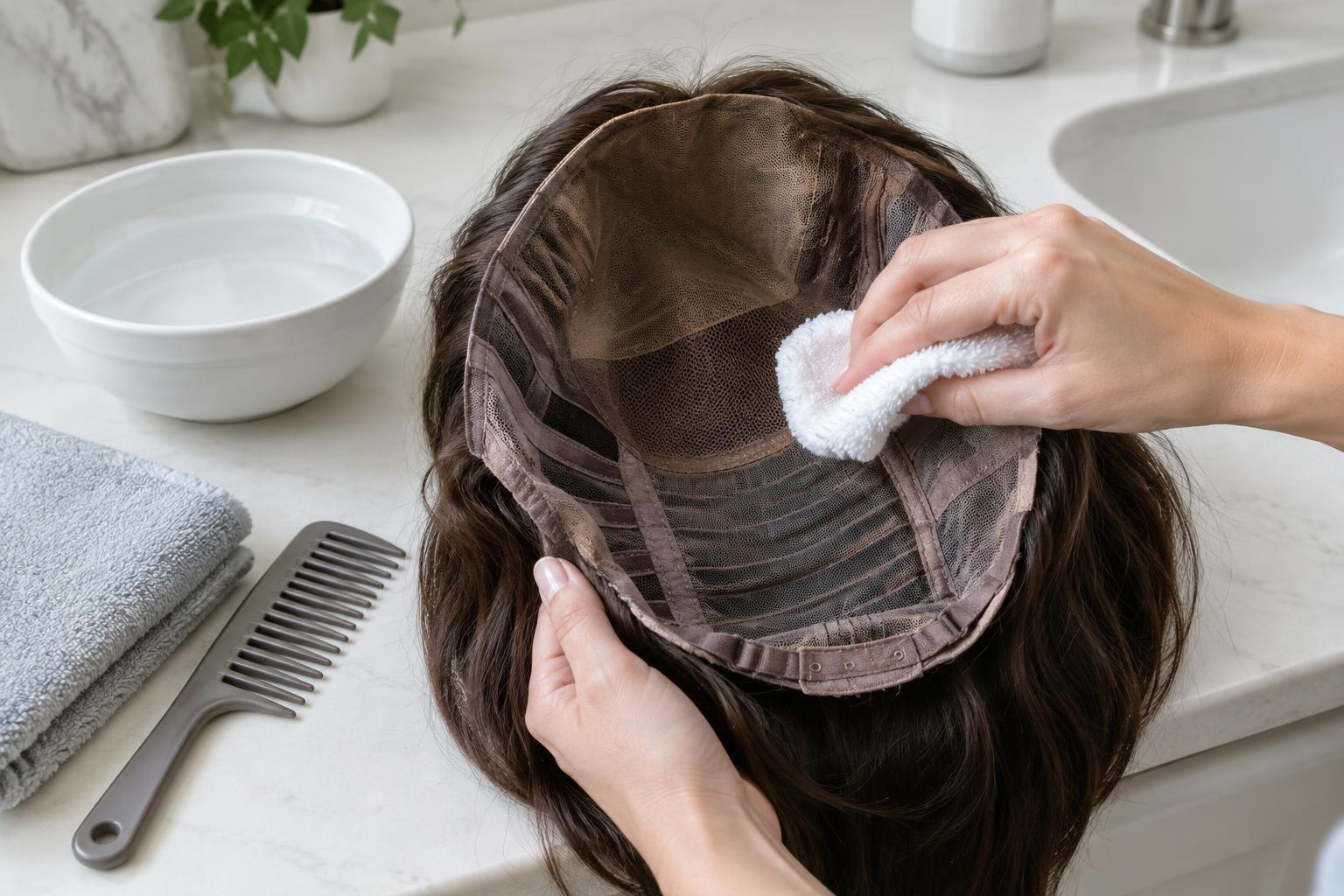
For mild sweat or oil, turn the wig inside out as far as its construction comfortably allows. Place it on a clean towel, supporting the cap rather than pulling at the hair. Use a soft cloth lightly dampened with cool water to blot the areas that touch your forehead, temples and nape. Work gently; firm scrubbing can stretch the cap or disturb knots in lace and hand-tied sections.
If water alone does not lift the residue, put a small amount of wig-compatible shampoo in cool water and dampen the cloth with that diluted solution. Blot the affected areas, then use a second cloth dampened with plain water to remove the cleanser. Keep the cloth moist rather than dripping, especially around delicate lace or attachments. Spot cleaning can reduce the need for a full wash, but it will not remove heavy buildup throughout the cap.
Wash more thoroughly when residue builds up
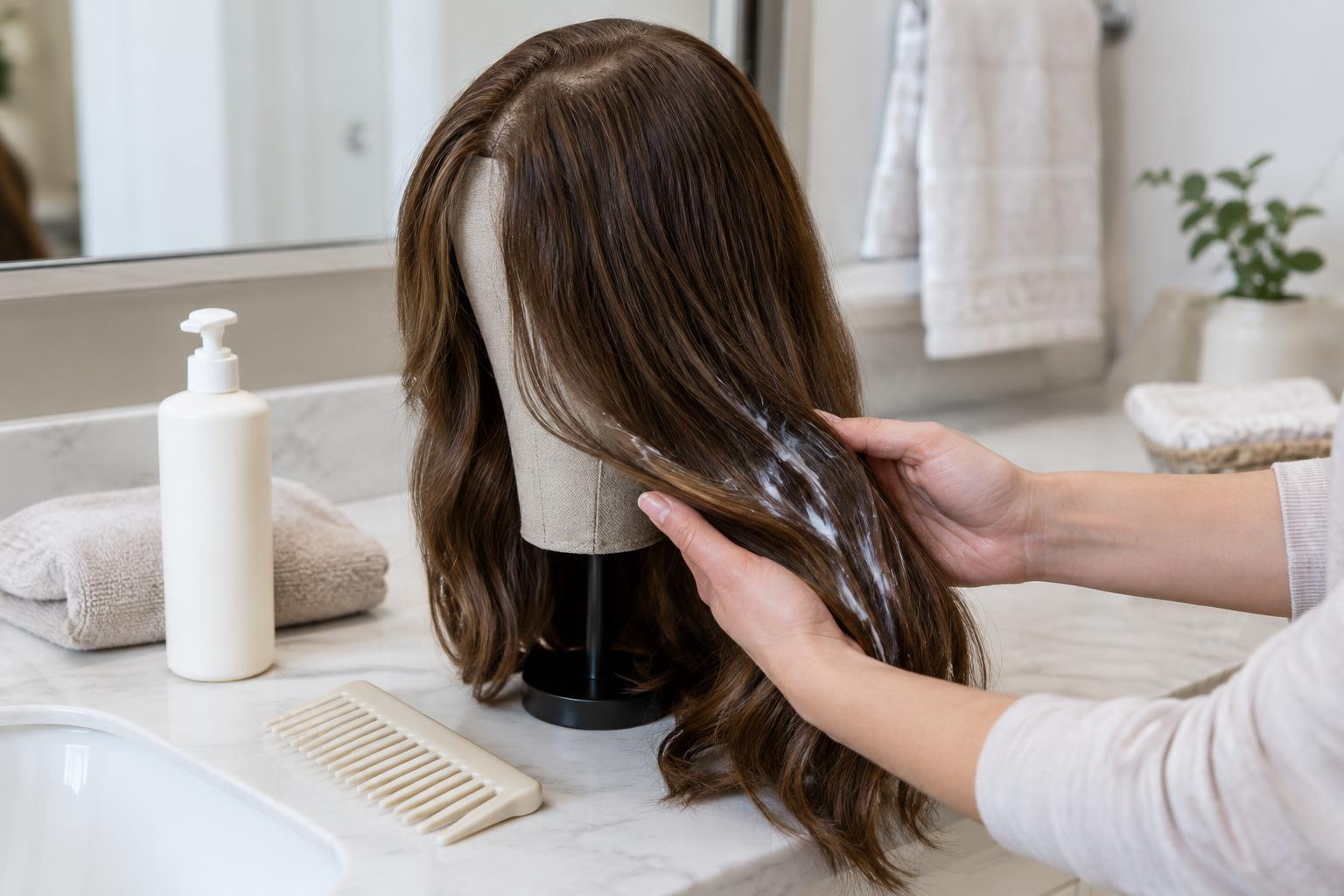
When the lining feels greasy or holds an odour after spot cleaning, a fuller wash may be appropriate if the wig’s care instructions permit it. Gently detangle the hair first, using a method suited to its fibre and curl pattern. Fill a basin with cool water and add the recommended amount of wig shampoo. Keep products intended only for natural hair away from synthetic fibres unless the wig maker says they are suitable.
Lower the wig into the water without twisting or scrubbing it. Let the soapy water move through the cap, then use your fingertips to press gently along the areas where oils collect. Pay particular attention to the front edge and nape, but avoid rubbing lace, knots, clips and seams. Rinse in cool water until the cleanser is gone. If conditioner is suitable for the wig, apply it according to the product directions, generally concentrating on the hair rather than the cap so it does not leave a slippery film against the skin.
Do not use hot water or try to strip stubborn oil with harsh household cleaners. If the buildup is mainly adhesive, check the wig and adhesive instructions for a compatible remover instead of pulling at the residue. Test any new product on a discreet area first.
Dry the cap completely before wearing or storing
After rinsing, press out excess water with a towel. Do not wring the wig: twisting can distort the cap and tangle the hair. Set it on a suitable wig stand in a ventilated place, following any maker guidance on whether to support the wig right-side out. Avoid stretching a wet cap over a stand that is too large.
Let the cap and hair dry fully before putting the wig away. Dampness trapped in the lining can leave it smelling stale. Keep the wig away from direct heat unless its care instructions specifically allow heat styling, and remember that permission to style the hair with heat does not necessarily apply to the cap.
Make the next clean easier
How often you clean the cap depends on how frequently you wear the wig, your activity level and the products you use. Check the lining after wear rather than relying on a fixed schedule. If it feels damp, let it air out before storage; if it feels oily, a prompt spot clean may be easier than removing older buildup later.
A washable wig liner or cap worn underneath may absorb some sweat and oils, provided it fits comfortably and does not affect the wig’s security. Clean that layer regularly too. When you handle the wig, use clean hands and avoid applying heavy products where the cap meets your skin. Small habits like these can keep the inside fresher while reducing how often the whole wig needs washing.