Check the construction before adding water
A fabric hair accessory may contain more than the material you can see. A scrunchie has elastic inside its fabric tube; a padded headband may contain foam and a rigid band; a bow may be stiffened or glued to a clip. Those hidden parts can react differently to water. Before cleaning, check for a care label, loose dye, exposed glue, metal hardware and embellishments that might detach.
If there is no care label, start with the least wet method likely to work. Lift off lint with a soft brush or clean, dry cloth. For a small mark, test a barely damp cloth on an inconspicuous area and let the spot dry before continuing. Colour transfer, a change in texture or a water ring is a reason to stop. Vintage pieces and accessories made with velvet, silk, leather or delicate decoration may be safer with careful surface cleaning than a full wash.
Hand-wash simple, washable fabric pieces
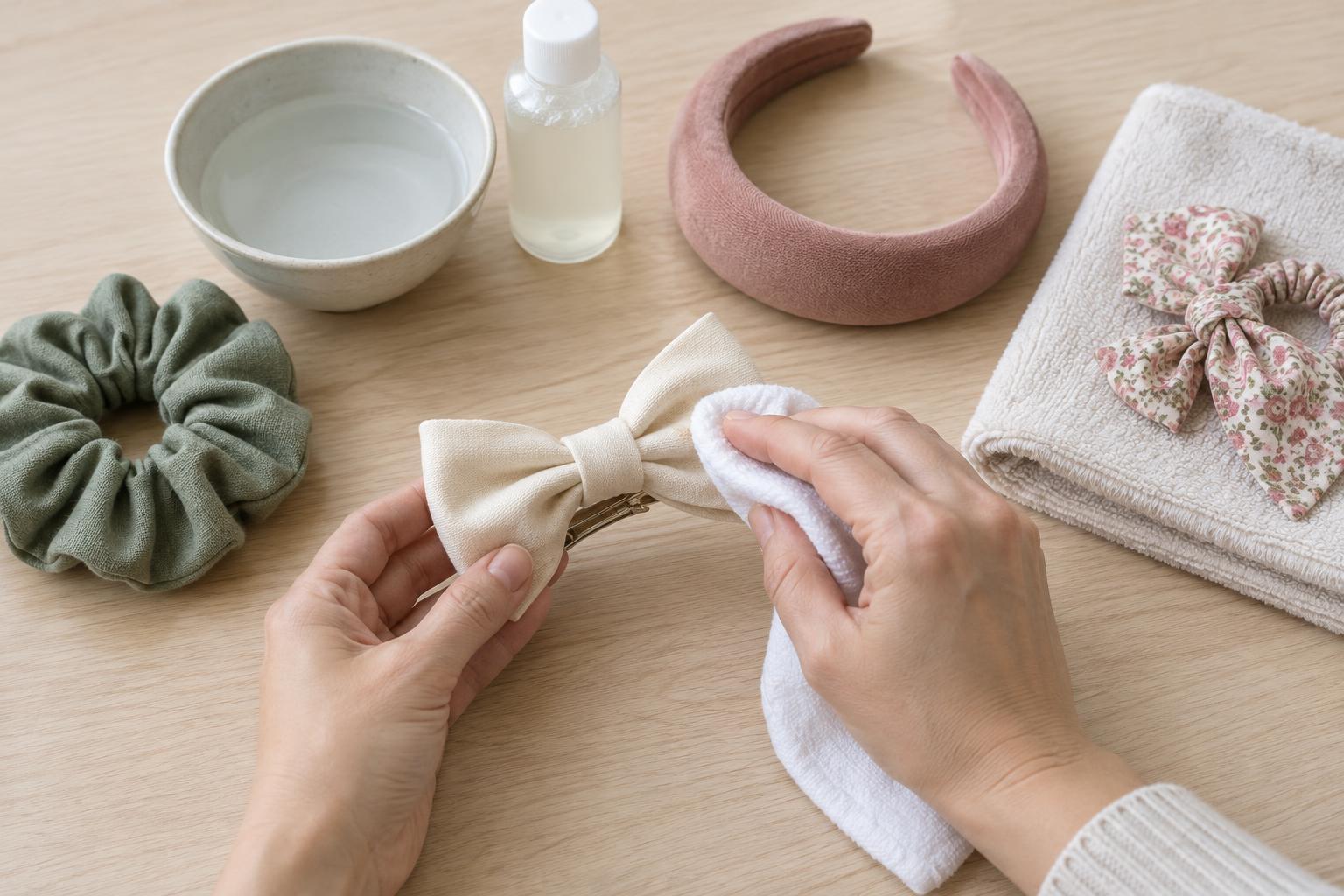
For a plain cotton or polyester scrunchie without fragile trim, fill a bowl with cool water and add a small amount of mild detergent. Swish the accessory gently, then press the fabric between your fingers where it needs cleaning. Avoid vigorous rubbing or stretching the elastic. Rinse in cool water until the detergent is removed; residue can leave fabric stiff or attract dirt.
Do not wring a scrunchie or twist a fabric tie to remove water. Instead, press it between clean towels. Smooth gathered fabric around the elastic while it is still damp so that one section does not dry bunched up. A washable, unpadded fabric headband can be treated similarly, but keep any glued join or metal end out of the water where possible. If you cannot tell whether its inner band or adhesive tolerates soaking, use spot cleaning instead.
Machine washing may be convenient, but agitation and spinning can pull seams, stress elastic and bend attached parts. Even when the outer fabric is washable, hand-washing gives you more control over the accessory’s shape.
Spot-clean structured bows, padded bands and covered clips
For a structured accessory, mix a little mild detergent with cool water and apply the solution with a clean cloth rather than pouring it over the item. Dab the stained area from the outside towards the centre. Follow with another cloth lightly dampened with plain water to remove the detergent, then blot with a dry towel. Work slowly so the backing, padding and clip mechanism do not become saturated.
Keep water away from glued seams, metallic finishes and decorative stones as much as you can. A soft, dry brush can help remove dust from textured fabric before you use a damp cloth. Do not scrape a stain with a fingernail or stiff brush: it may roughen the fibres or lift a covering from its base. If the fabric develops a ring as it dries, further wetting may make the mark more noticeable rather than fix it.
Dry gently and restore the shape
Heat and tension can cause more trouble than the wash itself. Lay a damp accessory on a dry towel in a well-ventilated spot, away from direct heat and strong sunlight. Reshape bows by arranging their loops and tails; straighten a fabric-covered band without forcing it wider or narrower. Turn a scrunchie occasionally so its gathers dry evenly. Avoid a tumble dryer, radiator or hot hairdryer unless the maker specifically recommends one.
Give padded pieces extra time to dry before wearing or storing them, since the surface can feel dry while the interior remains damp. Check that metal clips are dry too, especially around springs and hinges. If a washable fabric looks creased, try smoothing it with your fingers first. Direct ironing can flatten padding, damage elastic or affect glue, so do not apply an iron to an assembled accessory unless its care instructions clearly allow it.
Make cleaning easier between wears
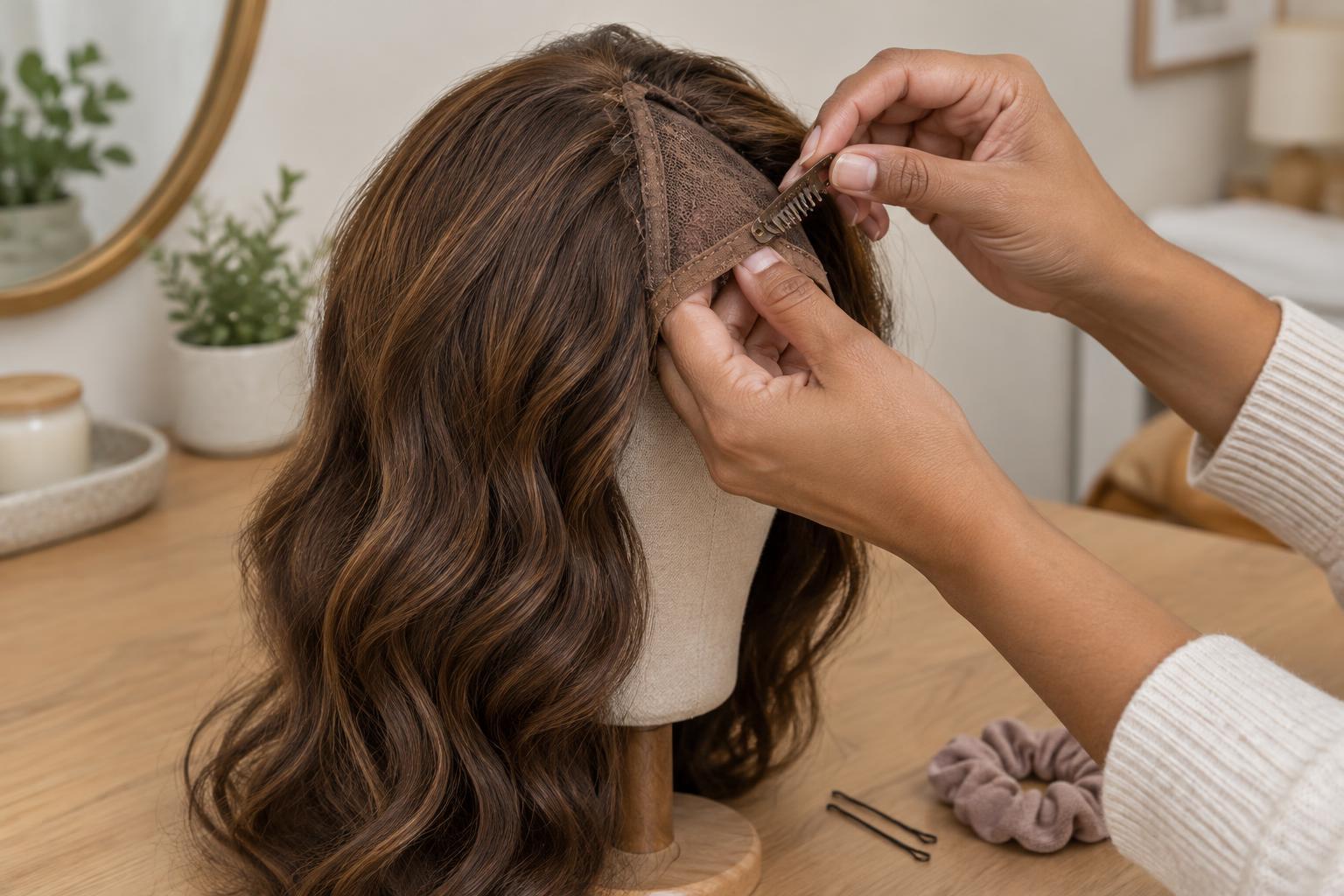
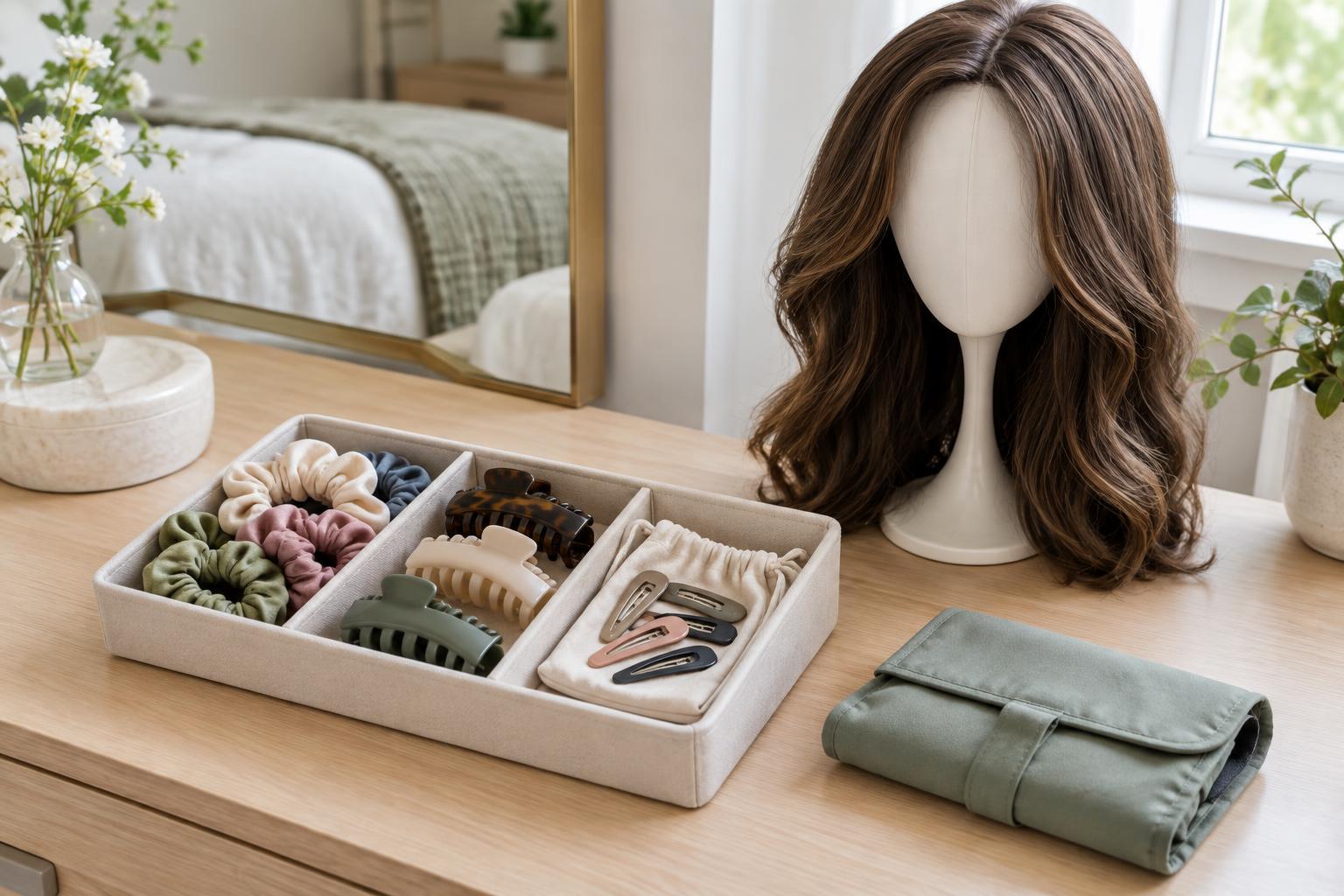
Removing light soil promptly reduces the need for repeated deep cleaning. After wearing an accessory with a wig or hairpiece, let it air out and wipe away any visible product residue before putting it away. Styling sprays and oils can build up on fabric even when the accessory looks clean. Store bows and padded bands where they will not be crushed, and avoid leaving scrunchies stretched around thick objects for long periods.
Choose the method that suits the whole accessory, not just its outer fabric. When in doubt, a careful spot clean, thorough air-drying and gentle reshaping are usually more controlled than soaking or heat. If an item has special value or an uncertain construction, follow its maker’s instructions or seek an appropriate specialist cleaner rather than testing an aggressive treatment on it.