Start with everything you normally wear
A wig can feel comfortable on its own and cramped once glasses or hearing aids are added. Bring your usual frames and devices to a try-on, or keep them nearby when testing a wig at home. If you switch between pairs of glasses, try the pair with the thickest arms as well as the one you wear most often. Pay attention to the space above and behind each ear, where wig tabs, glasses arms and hearing-aid components may meet.
Notice how the combination feels after more than a quick glance in the mirror. Turn your head, look down, smile and take the wig off and on. Mild unfamiliarity with a new wig may settle as you learn its placement, but pinching, persistent rubbing or a device being pushed out of position are reasons to adjust the fit or consider another cap. Comfort matters more than making the wig sit at a particular point on your forehead.
Check cap size and the areas around the ears
Choose a cap using the seller’s measuring guide rather than relying only on labels such as small or average. Head circumference is a starting point; the distance from the front hairline to the nape and the shape around the temples also affect where a wig settles. A cap that is too small may pull its sides upward or press them against glasses. A cap that is too loose may shift as you move, even if its ear areas feel roomy.
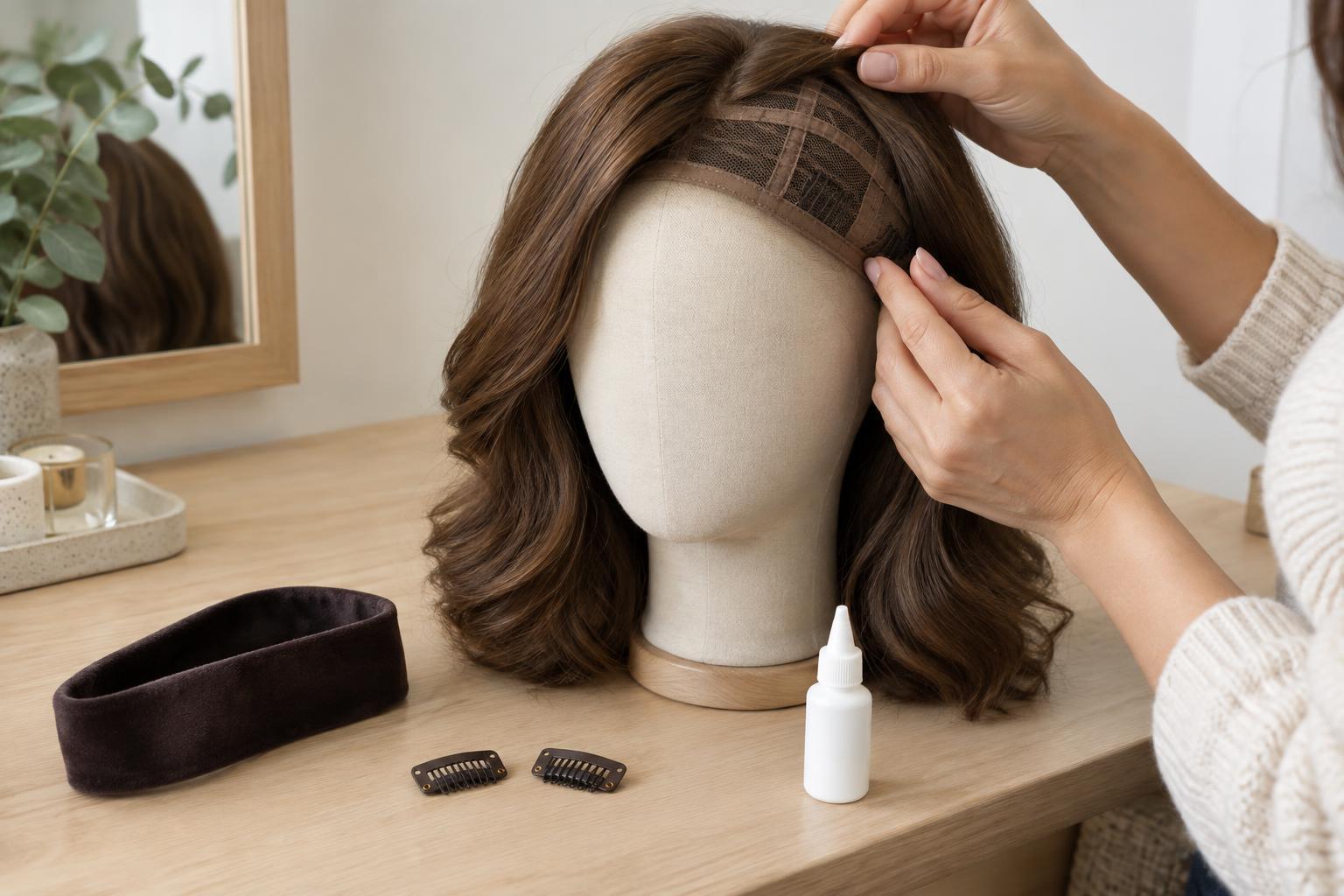
Look closely at ear tabs and side panels. They should lie near the temples without folding over a glasses arm or resting hard against a hearing aid. Adjustable straps can help fine-tune a cap, but tightening them is not a substitute for the right size. If a wig has clips, combs or other fasteners, check that none sits where it could catch a frame or device. A smooth lining and flatter seams may feel preferable if you are sensitive to pressure.
Compare constructions without assuming one will suit everyone
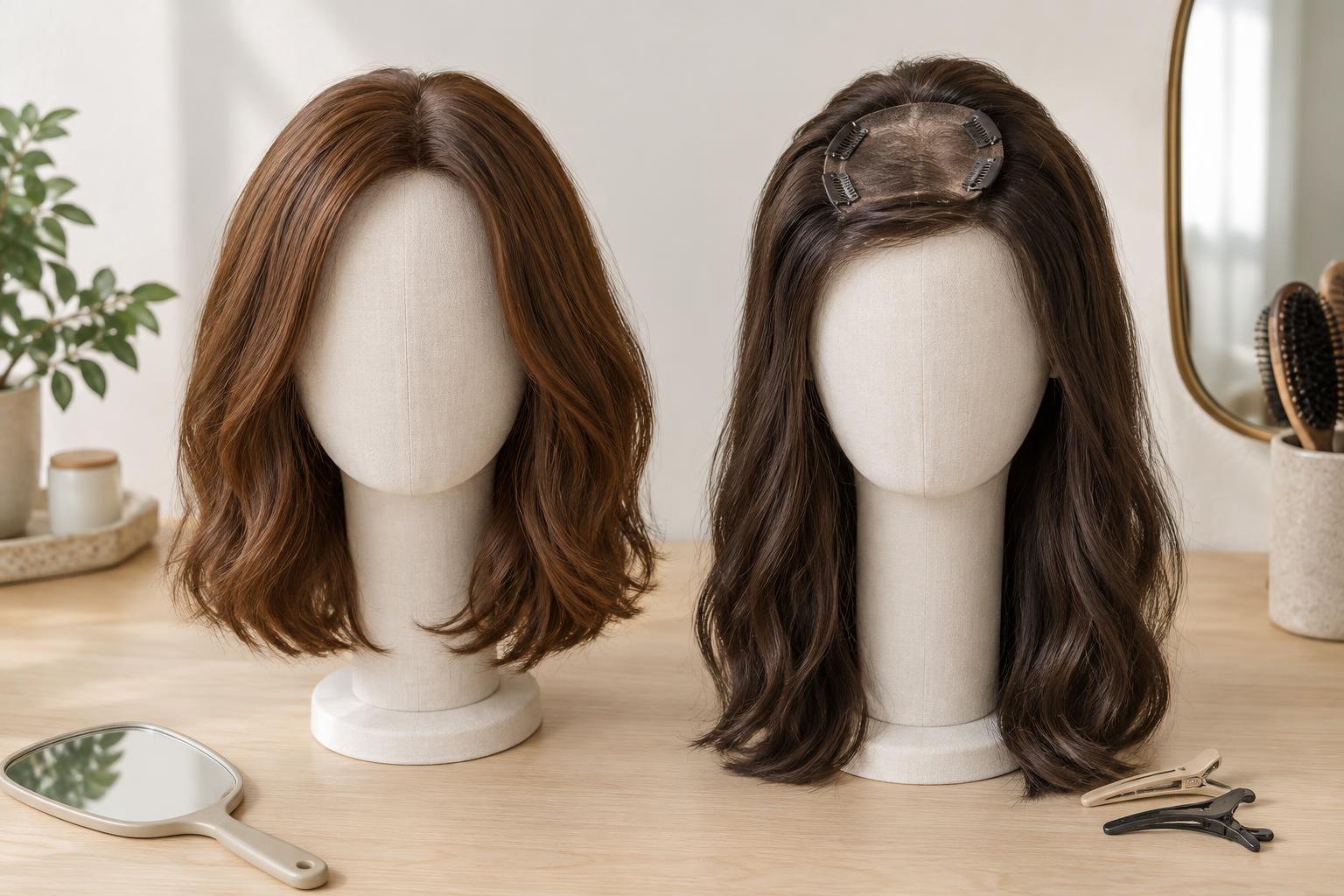
Different wig constructions distribute bulk differently. A dense wefted side panel may feel noticeable above the ear, while a thinner or more flexible area may leave more room for glasses arms. Lace-front and monofilament features mainly describe how parts of the hairline or top are made; they do not, by themselves, guarantee a comfortable fit beside the ears. Ask for clear photos of the cap’s inside and sides, especially when shopping online.
Consider hair density and cut alongside cap construction. Very full hair at the temples can make it harder to see whether an ear tab is lying flat, while a style with less bulk there may be easier to arrange around frames. If you prefer to tuck hair behind your ears, check how the wig looks and feels when tucked. You need not choose a short style: the useful question is whether the hair and cap stay comfortable in the way you intend to wear them.
Test the wearing order and make small adjustments
There is no single wearing order that works for every combination. Some people find it easier to settle their hearing aids first, then place the wig carefully around them; others prefer to position the wig before putting on glasses. Try a few sequences without forcing a glasses arm beneath a tight tab or moving a hearing aid simply to hide it. Once everything is in place, check that glasses sit level and that a hearing aid remains in its usual position.
Adjust one thing at a time. You might ease an adjustable strap, reposition an ear tab or change where hair falls over a frame. If you use a wig grip or cap underneath, test the full combination: an extra layer can improve security for some wearers but add unwanted thickness for others. Avoid adhesives or fasteners close to a device unless you are confident they will not interfere with it or irritate your skin. If a hearing aid becomes uncomfortable or seems to work differently, leave its fitting unchanged and seek guidance from your hearing-care provider.
Use a realistic try-on to make the final choice
Before keeping a wig, wear it with your everyday accessories for a short period in a safe, relaxed setting. Walk around, sit down and repeat the movements that usually make your glasses slide or your wig shift. Check for pressure points when you remove everything. The most useful fit is one you can reproduce without repeated tugging or careful balancing.
When ordering online, read the cap measurements, adjustment details and returns policy before purchase. If available, ask the seller about the ear-tab material and whether side views of the cap can be provided. Choosing a wig for glasses or hearing aids is less about finding a special label than finding enough room, a stable fit and a style you enjoy wearing together with the items you already use.