Start with an ordinary day, not a special occasion
A wig can look ideal in a photograph and still feel inconvenient by the end of a typical day. Before choosing a length, picture when and where you will wear it most often. Do you want to put it on quickly before leaving home, or do you enjoy setting aside time to style it? Will you be at a desk, outdoors, commuting or moving around frequently? The answers matter more than any rule about which length suits a particular face shape.
Think about the clothes and accessories you reach for regularly. A collar, scarf, bag strap or coat hood may rub against hair that falls over the shoulders. If you often wear headphones, consider where the hair will sit around them. None of these details rules out a longer wig; they help you decide whether you would be happy adjusting it during the day.
Compare what each length asks of you
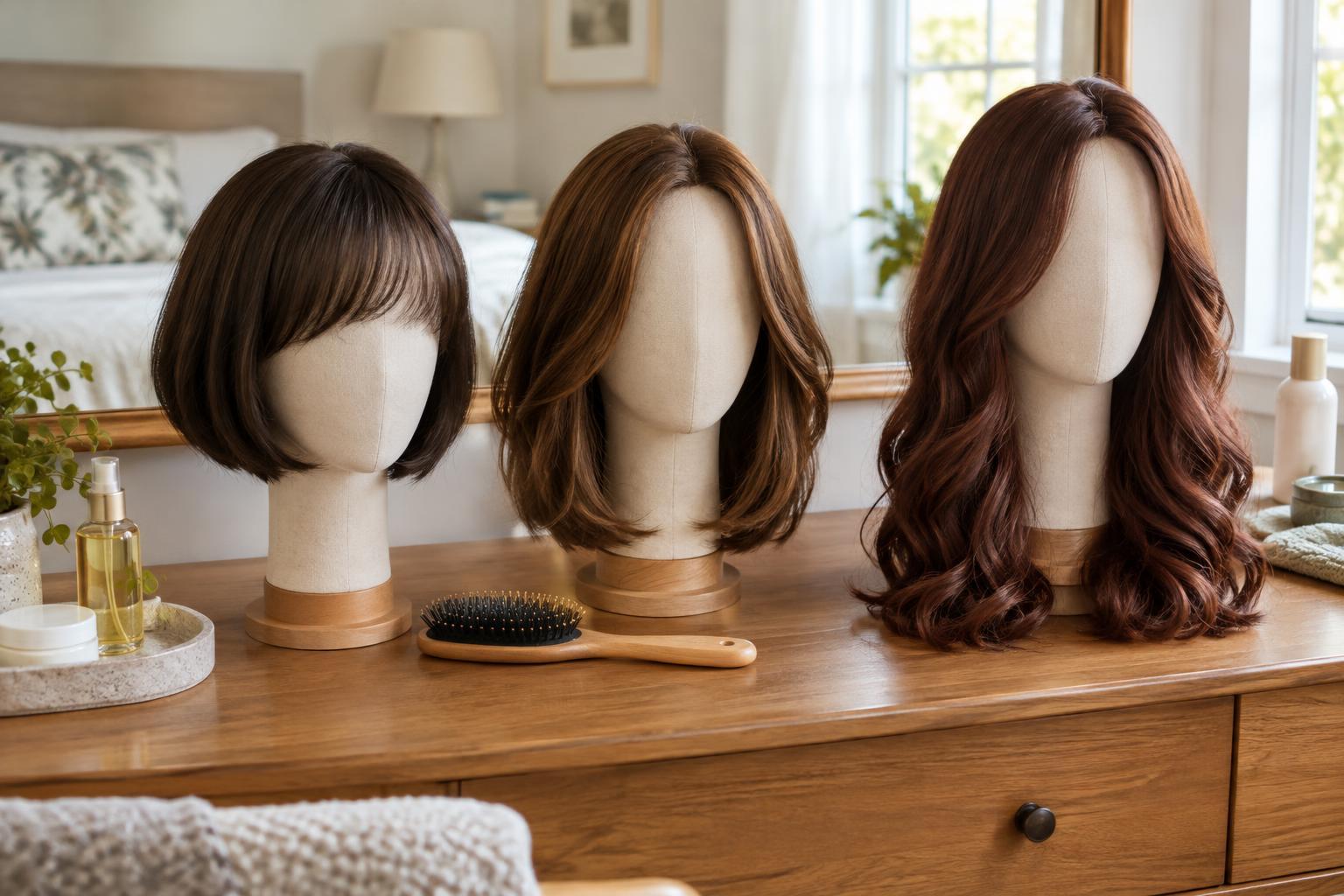
Short wigs, such as cropped cuts and styles that end around the jaw, keep hair away from collars and bags. They can be convenient when you want a quick routine, though a shaped cut may still need a little attention to sit as intended. Check the view from the sides and back as well as the front: shorter styles leave less length to reposition if you would prefer more coverage around the ears or nape.
A mid-length wig, from roughly chin to shoulder level, can offer room to change the parting or tuck hair back without giving you a great deal of hair to manage. Shoulder-length ends may brush against clothing, so pay attention to how the style behaves when you turn your head. If you like the option of tying hair back, check the wig’s construction and the amount of hair at the nape rather than assuming every mid-length style will make a comfortable ponytail.
Long wigs offer more scope for braids, updos and other changes of style, but they also give you more length to detangle and keep clear of friction. A loose long style may need tidying after a windy journey or a day against a coat. If you love the look but want a simpler routine, consider how often you would actually wear it loose and whether a shorter everyday option would be useful alongside it.
Understand what a length label can and cannot tell you
Wig listings commonly describe length in inches, but the number may refer to hair measured when straight rather than where the finished style falls on a person. Curls and waves can make the visible length look shorter. Layers also change the outline: a wig with long pieces at the back may have much shorter hair around the face. Your height, neck length and the position of the wig on your head can affect where the ends appear to land.
Use the stated measurement as a starting point, then look for front, side and back views of the wig being worn. Check whether the product description explains how length is measured. If possible, compare the listed measurement with a wig or hairstyle you already know. The question is not simply “How many inches?” but “Where will the hair fall, and what will it touch while I wear it?”
Factor in fibre, density and fit
Length is only part of the wearing experience. A full, dense long wig can feel and move differently from a lighter style of the same length. Synthetic and human-hair wigs also have different care and styling requirements; neither fibre makes a particular length automatically effortless. Read the maker’s care and heat-styling guidance before planning a daily routine around curling, straightening or washing.
A secure, comfortable fit matters at every length. If a wig shifts when you move, extra length may make that movement more noticeable or tempt you to keep adjusting it. Check the size guidance and adjustment features, and try the wig on with the cap positioned as you intend to wear it. Move your head, put on a coat and sit down if you can. These small tests reveal more about everyday comfort than standing still in front of a mirror.
Make a choice you can live with
If you are torn between lengths, start with the one that suits the days you have most often, not the most elaborate outfit you can imagine. Decide what you are willing to do each time you wear the wig: brush or gently detangle it, arrange the front, secure hair away from your face, or leave it largely as it is. Then allow time for the care the style needs between wears, including appropriate storage.
When shopping, confirm the finished style, return conditions and care instructions before removing any tags or making changes. If trying on is possible, notice how the length feels after you have worn it for a while, not just at first glance. The right choice is not necessarily the shortest or easiest wig. It is a length whose appearance you like and whose day-to-day demands fit comfortably into your life.