What lace colour is meant to match
On a lace-front or full-lace wig, individual hairs are attached to a fine mesh. Where that mesh sits against your forehead or parting, its colour can affect how visible the wig looks. The aim is usually for the lace to blend with the skin beneath it, especially at the hairline. It does not need to match the hair colour, and it may not need to match your face perfectly if your forehead or scalp appears a little different.
Lace is translucent rather than fully invisible. Its appearance depends on the mesh colour, the amount of lace, the way the hair is attached and what sits underneath it. A shade that looks right against your hand may look different on your forehead. Treat shade names such as light, medium, brown or transparent as starting points, not universal colour standards: sellers may use the same name for noticeably different lace.
Compare depth and undertone separately
Begin with depth: is the lace lighter, darker or close to the skin where you intend to wear it? Lace that is much lighter can look pale or grey against the forehead, while lace that is much darker can leave a visible band. A close match in depth is a useful first filter, but it is not the whole decision.
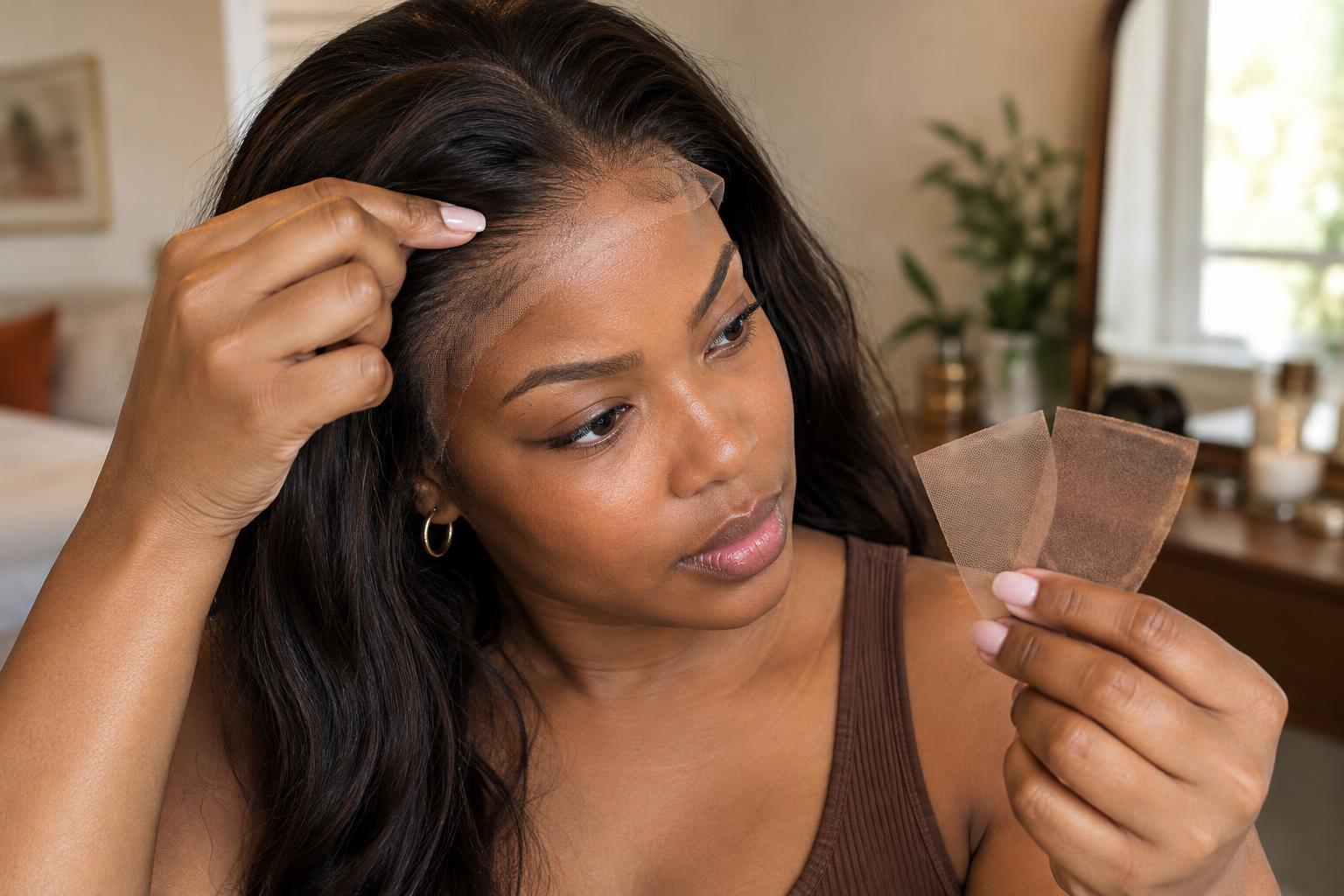
Next, look at undertone. Some lace appears pink, peach, golden, olive or neutral even when its overall depth seems right. Hold a small piece of lace flat against your forehead, if possible, and check whether it seems to take on the colour of your skin or casts a contrasting tint. Skin tone varies within every complexion group, so choosing by a broad label alone is less reliable than comparing the material against your own skin.
Test lace where and how you will wear it
Compare samples or the wig itself in indirect daylight and in the indoor lighting you commonly use. Bright shop lights, warm lamps and phone screens can change how a shade appears. Look straight on and from the side, with the lace lying flat rather than bunched up. If you plan to wear the wig without adhesive, test it that way; if you normally use a wig cap, include the cap in your comparison.
Notice where the lace will remain visible after fitting. Many lace-front wigs arrive with extra mesh beyond the hairline, which is normally trimmed during preparation. Judge the colour close to the hairs rather than relying only on the loose outer edge. Do not trim a wig you might return: first check the seller’s policy and complete any shade comparison while the item is still in its original condition.
Understand how other details change the result
Lace colour is only one part of a convincing blend. A cap or your natural hair beneath the lace can show through it, particularly along a parting. The density of the hairline, the visibility of knots and how evenly the lace lies against the skin can also draw the eye. If two lace shades both look plausible, a well-fitting wig with a comfortable, flat hairline may be the more useful choice.
Transparent lace is often described as versatile, but it may still look pale on some skin tones. Tinted lace can reduce that contrast, though a premade tint may not suit every undertone. Product photographs are helpful for narrowing options, not proof of how the lace will look on you. If samples are available, comparing the actual material is more informative than choosing from a name or photograph alone.
Make adjustments cautiously
If a wig is close but not quite right, temporary lace tint products or a small amount of complexion makeup may help adjust its appearance. Test any product on an inconspicuous area first and follow its directions. Too much product can collect in the mesh, transfer onto skin or clothing, or make the hairline more noticeable. Keep products away from the hair where possible and clean the lace according to the wig maker’s care guidance.
Avoid treating colour correction as a substitute for fit. Lace that lifts, folds or pulls against the hairline is likely to remain visible even in a good shade. Choose the closest comfortable match you can find, view it under your everyday conditions and make changes gradually. A natural-looking result does not require the lace to disappear under close inspection; it should simply feel comfortable and look balanced in the settings where you plan to wear the wig.