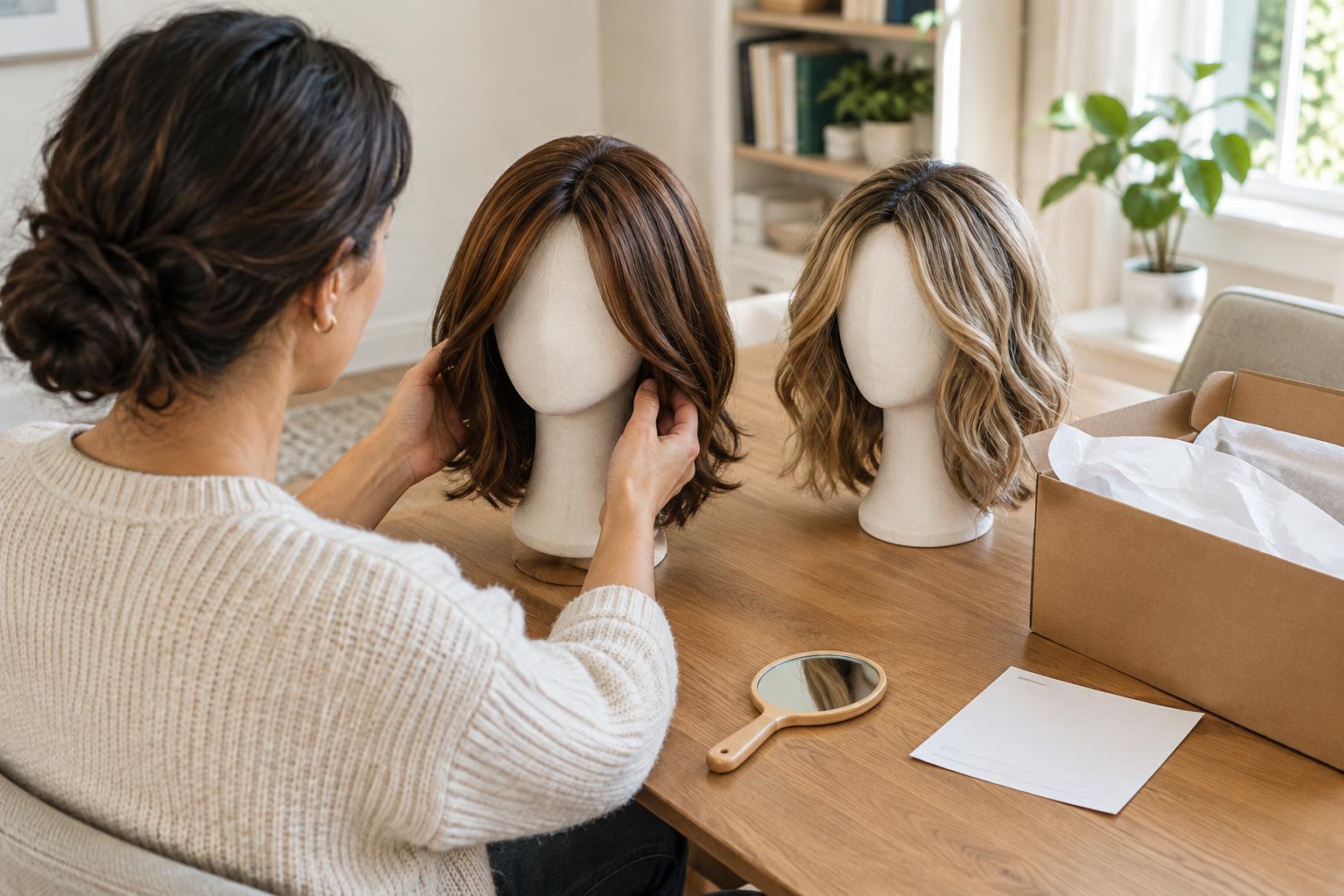
Start with how and where you will wear it
Before setting a spending limit, picture an ordinary week in your wig. Will you wear it for a few hours occasionally, or most days? Do you want something you can put on quickly, or are you happy to spend time arranging a lace front? These choices affect both the wig you buy and the supplies you may need alongside it.
Write down your total amount available, then divide it into three parts: the wig itself, the items needed to wear and care for it, and a small reserve for adjustments or surprises. Keeping that reserve separate makes it easier to judge whether an attractive wig is actually within budget. If your budget is tight, prioritise a comfortable fit and a style you can manage over features you may not use.
Compare the full cost of different wigs
Synthetic wigs often cost less upfront and may hold their intended style after washing, but they can have limits on heat styling. Human-hair wigs generally offer more styling flexibility, while often costing more and needing more hands-on care. Neither material is automatically the better first choice: think about the look you want, the time you can give to upkeep and the maker’s care instructions.
Construction matters too. A basic cap, lace front and more extensively hand-tied cap can differ in appearance, feel and price. You do not need to pay for the most elaborate construction to find a wig you enjoy wearing. Compare specific features rather than relying on labels such as “natural-looking” or “premium.” Check whether the listed price includes the pictured styling, a fringe trim or any other work you would otherwise need to arrange.
When comparing sellers, include delivery costs and read the return policy before ordering. Some wigs can only be returned unworn and with their original packaging or tags intact. Knowing the conditions in advance is especially useful if you are choosing a colour or cap size from photographs.
Make room for fit and personalisation
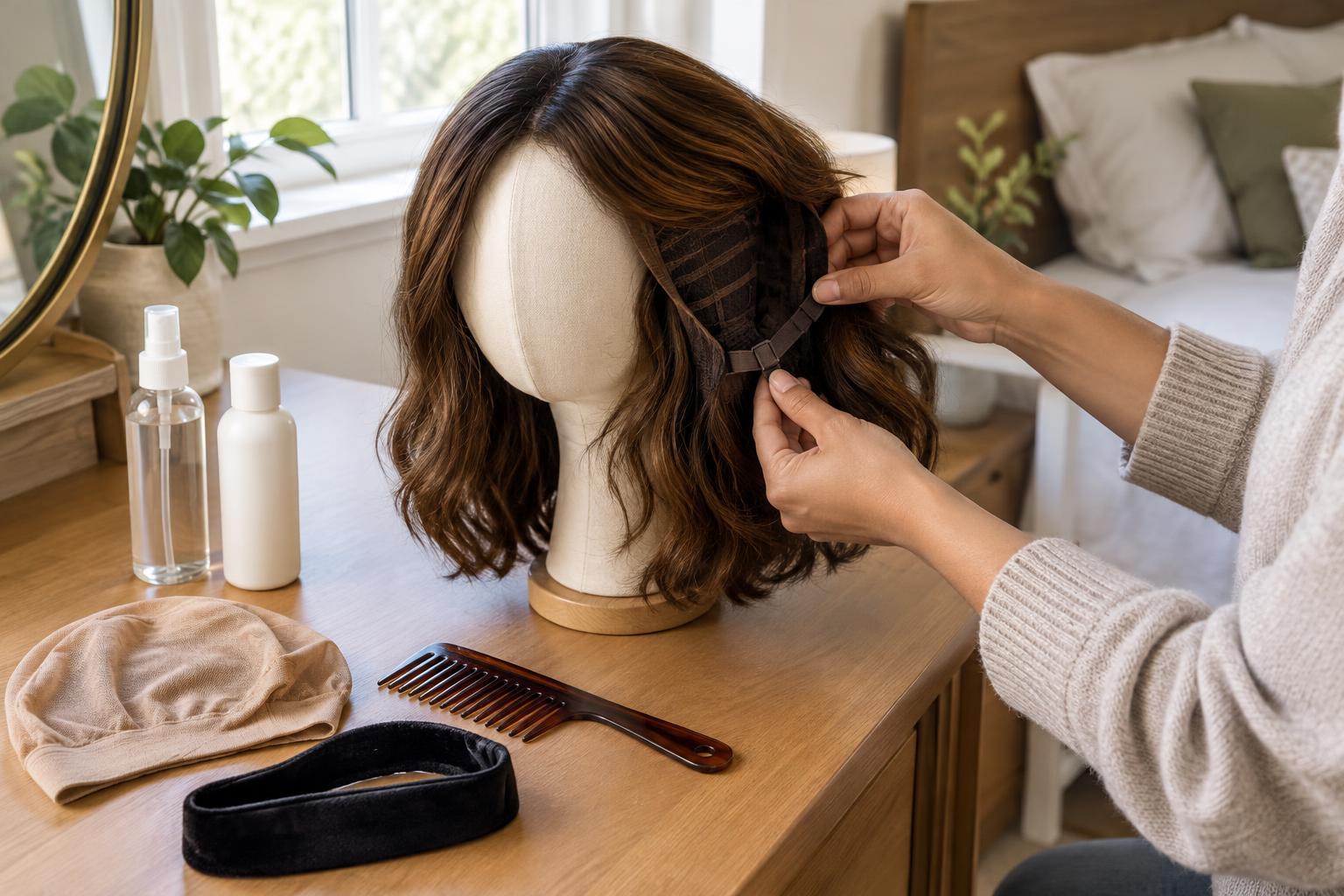
A wig that stays comfortably in place is worth more to you than a cheaper one you avoid wearing. Measure your head using the seller’s guide rather than assuming that “average” will fit. Look for information about cap circumference, adjustable straps and whether the cap has room for your own hair. If you can try wigs on, notice pressure points and movement as well as how the style looks in a mirror.
Set aside some of your budget if you expect to need a fringe cut, thinning or other small alteration. Ask what a fitting appointment includes and whether any changes cost extra. Cutting a wig is difficult to reverse, so it is reasonable to wear it at home first, within the return conditions, before committing to alterations. If a cap feels persistently uncomfortable, styling changes are unlikely to solve the underlying fit problem.
Buy wearing essentials selectively
You may not need a large starter kit. Depending on your hair, scalp comfort and the wig’s construction, useful basics might include a wig cap, a suitable brush or wide-tooth comb, and a simple place to set the wig while it dries. A stand can be convenient, but a clean, well-ventilated drying setup that supports the cap may be enough to begin with.
Grip bands, clips, tape and adhesive are options, not universal requirements. Some wigs stay secure with their built-in adjustment; other wearers prefer an additional method. Check that any clips have hair to attach to comfortably, and follow product directions if using adhesives. Buy one approach to try rather than several at once. For daily wear, consider whether a second wig cap or other small duplicate would make washing and wearing easier.
Plan for care, then leave space to learn
Allow for products suitable for your wig’s fibre, particularly a cleanser and any conditioner or detangling product recommended by its maker. You may also need a towel and a safe storage spot away from excess heat and direct sunlight. Follow the wig’s washing and heat-styling guidance: an ordinary hair product or hot tool is not automatically suitable for every wig.
Maintenance costs depend partly on how often you wear the wig and how gently you handle it. Friction at the nape, frequent restyling and heavy product use can affect how long it looks its best. Rather than guessing an exact replacement date, keep a little of your budget available for future care or repairs. After a few weeks of wearing, you will have a clearer idea of what helps you and what you can skip. A thoughtful first purchase is not a complete collection; it is a comfortable starting point.