Start with what bothers your scalp
A sensitive scalp is not the same experience for everyone. You might notice itching where a seam sits, pressure behind the ears, warmth across the crown or discomfort from tape and other products. Before comparing wigs, think about where the sensation occurs and how soon it begins. Those details can help you identify a feature to avoid rather than assuming that every wig will feel alike.
If you already own a wig, check it after removing it. Look for folded fabric, rough stitching, clips that press into one spot or an adjustment strap pulled too tightly. A cap that shifts can also create friction even when its fabric feels soft in your hand. Treat comfort as a combination of material, construction and fit.
Feel the parts that will touch your skin
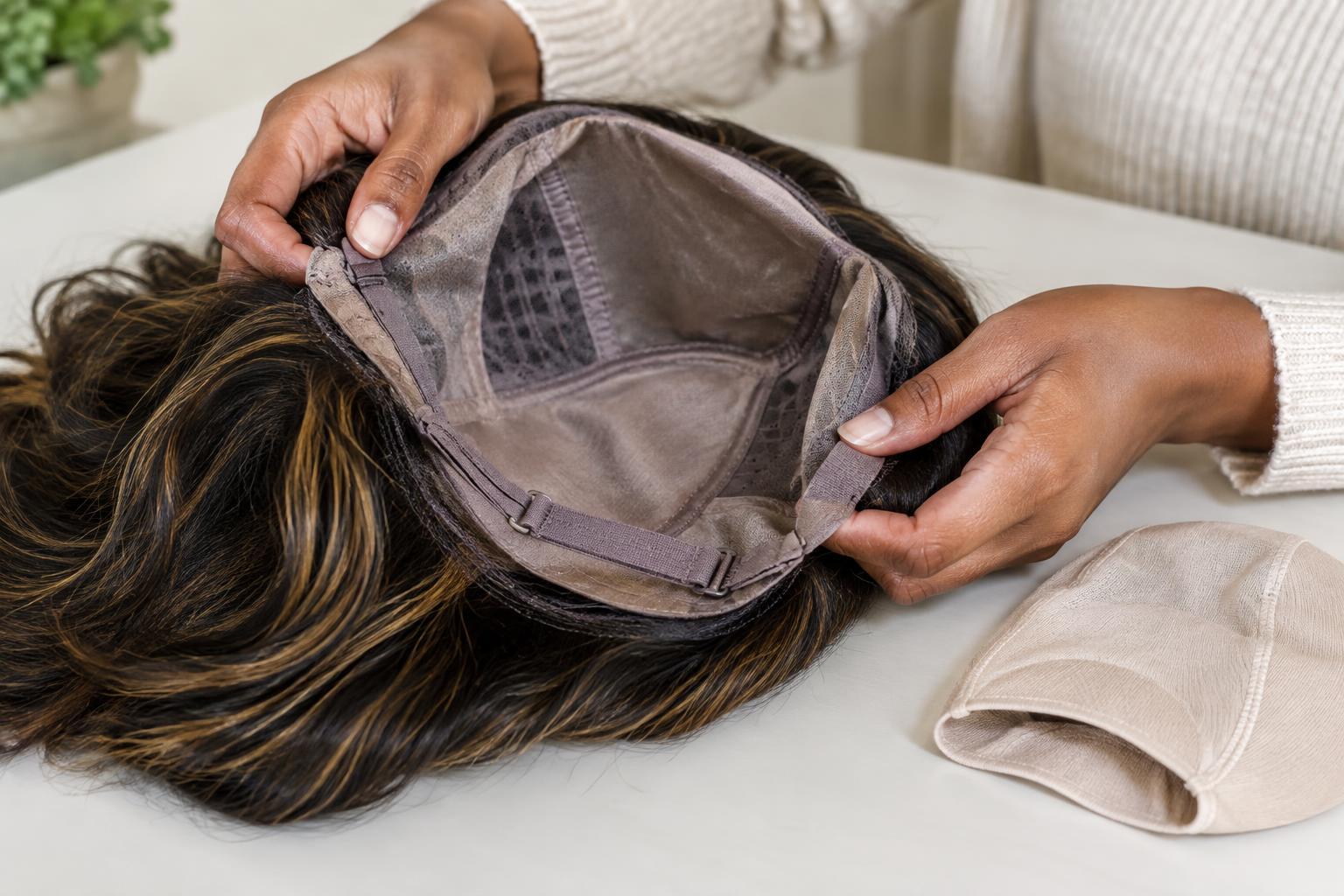
Turn a wig inside out to inspect the cap. Run your fingers along the hairline, crown, ear tabs, nape and any joins between panels. Look for exposed knots, stiff edges, raised seams or labels that could rub. A lining may cover some of these details, but check where it ends: an otherwise smooth cap can still have an uncomfortable edge at the front or behind the ears.
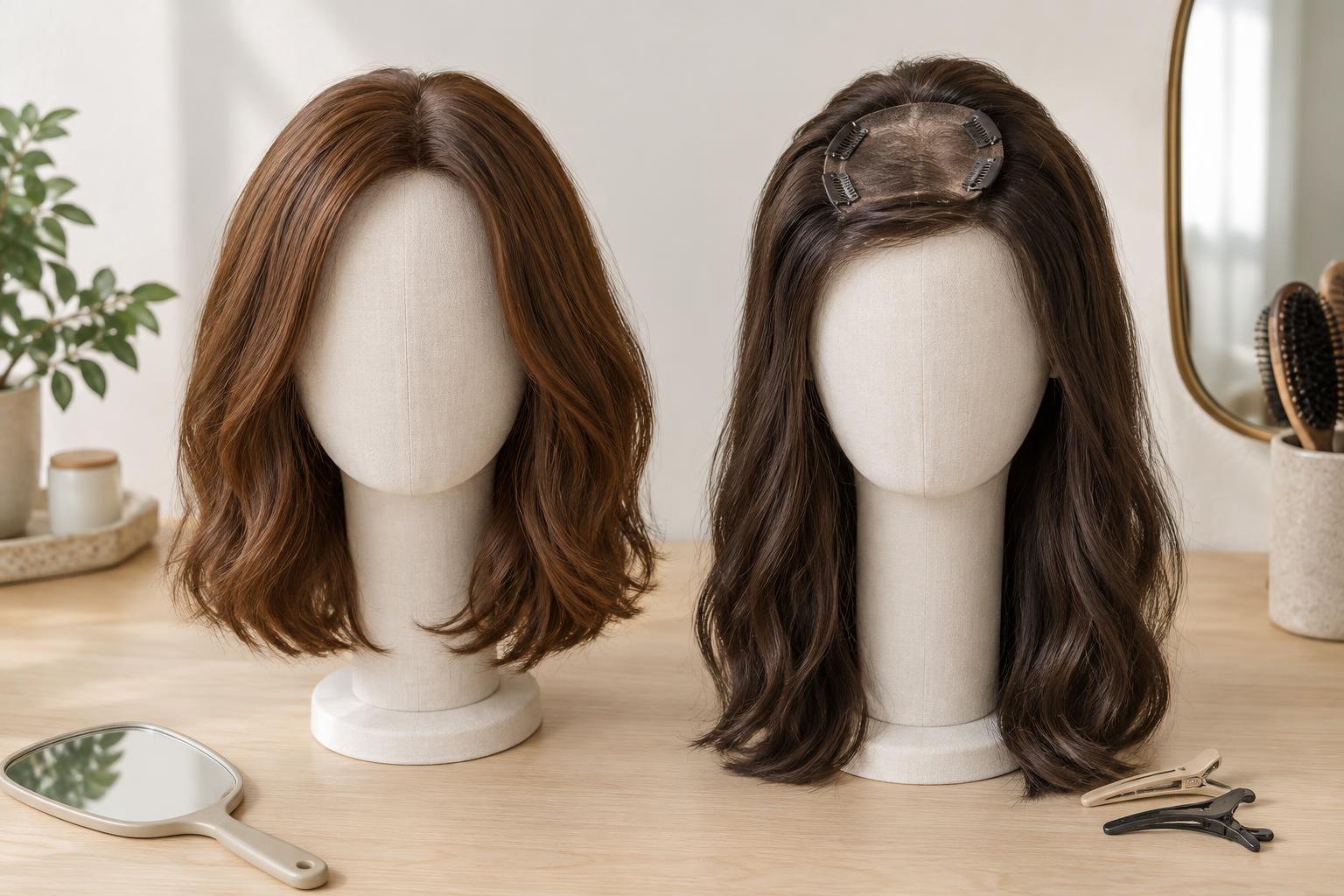
Cap terms describe construction, not a guaranteed level of comfort. Lace can offer a fine-looking hairline but may feel textured at its edge. Monofilament sections can give the appearance of hair growing from the scalp, while their borders may feel different from the centre. Wefted caps have rows of hair attached to a base, often leaving open spaces for airflow; their bands and stitching still need checking. Polyurethane areas are often used for grip or attachment and may feel warmer or less flexible to some wearers. The best choice depends on how the finished cap feels against your own scalp.
Compare linings without relying on labels
A soft wig liner or cap can place a layer between your scalp and the wig. Options include smooth, stretchy fabrics and more absorbent materials. The useful questions are whether the liner stays flat, covers the areas that bother you and adds too much bulk. A liner that bunches beneath the wig may cause more pressure than it solves.
Be cautious with words such as “gentle” or “hypoallergenic.” They do not tell you whether a particular fabric, dye, coating, elastic or adhesive will suit you. If a product listing does not identify the material or show the inside of the cap, ask for those details before buying. If you know that a particular product irritates your skin, check care and material information rather than assuming it is absent.
Check fit before judging softness
Measure your head according to the seller’s guide, then compare the result with the wig’s stated size and adjustment range. A snug wig should feel secure without needing its straps tightened to their limit. Pay particular attention to the temples, ear tabs and nape, where pressure can become noticeable during wear. A wig that feels comfortable for a minute may feel different after you have moved your head, spoken and worn it for longer.
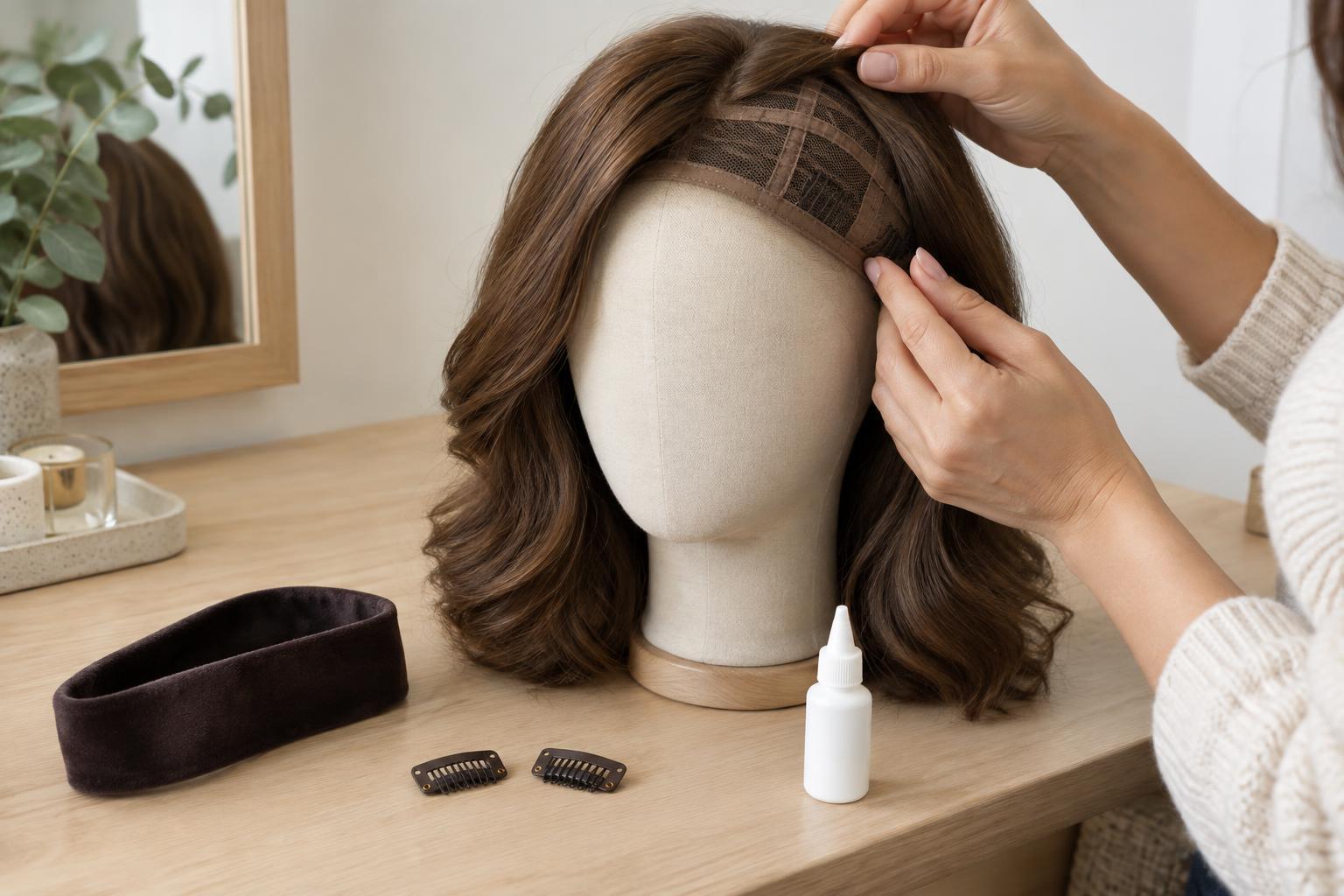
When trying on a wig, begin with clean, dry skin and a cap or liner you would realistically wear. Adjust one feature at a time so you can tell what changes the feel. Check whether the wig slides when you turn your head; if it does, tightening is not necessarily the answer. A different cap size, grip method or style may sit more securely without concentrating pressure. Follow a shop’s hygiene rules when trying on items, and check its return conditions before purchase.
Make a short wear test part of the decision
If a try-on is possible, give yourself time to notice more than the mirror result. Sit, stand and gently turn your head. Ask yourself whether you can feel a particular seam or edge, whether the cap becomes warm and whether anything pulls when you move. Take note of both the location and timing of discomfort. That record makes it easier to compare two constructions or explain what you need to a retailer.
At home, follow the wig and liner care instructions: residue from styling products or detergent may affect how a cap feels. Let washed items dry fully before wearing them, and inspect the inside regularly for wear or roughened edges. If a wig repeatedly causes discomfort, take it off rather than trying to endure it. Persistent or significant scalp irritation is worth discussing with a healthcare professional; a different cap cannot address every possible cause.