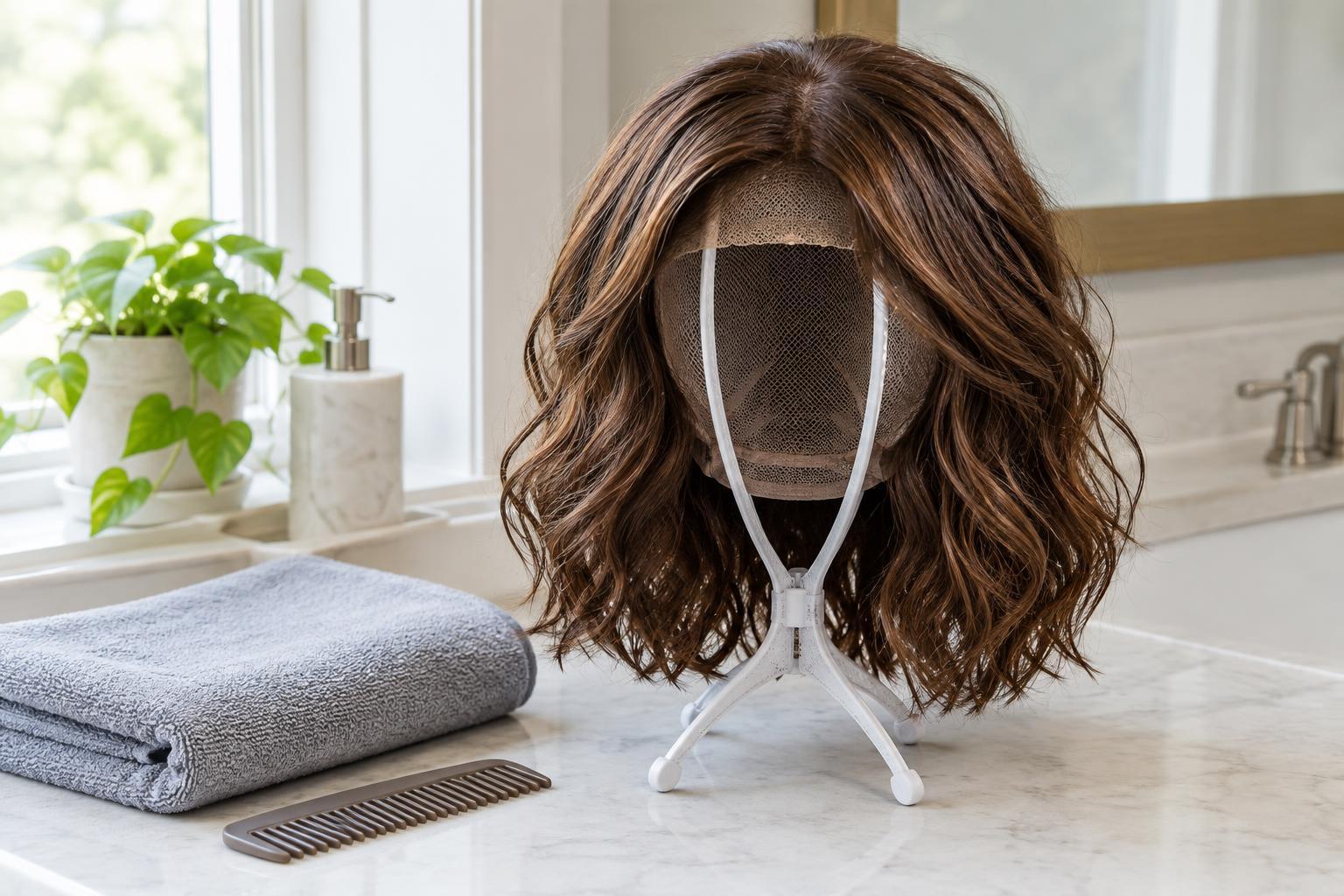
Start with how you wear it, not a fixed calendar
There is no single washing schedule that suits every wig. A piece worn for a few hours at a time and kept away from heavy styling products may stay fresh through many wears. One worn all day, close to the scalp, may need cleaning sooner. Treat a wash schedule as a starting point, then adjust it to the condition of the wig.
Note how often you wear the piece, whether you use a wig cap, and how much heat or activity makes you sweat. Weather, smoke, cooking smells and product use can also affect how quickly it needs attention. If the wig still feels clean, smells neutral and moves normally, it may not need a full wash simply because a certain number of days has passed.
Look for changes in feel, appearance and smell
The area beneath the wig is often the best place to check first. Examine the lining, ear tabs and nape for skin oils, sweat or product residue. A lace front may develop visible buildup where it meets the skin, particularly if you use adhesive. If a clean wig cap quickly picks up residue from the wig, that is another clue that cleaning is due.
The hair or fibres can offer clues too. A wig may look dull or feel coated when products accumulate. Strands that cling together, lose their usual movement or become harder to style may need washing. A lingering odour after the piece has aired out is a stronger signal than a brief smell picked up during the day.
Tangles alone do not always mean a wig is dirty. Friction against collars and scarves can cause tangling, especially at the nape. Try gentle detangling first. Washing a tangled wig without preparing it can make the knots harder to manage.
Why the wig’s material and construction matter
Synthetic fibres generally do not absorb scalp oils in the same way as human hair, but products, dust and residue can still collect on them. Human-hair wigs may need conditioning as part of their wash routine because the hair does not receive the same ongoing supply of natural oils as hair attached to the scalp. In either case, use products and water temperatures suited to the piece rather than your usual hair routine by default.
Construction matters as much as fibre. Delicate lace, hand-tied areas and decorative attachments call for careful handling. If you wear a bonded or glued wig, follow the adhesive and wig maker’s removal and cleaning guidance; do not assume it can be washed while attached or soaked like a removable piece. Check the care instructions before getting any wig wet, especially if its materials are mixed or unclear.
Try lighter upkeep between washes
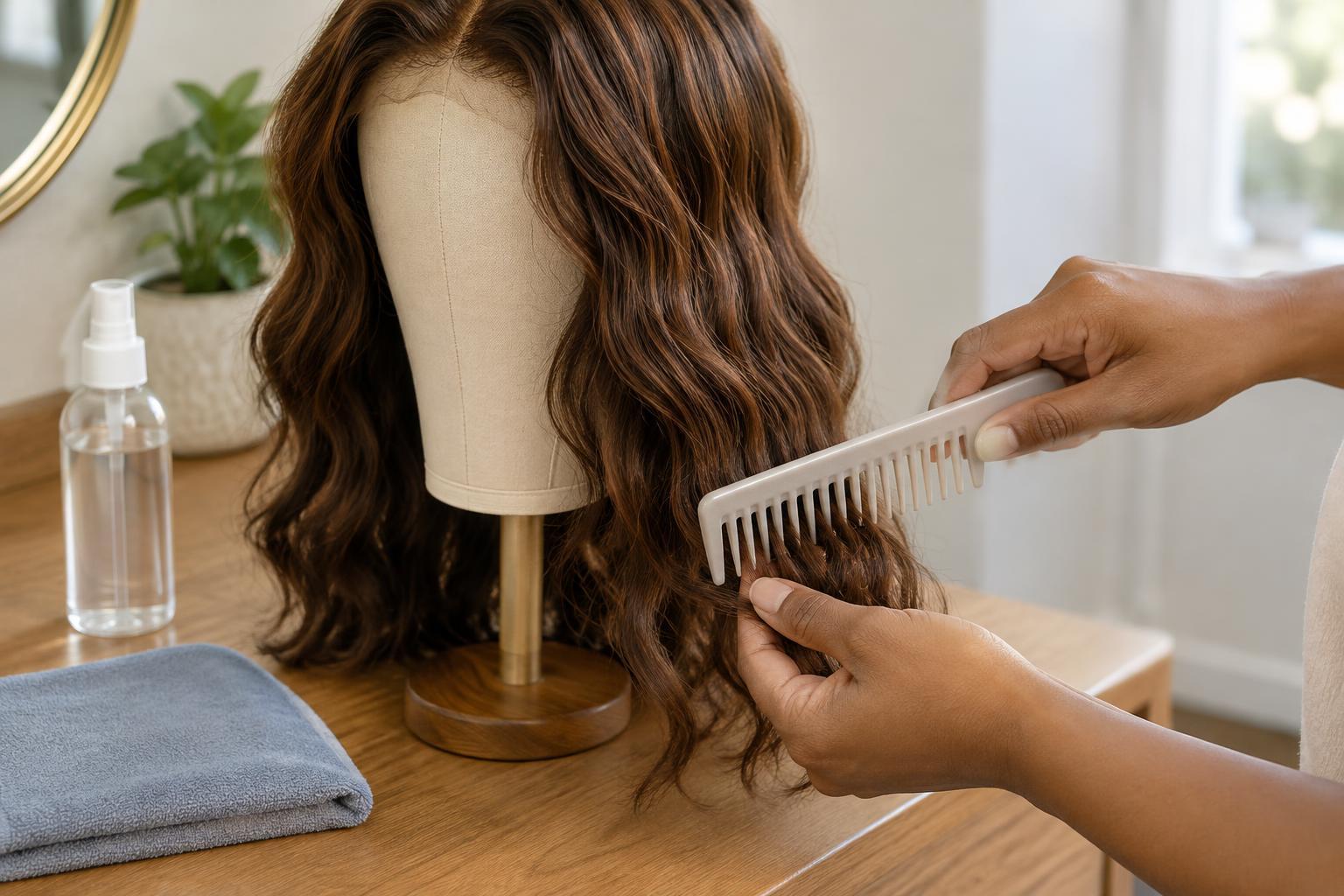
Not every sign of use calls for a full wash. After wearing, let the wig air out in a clean, dry place before putting it away. Gently detangle it with a suitable brush or wide-tooth comb, working from the ends upwards and supporting the hair near the cap. Clean or change a wig cap as needed so residue on the cap does not transfer back to the wig.
If residue is limited to an edge or a small area, check whether the maker recommends spot cleaning. Avoid repeatedly adding sprays to cover an odour or stiffness: layering more product can make buildup worse. When the lining or fibres feel broadly dirty, a full wash is usually more useful than another styling product.
Wash gently, then let it dry completely
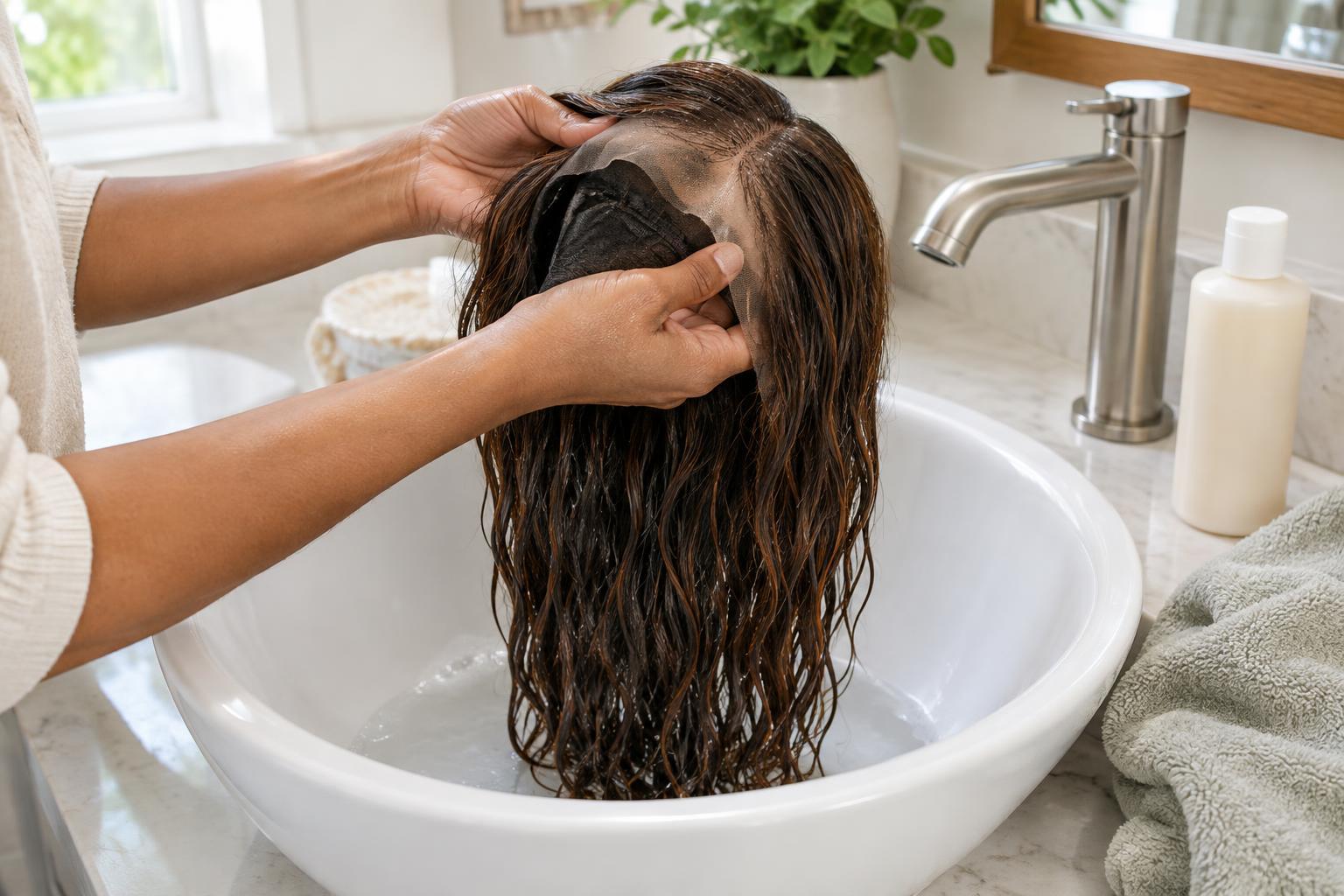
Before washing, detangle the wig and review its care label. Use a cleanser suitable for its fibre type, handle the cap gently and avoid scrubbing or twisting the hair. Rinse thoroughly, since leftover cleanser can leave strands feeling coated. Follow the maker’s directions for conditioner, particularly on synthetic fibres or lace areas where unsuitable products may cause buildup.
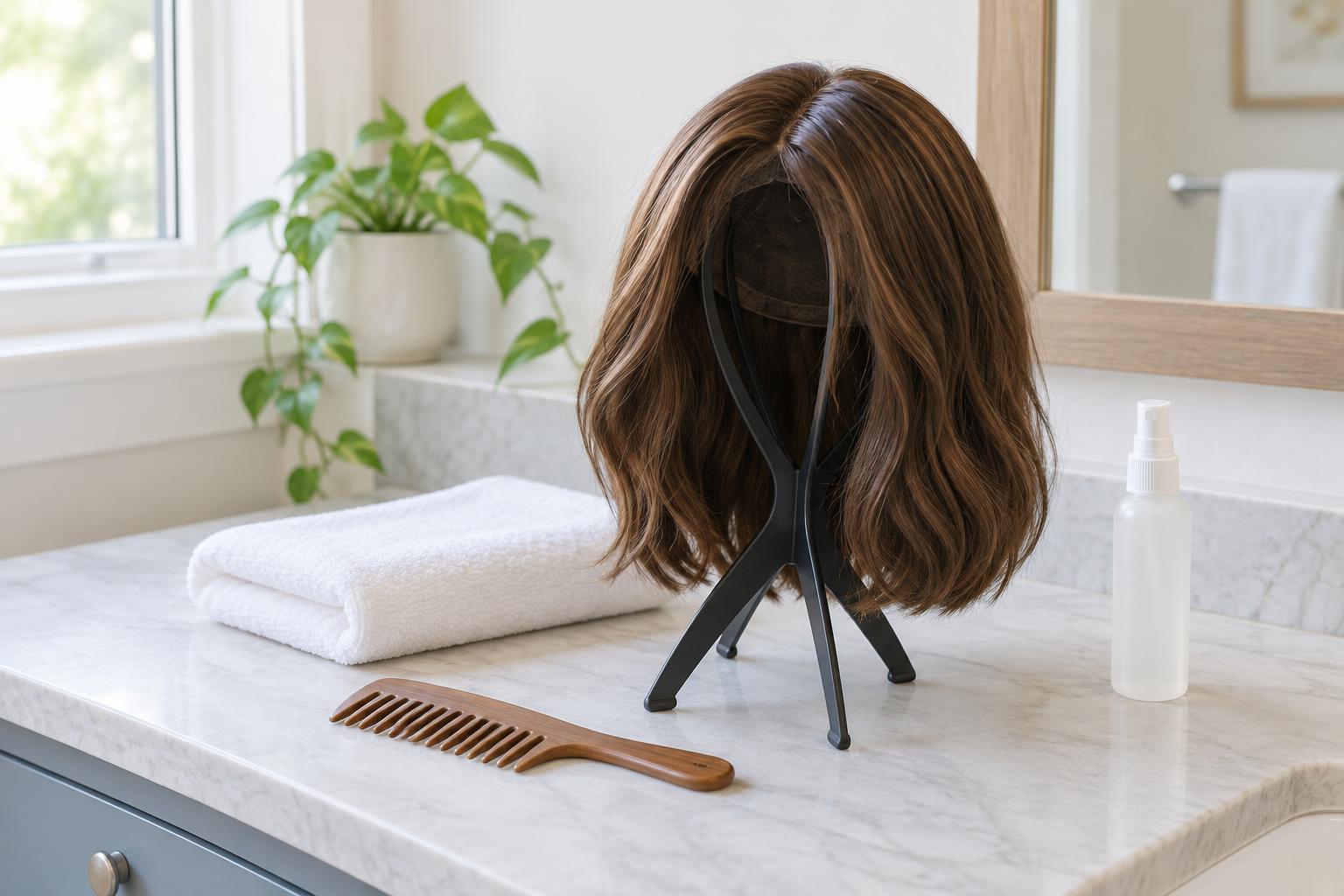
Blot excess water with a towel rather than rubbing. Allow the wig to dry as directed before brushing, styling or storing it; damp storage can encourage unpleasant smells. Unless the wig is labelled heat-friendly, keep heated tools and hot drying methods away from synthetic fibres. If you notice discomfort where a wig touches your skin, clean the piece and its accessories, and consider whether fit or products may also be contributing.
The useful rule is simple: wash when the wig shows signs of needing it, not merely when the calendar says so. Paying attention to residue, odour and movement helps you keep it comfortable and presentable without putting it through unnecessary washes.