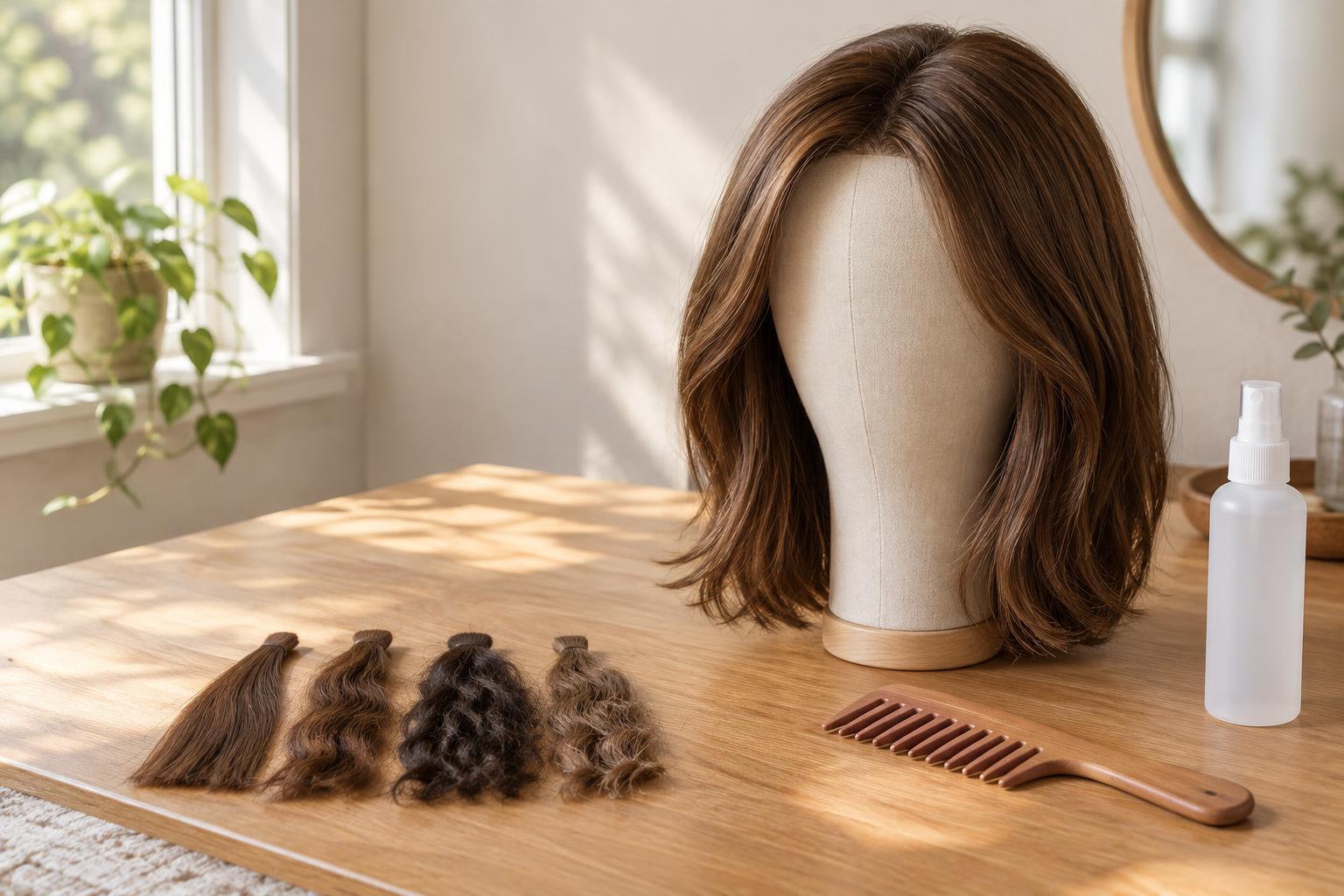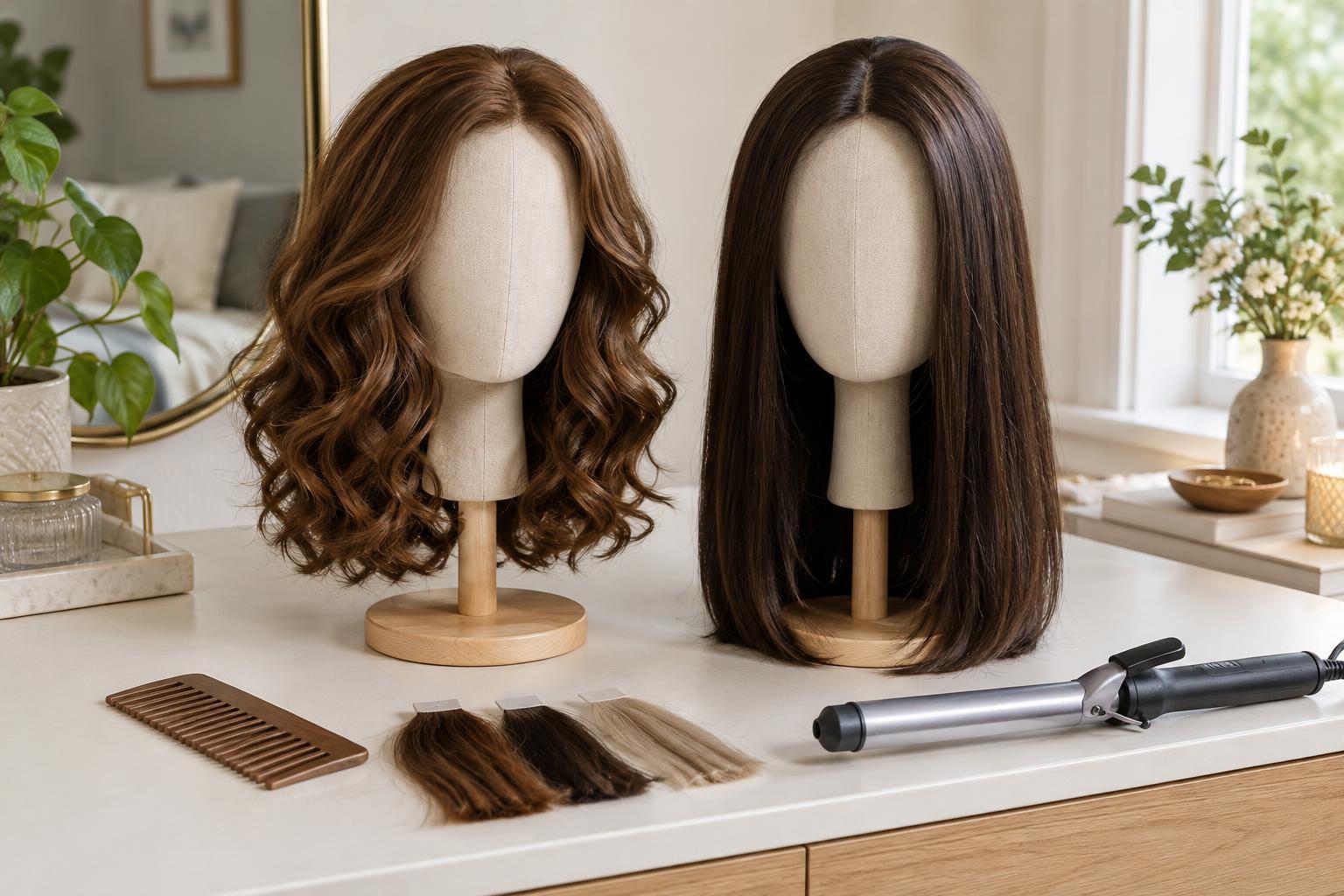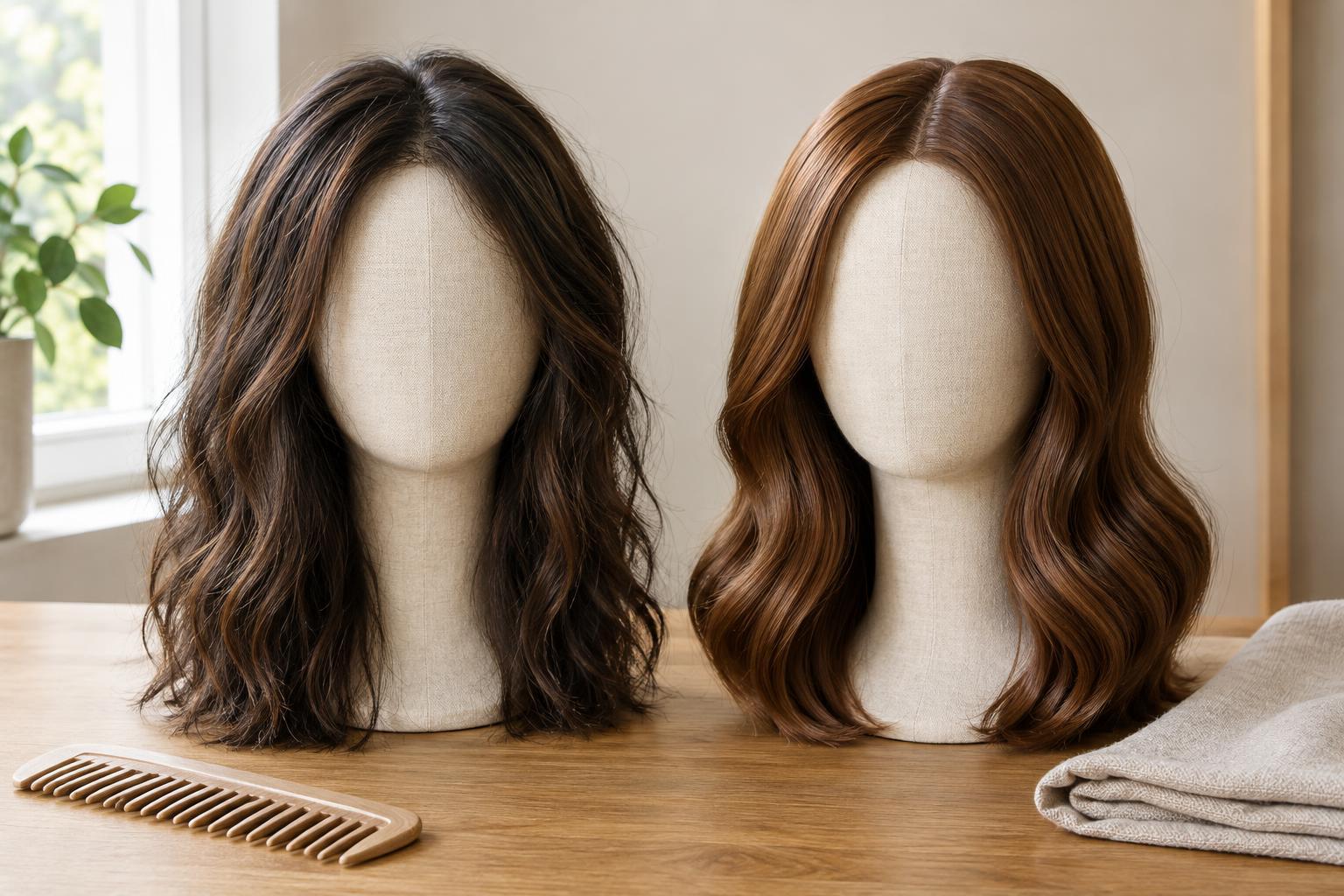
What the construction terms mean
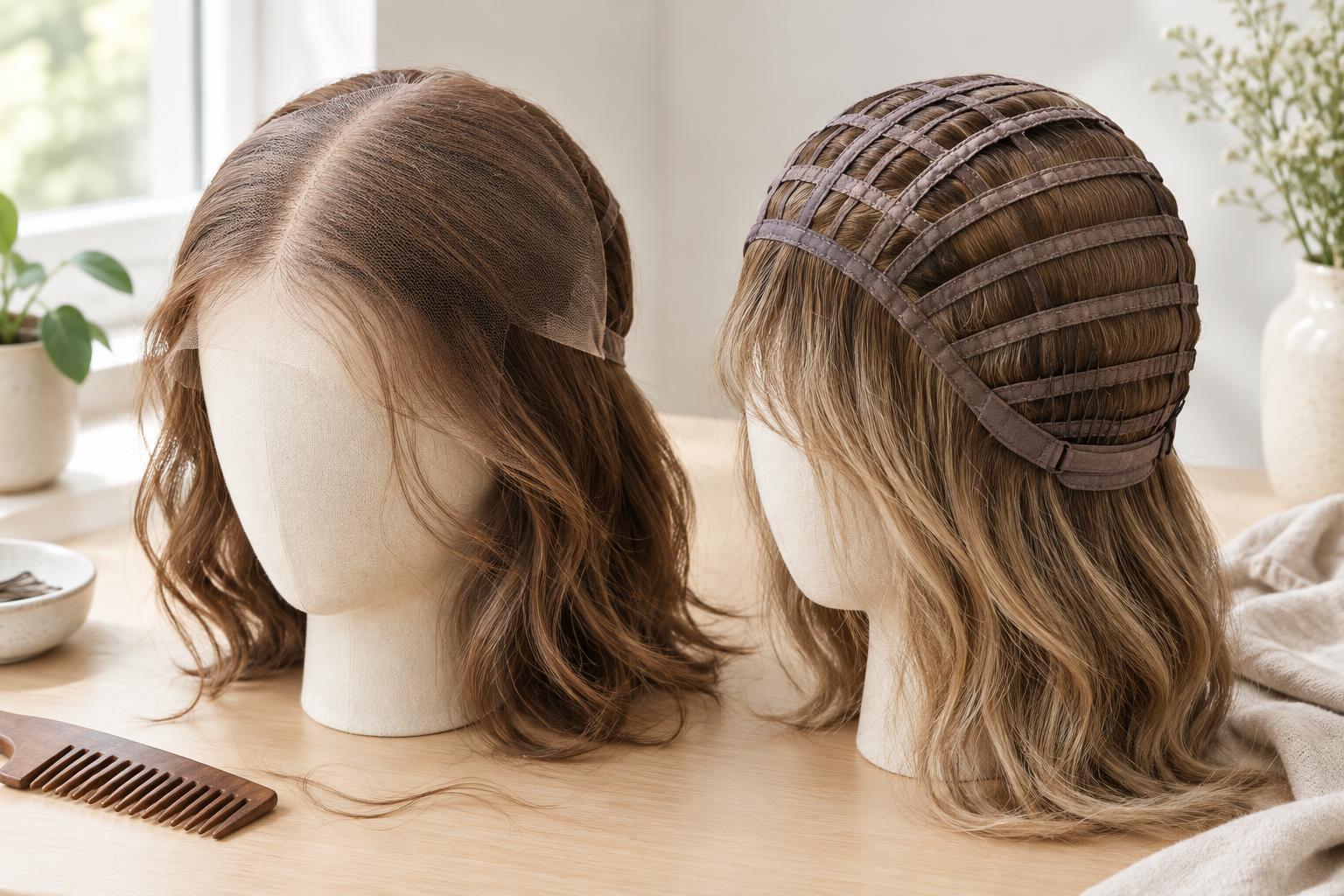
A wig’s construction describes how its hair is secured to its cap. In a hand-tied area, individual hairs or small groups of hairs are knotted onto a fine base, often lace or another mesh material. The hair can move in several directions, depending on the base and knotting. A fully hand-tied wig uses this method across most or all of the hair-bearing cap, although details vary between products.
A machine-wefted wig uses rows of hair sewn together into strips called wefts. Those strips are attached to the cap, typically with spaces between rows. You may also see the term open-wefted or capless: it generally describes a cap with visible gaps between the wefts, rather than a cap with no structure at all. Neither method tells you by itself whether the hair is synthetic or human; both hair types can appear in different constructions.
Appearance and styling flexibility
Hand-tied sections can allow the hair to fall and shift more freely. They are useful where the base may be seen, such as at a parting or the crown. A monofilament top, for example, is a fine base intended to give the impression that hair is growing from the scalp. A lace front addresses a different area: it creates a finer-looking transition along the front hairline. These features may be hand-tied even when the rest of the wig is wefted.
Wefts can provide dependable volume because each row holds hair in a set position. That structure can suit a style designed to keep its shape with little rearranging. It may offer less freedom to move the part or style the hair away from its intended direction, especially where a solid top conceals the wefts. If you want to change your parting, check the stated parting area rather than assuming a wig is versatile because its listing says “hand-tied” somewhere.
Feel, airflow and durability
A hand-tied cap may feel softer or less bulky against the head because it does not rely on rows of sewn wefts in those areas. That can matter if you have little natural hair beneath the wig or are sensitive to seams. Comfort is personal, though: cap size, stretch, edge finishing, adhesives or grips, and the material touching your skin can matter as much as the attachment method.
Open-wefted caps may allow more air through the gaps between rows. A fine hand-tied mesh can also feel light, but neither construction guarantees that a wig will feel cool in every setting. Hair density, fibre, cap lining and weather all affect the experience. On durability, wefts can be relatively straightforward to handle, while fine hand-tied bases may need gentler treatment to avoid stretching or damage. Any wig can shed if it is tugged, brushed roughly or worn against friction.
Price, hybrids and labels worth checking
Hand-tying takes labour, so fully hand-tied wigs often cost more than comparable machine-wefted styles. Price also reflects factors such as hair fibre, length and cap features; a higher price does not guarantee a better fit for you. Many wigs combine techniques to balance appearance and cost. A lace front with a wefted back, or a monofilament top with wefted sides, may put finer construction where it is most visible.
Read product descriptions by area rather than relying on a single headline term. Ask what is hand-tied, what is wefted, whether the part can move, and what sits against the scalp. “Hand-tied top” is not the same as “fully hand-tied.” Photographs of the inside of the cap can help you identify weft rows, a fine top panel, adjustment tabs and any lining. If that information is missing, it is reasonable to ask the seller before buying.
Choosing and caring for your wig
Start with how you plan to wear the wig. For a familiar style that you do not expect to restyle often, a wefted option may meet your needs. If natural-looking movement across the cap or a flexible parting matters most, look closely at hand-tied and monofilament areas. If your scalp is sensitive, pay particular attention to the cap surface and seams. Fit remains essential in every construction: a wig that is too tight or too loose can be uncomfortable regardless of its materials.
When possible, compare wigs in similar lengths and densities so construction is the main difference you notice. Try gentle head movement and check whether the cap stays secure, where it touches your skin and how the hair falls after you move it. Follow the maker’s washing and detangling guidance, support the cap while handling wet hair, and avoid pulling at lace or mesh. The best choice is not a universal winner; it is the construction that supports the look, feel, care routine and budget you prefer.