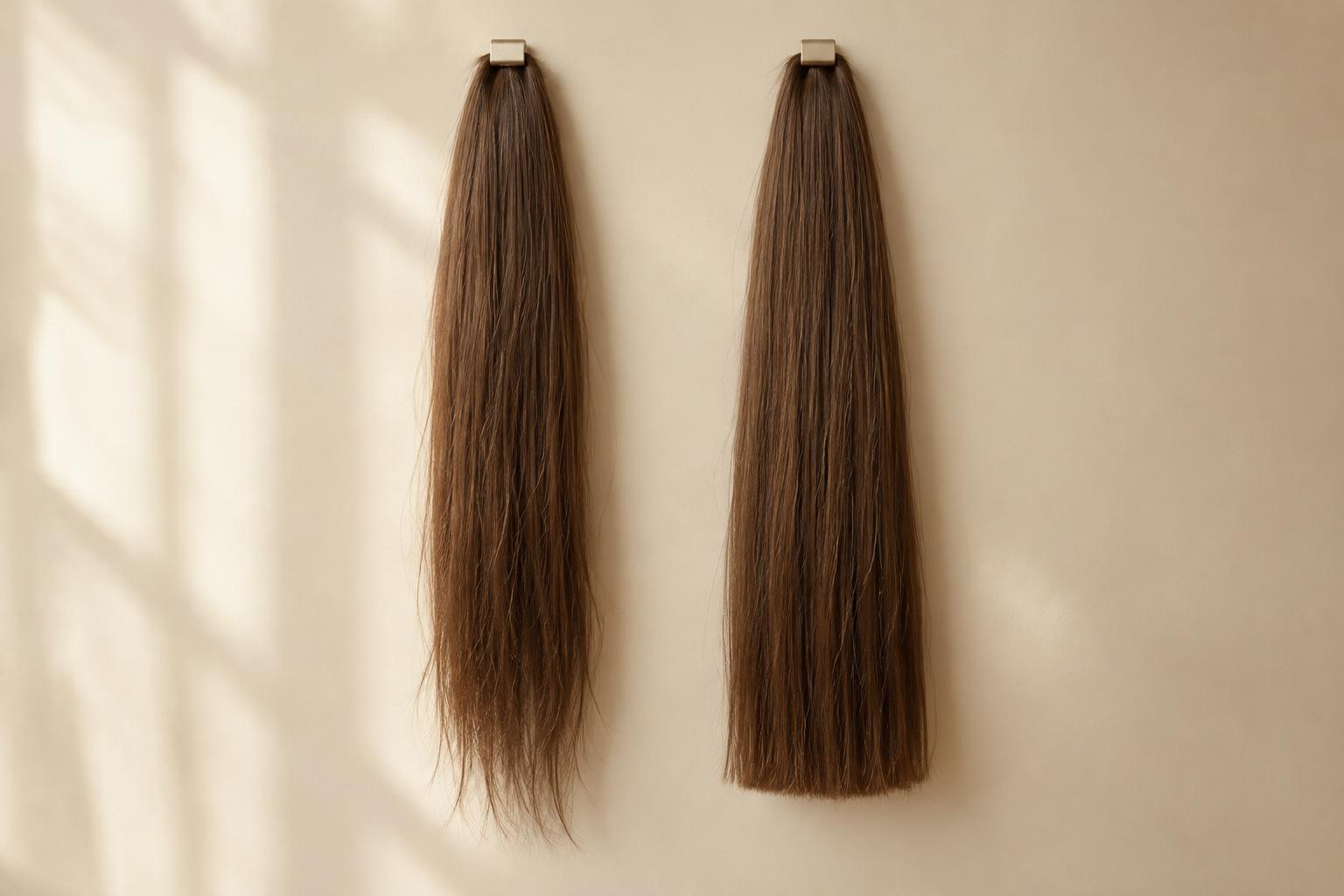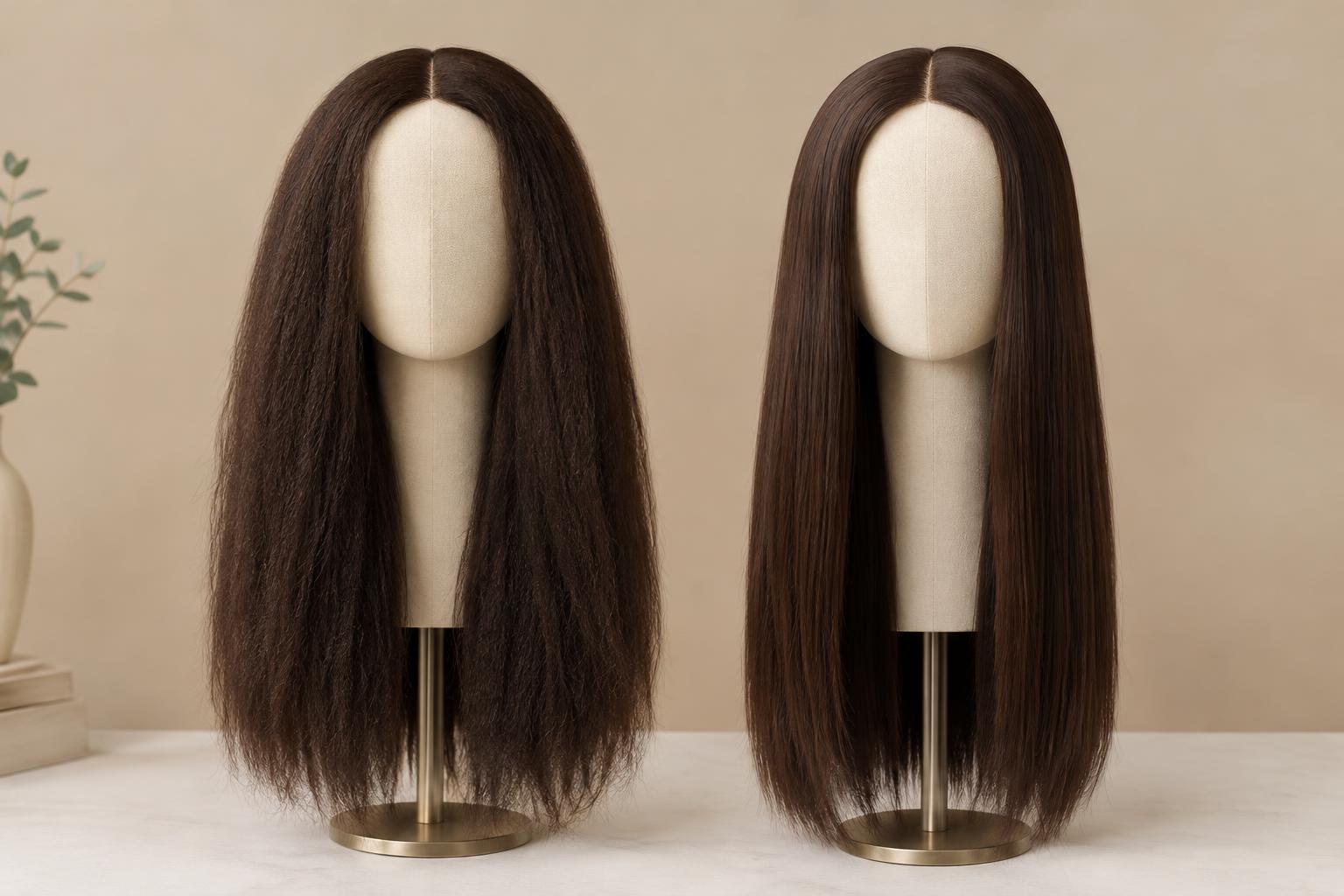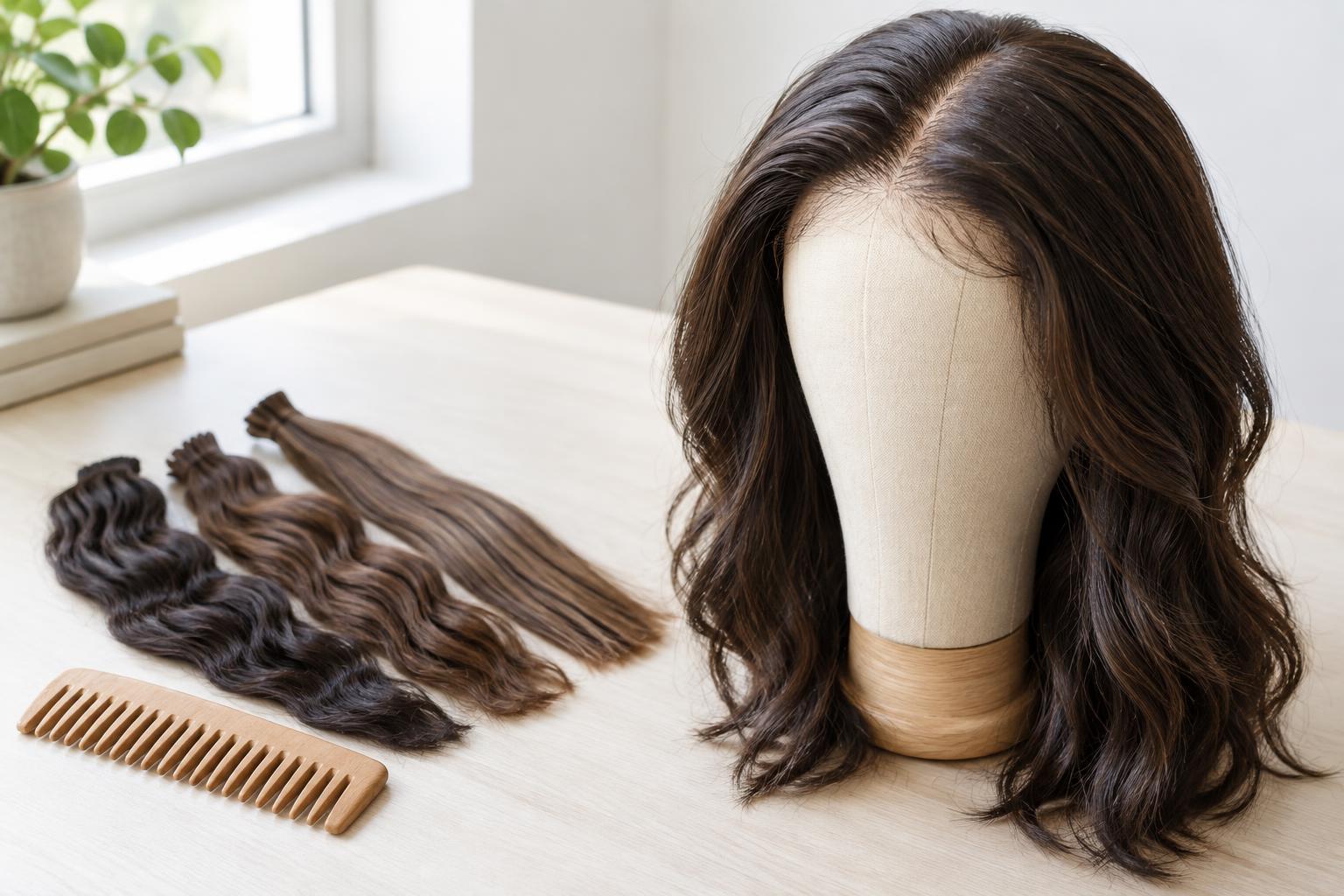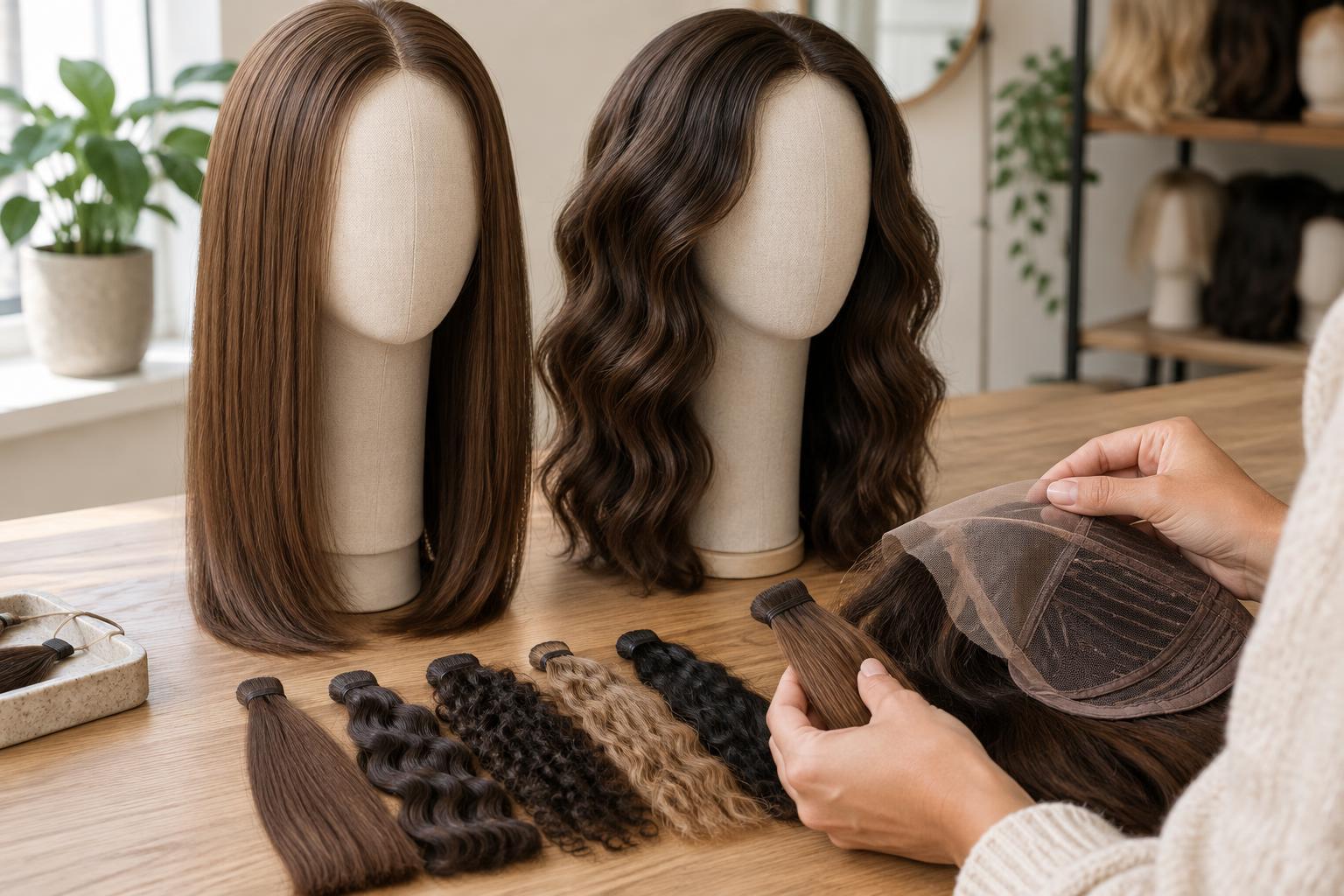
Why hair-origin labels need a closer look
When shopping for a human-hair wig, you may see descriptions such as “European hair” or “Brazilian hair” alongside words like silky, thick or wavy. These labels can help a seller describe the look of a product, but their meaning is not always precise. Depending on the listing, a place name might refer to where hair was collected, a texture associated with that name, or a product range. The label alone cannot tell you which meaning the seller intends.
Hair may also pass through several stages before it becomes a wig: collection, sorting, colouring or other processing, and assembly. A place named in a product title does not necessarily describe every stage. Rather than treating an origin word as a guarantee of quality, use it as a starting point for more specific questions.
What “European” and “Brazilian” might describe
“European” is a broad term: Europe includes people with many natural hair colours, textures and strand characteristics. In a wig listing, the word might be intended as an origin claim, or it might describe a particular fine or smooth appearance. It does not, by itself, establish that every strand was collected in Europe. If collection location matters to you, ask the seller to state what they mean by the label.
“Brazilian” can be similarly flexible. A seller may use it to describe hair presented as full-bodied, smooth or naturally wavy, but those qualities are not exclusive to hair from Brazil. Nor can a photograph confirm geographic origin. Compare the actual specifications and images of the wig rather than assuming two products with the same origin label will look or behave alike.
The distinction matters most when a listing charges a premium for a named origin. A clear description should explain what you are paying for, whether that is documented collection location, a particular texture, longer lengths, lighter processing or a construction feature. If the answer remains vague, you can still consider the wig on its visible merits without treating the origin claim as verified.
Details that reveal more about how a wig may wear
Start with the fibre. Human hair and synthetic fibre have different styling and care requirements, while a blend may contain both. For human hair, ask whether it has been coloured, lightened, coated or otherwise processed. Processing can affect how a wig feels and how it responds to washing or further styling, although its effects vary by product.
You may also encounter “Remy” and “virgin”. Remy generally refers to hair arranged so the cuticles run in the same direction, an approach intended to reduce friction and tangling. “Virgin” commonly means hair that has not been chemically altered. Sellers do not always use these terms consistently, so ask for a plain-language explanation of what has and has not been done to the hair.
Construction deserves equal attention. A lace front, full lace cap and wefted cap offer different approaches to the hairline, ventilation and fit. Density, length, cap measurements and parting options may make more difference to your daily experience than the geographic label. Check whether listing photos show the actual wig or a representative style, and look for views of the hairline, parting and cap interior when available.
How to compare labels without relying on them
Choose the qualities you want before comparing product names. Do you prefer a sleek finish, a loose wave, a lightweight cap or room to change the parting? Write down your priorities and match them to descriptions that give concrete details. A texture label is more useful when paired with clear photographs and an explanation of how the hair looks after washing, not only after professional styling.
If you can examine a wig in person, look at it in ordinary lighting and handle it gently. Notice whether the density suits the look you want, whether the cap feels comfortable, and whether the strands move in a way you like. For online shopping, check the size guide, return conditions and care instructions before ordering. These practical details help you judge suitability even when the hair’s origin cannot be confirmed from the listing.
Questions worth asking before you buy
Ask what an origin label specifically refers to: collection location, processing location or a style designation. If a seller says the origin is verified, you can ask what information supports that claim and whether it applies to the whole wig. If ethical sourcing is important to you, ask what the seller can explain about its supply chain rather than assuming a geographic name provides that assurance.
Also ask whether the hair is human, synthetic or blended; whether it has been coloured or otherwise processed; and whether the texture shown is its condition after washing. Confirm the cap size and construction, permitted styling methods, and the return policy. A seller who cannot answer every question may still offer a wig you like, but knowing what remains uncertain lets you make a more informed choice.
Ultimately, “European” and “Brazilian” are not substitutes for product specifications. Treat them as terms to clarify, then judge the wig by its material, construction, appearance, care needs and fit with your preferences.