Start with the opening, not the outside diameter
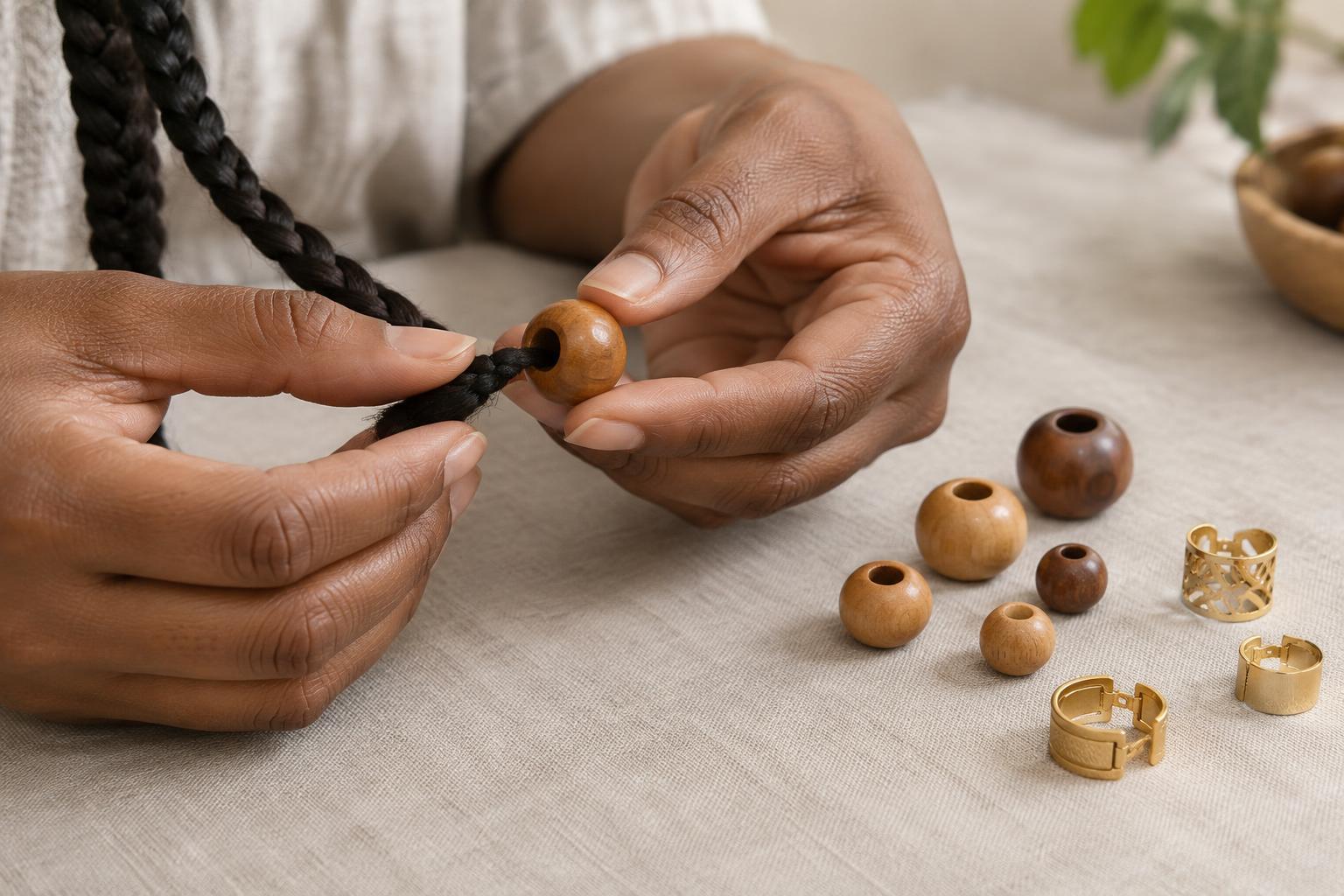
When shopping for hair beads, the useful measurement is the inside diameter of the hole. A bead can look large from the outside yet have little room for hair if its walls are thick. For a cuff, check the space inside it and whether its opening can be adjusted. Product descriptions do not always make these measurements clear, so look for an inside measurement or compare the accessory with a ruler before buying several of the same kind.
The section of hair going through a bead should be slightly narrower than the opening. It needs enough clearance to move through without scraping, but not so much that the bead drops straight off. If a size seems borderline, try one accessory first rather than forcing a whole set onto a finished style.
Measure the part that actually has to pass through
A braid or twist may be slim near the root and thicker farther down. A folded-over end, knot, elastic or decorative wrap can also be much wider than the main length. Check the widest part that must pass through the bead, especially if you plan to slide it on from the end. A soft tape measure or a strip of paper can help you estimate the circumference; you can then compare it with beads you already know fit.
For a quick physical test, gather a small section of hair to match your planned braid or twist and try sliding the bead along it. Test both directions. Hair may compress enough to enter a bead but catch when you remove it, particularly if strands loosen or fan out. With wigs and hairpieces, test on a discreet section first: synthetic fibres and delicate lace-front areas may not respond well to pulling.
Choose beads and cuffs for different jobs
Closed beads need a clear route onto and off the hair. Smooth, rounded openings are generally easier to use than rough or sharp-edged holes. Weight matters too: several heavy beads can pull a fine braid downward or make a lightweight wig style feel less balanced. If you want to change your look often, a larger, lighter bead secured in place may be more convenient than a very tight bead.
Cuffs usually open at the side, so you can place them around a braid or loc rather than threading them over the end. Choose one that closes gently around the hair without pinching it. Some cuffs bend easily, but repeated opening and closing may weaken them. Avoid pressing a cuff flat simply to make it stay put; it should be possible to reopen it without tugging at strands.
Fit the accessory without forcing the hair
To add a closed bead, smooth the end of the braid or twist and guide it through the opening. A beading tool can help collect loose strands, provided you use it gently and do not pull a thick section through a narrow hole. If the bead stops partway, take it back off and try a larger opening or a smaller section of hair. Resistance is useful feedback, not a reason to pull harder.
Think about how the accessory will stay in place. A small elastic or a neatly secured braid end may stop a bead from slipping off, but it can also make removal harder if it sits below the bead. Leave yourself a simple removal route. For cuffs, place the open side where you can reach it easily, then close it just enough to hold. Avoid setting either type where it rubs repeatedly against a wig cap, lace edge or sensitive scalp.
Make removal part of the size test
Take accessories off slowly, supporting the hair above the bead or cuff as you work. Open a cuff before lifting it away. Slide a bead towards the end while keeping stray strands smooth; if it catches, pause and free the strands rather than dragging them through. You may need to undo an end fastening to remove a closed bead cleanly.
After wearing, check for trapped hairs, rough edges or a change in how the accessory fits. A bead that snags on removal, or a cuff that must be prised open each time, is not an easy fit for that style even if it looked right while worn. Keep a note of which openings work with your usual braid or twist sizes so future choices are simpler.