Start with the movement, not the accessory
An accessory that looks simple on a shelf may still require precise finger movements to open, fasten or remove. Before shopping, notice which actions feel most manageable: stretching a soft band, squeezing a large clip, pulling fabric through a loop or pressing two surfaces together. Also consider whether you usually style your hair with one hand or two, and whether you can comfortably reach the back of your head.
Look for a fastening you can operate without a firm pinch between fingertip and thumb. Larger tabs, broad handles and visible openings can be easier to find and hold than tiny hooks or narrow pins. Ease of use is personal, so treat product descriptions such as “easy grip” as a starting point rather than a guarantee.
Low-fuss options to try
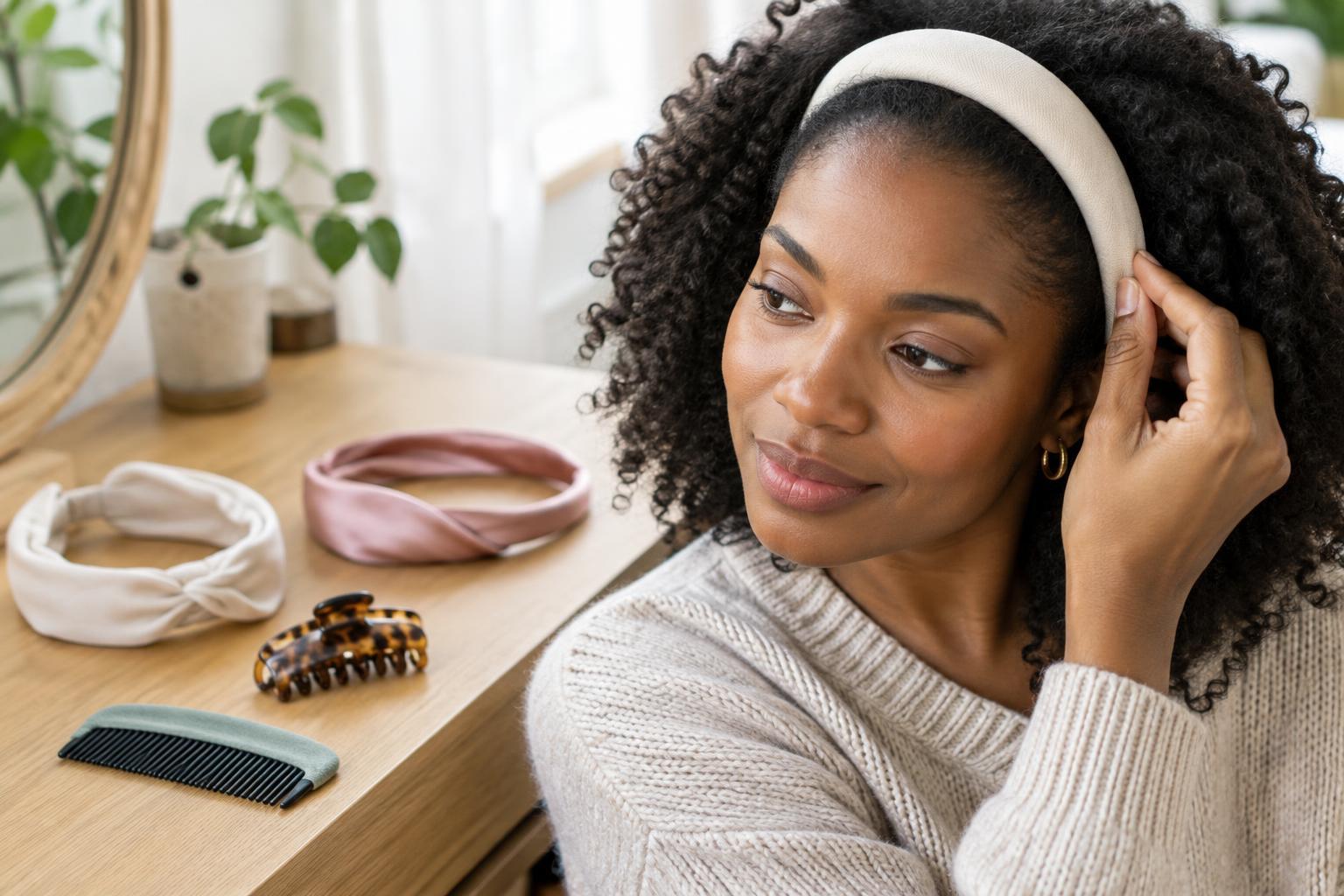
A wide, flexible headband can slip on without a clasp and help keep hair away from the face. Fabric-covered or soft-edged styles may feel gentler than rigid bands, while an adjustable wrap headband lets you choose the fit. If pulling a band over your head is difficult, look for one that opens fully and fastens at the side or front, where you can see what you are doing.
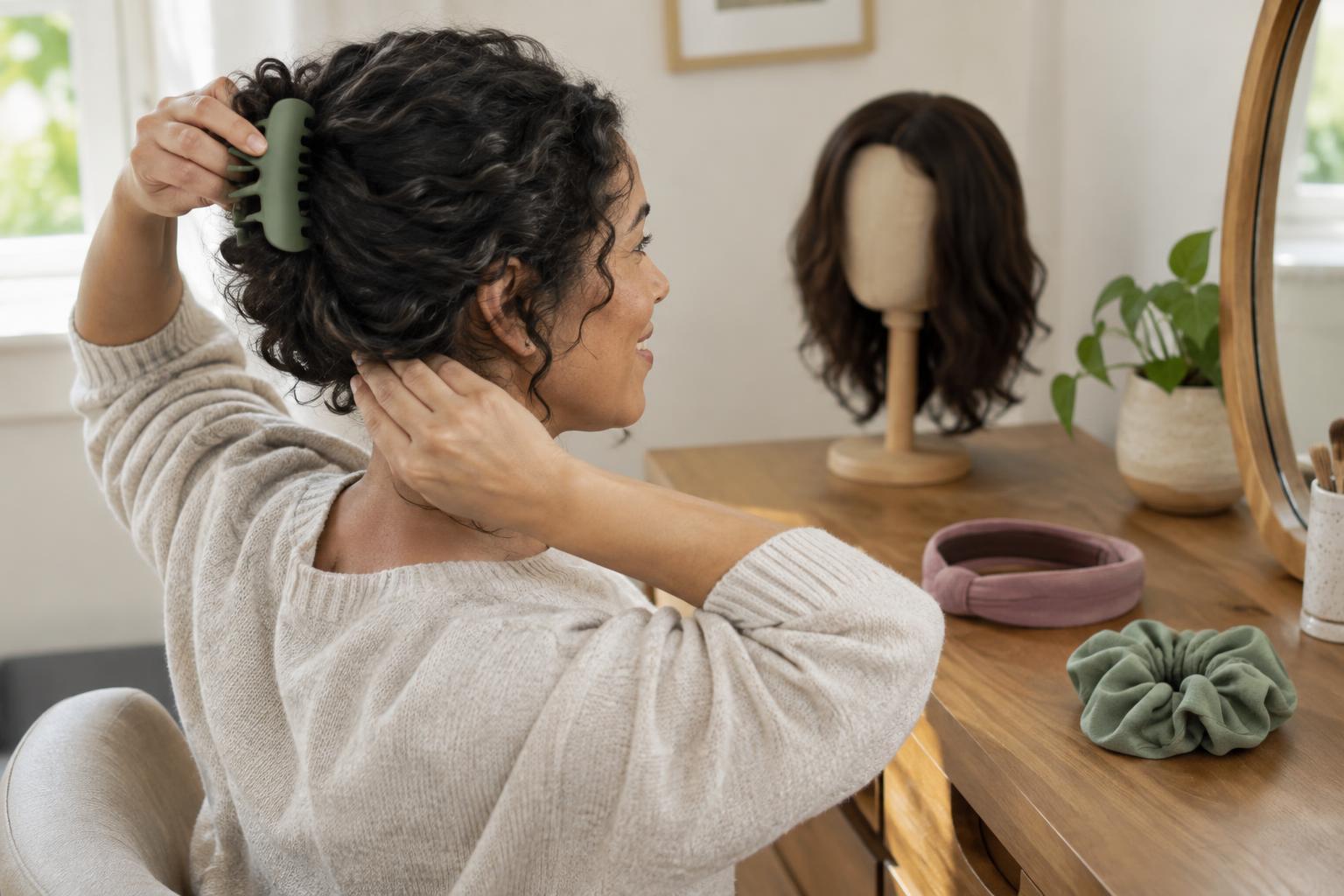
Large claw clips offer a broad surface to squeeze and can hold a loose twist without the repeated motions needed for several small grips. Check the spring tension before buying: a clip must open easily enough for you to use it but still hold your hair. Soft scrunchies and spiral ties may suit a loose ponytail if stretching and releasing a band is comfortable. A ribbon or scarf can work too, though tying a knot may be more demanding than using a ready-made loop or adjustable closure.
Hook-and-loop fastenings can make some wraps straightforward to secure and adjust. Keep the fastening away from loose hair when closing it, as strands can catch in the rough surface. Magnetic closures are another option on some accessories, but check that the pieces meet easily and stay closed during ordinary movement.
Choose size, grip and placement together
Hair thickness and texture affect how an accessory behaves. A clip that holds a small section may not close around a full twist, while an oversized clip can slide on fine or short hair. Smooth surfaces may slip more readily, whereas teeth and textured linings may improve grip but catch when removed. If possible, test an accessory with the amount of hair you actually plan to secure.
Placement can save effort. A side fastening is often easier to see than one at the nape, and a low, loose style may take fewer adjustments than a tightly arranged updo. Try positioning the accessory before gathering every strand perfectly. Once it is secure, you can tuck in a few loose pieces if you want a neater finish. Comfort matters as much as hold: an accessory that pulls at the scalp or needs constant readjustment is unlikely to be a useful everyday choice.
Using accessories with wigs and hairpieces
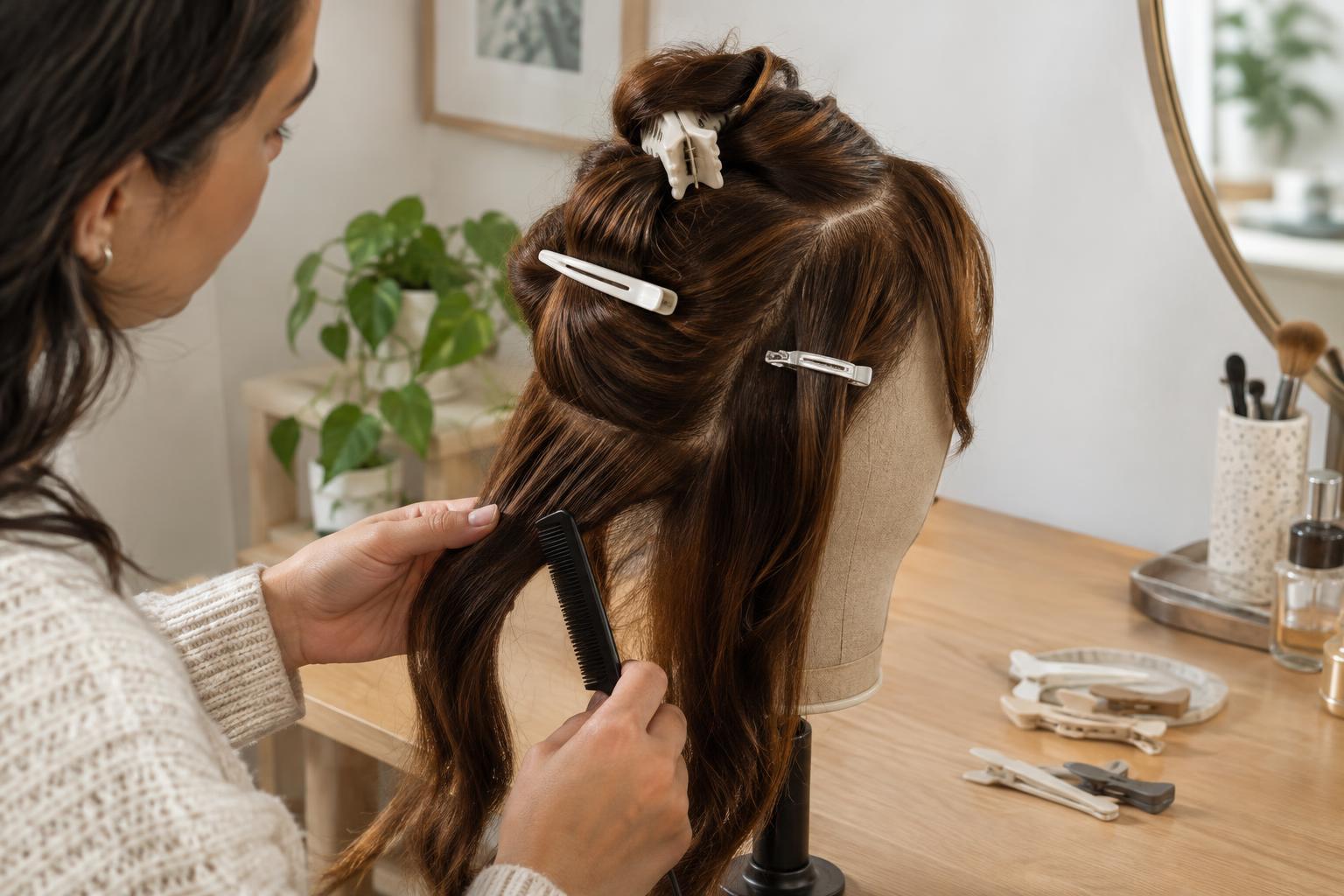
Wigs and hairpieces need an extra check because an accessory can grip the fibres while shifting the base underneath. Start with a light touch and make sure the wig or piece is secure on its own. A headband placed over a wig can provide a finished look without requiring you to attach anything to the cap, but avoid relying on a tight band to correct a poor fit.
Be cautious with clips, pins and rough fastenings near lace, delicate cap areas or attachment points. They may snag fibres or catch the base during removal. Instead, secure only a manageable section of hair, or choose a fabric accessory that rests over the style. If you use a synthetic wig, follow its care guidance before adding heat-shaped accessories or styling tools; not all fibres tolerate heat.
Make a simple trial part of shopping
When comparing accessories, ask whether you can open them, place them and remove them without help on a typical day. Try each step a few times rather than judging only how it looks once it is in place. Check for sharp edges, exposed metal, strong pressure and parts that trap hair. If you shop online, look closely at the fastening and dimensions; a photo of an accessory in hair may not show how its mechanism works.
It can help to keep one reliable option for everyday use and another for occasions when you want a different look. An easy fastening should make styling feel less demanding, not require you to work through discomfort. The best choice is the one that suits your hair or hairwear, stays comfortable and lets you get ready in a way that works for your hands.