Start with the shape you want to keep
Before choosing an accessory, decide which parts of your curls you want to leave free. You might want height at the crown, volume around the sides or a few defined curls near your face. An accessory works best when it supports that shape rather than trying to hold every strand in place.
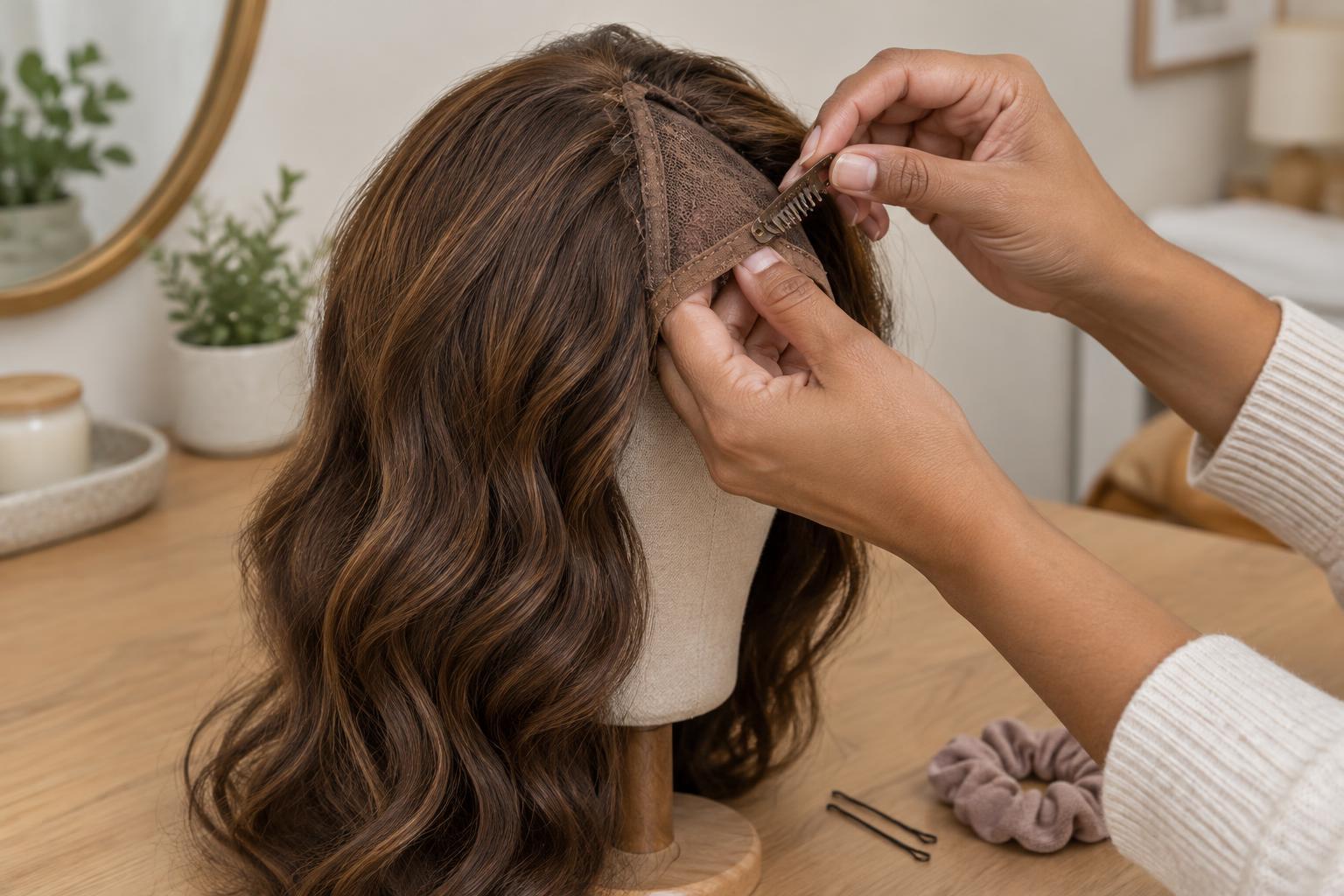
Notice where your hair naturally separates and how much pressure it takes to move it. Dense curls may hold a clip securely with little help, while finer or looser curls may need a lighter accessory that will not slide. If you wear a curly wig or hairpiece, check its attachment points and cap construction first. Avoid putting tension on a delicate lace edge or using a heavy clip where it could pull the piece out of position.
Pick accessories that grip gently
Small claw clips, open-ended pins and smooth barrettes can secure a section while leaving most curls untouched. Look for rounded edges and enough room inside the clip for the amount of hair you plan to gather. A clip that barely closes may squeeze curls flat; one that is much too large may slip. Try fastening only the front or side sections and letting the remaining curls keep their volume.
For a half-up look, gather hair loosely with your fingers rather than brushing it into a tight bundle. Set the clip below the fullest part of the crown so the curls above it can spring back. If you use pins, place them at the base of a section instead of threading them through the ends. That keeps the visible curl pattern intact and makes removal less likely to snag.
Use bands and scarves without pressing down
A narrow, rigid headband can create a flat strip across the top of the head, particularly if you wear it for hours. A wider, flexible band may spread pressure more comfortably, but placement matters just as much as width. Slide it on carefully, then lift curls around its edges with your fingertips. If you like height at the front, position the band farther back rather than pushing it firmly against the hairline.
Scarves offer more ways to adjust the fit. Fold one into a loose band, tie it beneath your hair or wrap it around a low, relaxed style. Smooth fabrics may cause less friction when you put them on and take them off, though they can also slip more easily. Tie a scarf securely enough to stay in place without tightening it to the point that it changes the shape of your curls or makes your scalp uncomfortable. On a wig, make sure the scarf is not dragging the hairpiece backward.
Let one detail frame the curls
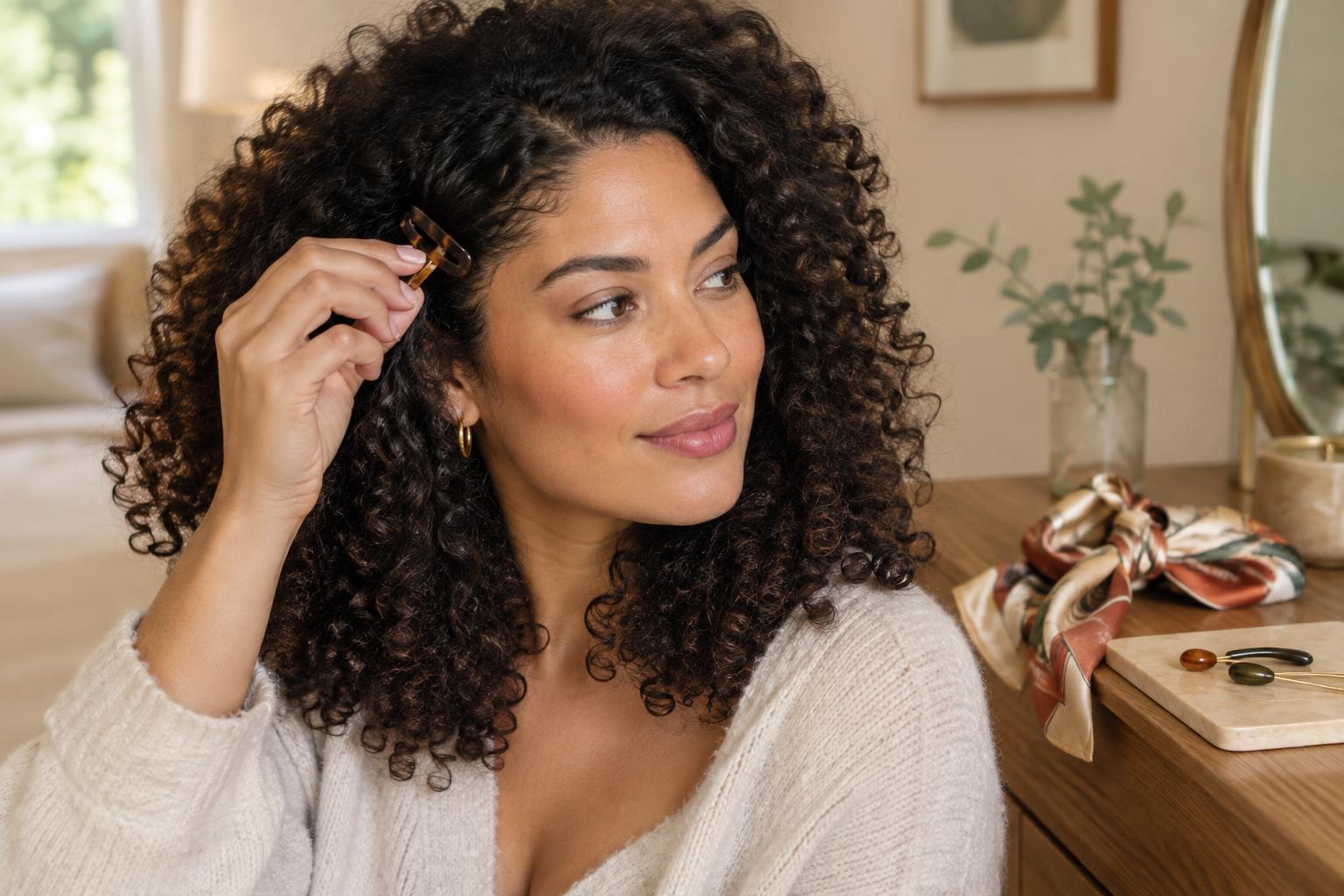
Accessories do not have to control your whole hairstyle to make an impact. A decorative clip above one ear can reveal your face while keeping the opposite side full. A pair of small pins can hold back shorter layers without compressing the longer curls. You can also place an accessory beside, rather than on top of, your most defined section so those curls remain the focus.
Consider the weight as well as the appearance of a piece. Large embellishments may look appealing but can pull on a small section of hair. Attach heavier pieces to a broader section, use a lighter alternative or reserve them for brief wear if they feel unstable. Comfort is a useful test: if you keep adjusting an accessory or feel it tugging, it is probably not the best match for that placement.
Remove accessories with the same care
Even a gentle accessory can disturb curls if you pull it out quickly. Open clips fully before lifting them away, and unwind scarves rather than sliding them across the hair. If a strand catches, pause and free it instead of tugging. After removal, use your fingers to lift the roots or separate any curls that have settled together. You may not need to restyle the whole head.
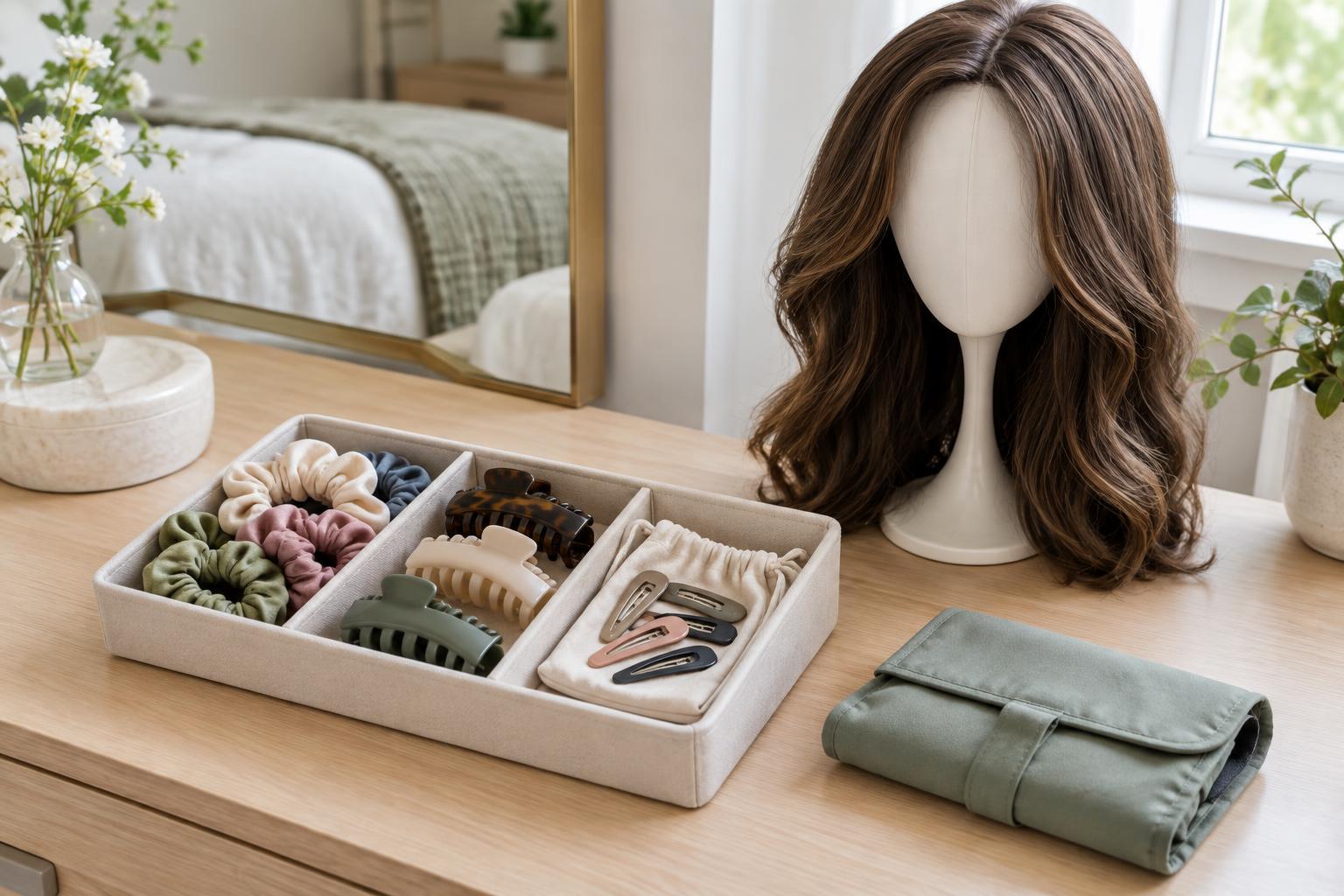
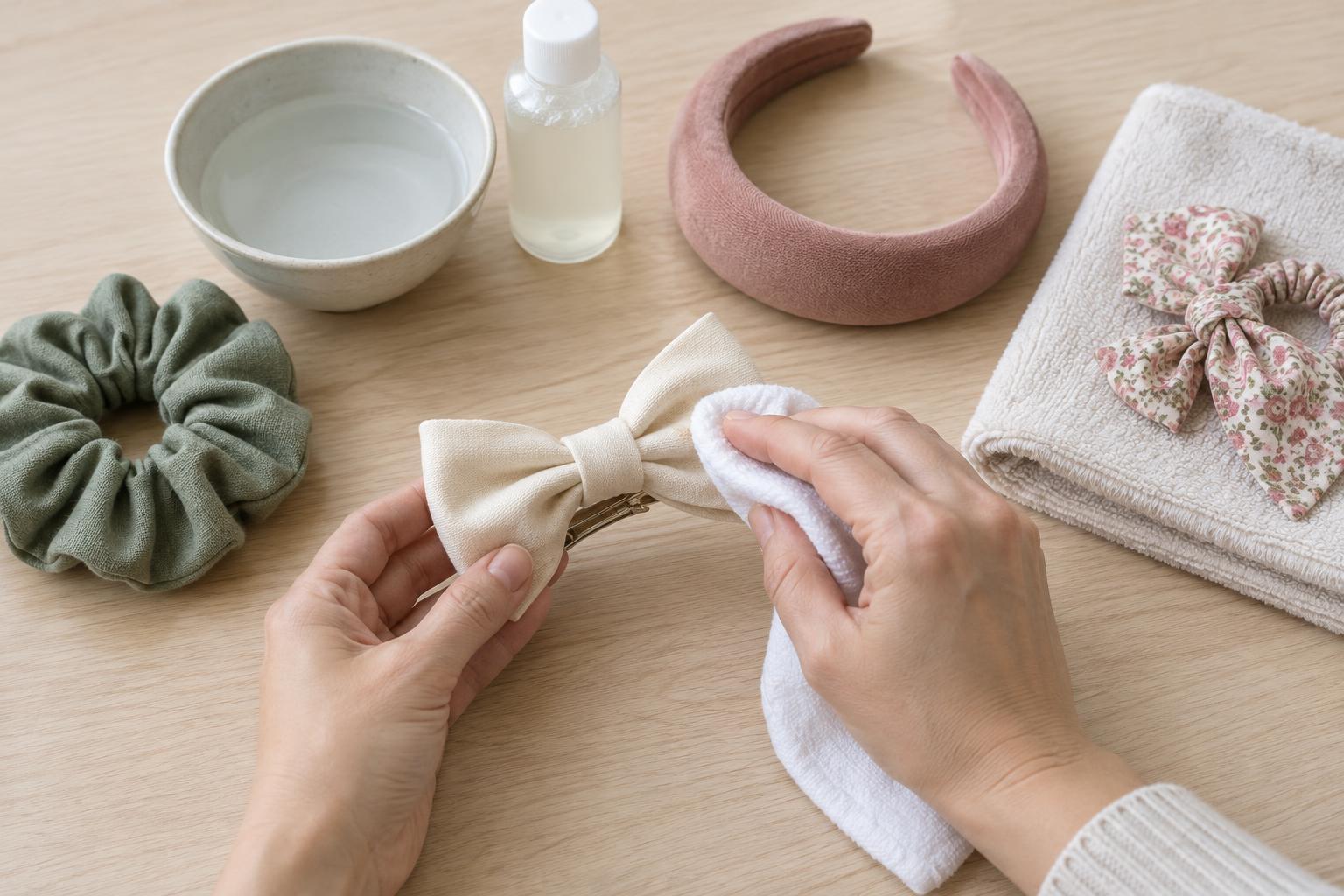
For wigs and hairpieces, handle the hair and its base separately: support the cap or attachment area while removing a clip, especially near lace or a parting. Store accessories with their clasps closed and check occasionally for rough edges or loose hinges. Keeping a few comfortable pieces in different sizes gives you options as your curl shape changes from one style or wash day to the next.