Start with how you want to wear it
Choosing a first wig is not a test of how convincingly you can recreate a particular hairstyle. It is about finding something you feel comfortable putting on and wearing through an ordinary day. One useful starting point is the front: would you rather have a fringe covering the hairline, or wear the hair swept back or parted so the hairline is visible?
A fringe can reduce the attention you need to give the front edge when you put the wig on. An exposed hairline gives you more freedom to move hair away from your face, but its placement may be more noticeable to you. Neither choice is inherently more natural or more suitable for a beginner. Think about your usual hairstyle, how much time you want to spend getting ready, and whether hair against your forehead feels comfortable.
What a fringe can make easier
A full or side-swept fringe draws the eye to the cut rather than the edge of the wig. That can be reassuring if you are still learning where the front should sit. It may also let you choose a straightforward cap construction without needing a lace front, a fine mesh section intended to create the appearance of hair growing along the front hairline. A wig with a fringe can still need adjustment, though: coverage does not compensate for a cap that slips or feels tight.
Fringes come with their own decisions. Check whether the length falls comfortably above your eyes and whether the density suits you. Hair may sit differently on your head than it does on a display stand or model. If a fringe needs trimming, start cautiously or ask someone experienced with wig cutting, since removed length cannot be put back. A lighter or side-swept fringe may be a useful middle ground if you want some coverage without hair resting across your whole forehead.
What an exposed hairline asks of you
If you like tucking hair behind your ears, wearing it off your face or changing your part, an exposed-hairline style may feel more like you. Lace-front wigs are one option because the front section is designed to give a softer-looking transition between wig and skin. The effect varies with the construction, hair placement, lace colour and how the wig fits. A lace front does not automatically mean the wig needs adhesive; some wearers use a well-fitting, secure cap without it, depending on the wig and their activity.
You may need a little more time to position an exposed hairline consistently. Try placing the wig where the front looks comfortable with your face rather than pulling it low to hide the edge. Look at it in daylight as well as indoor light, and turn your head to check the temples and sides. If you expect to tie the hair fully back, check the side and back construction too: a front lace section only addresses the front.
Fit matters more than the front style
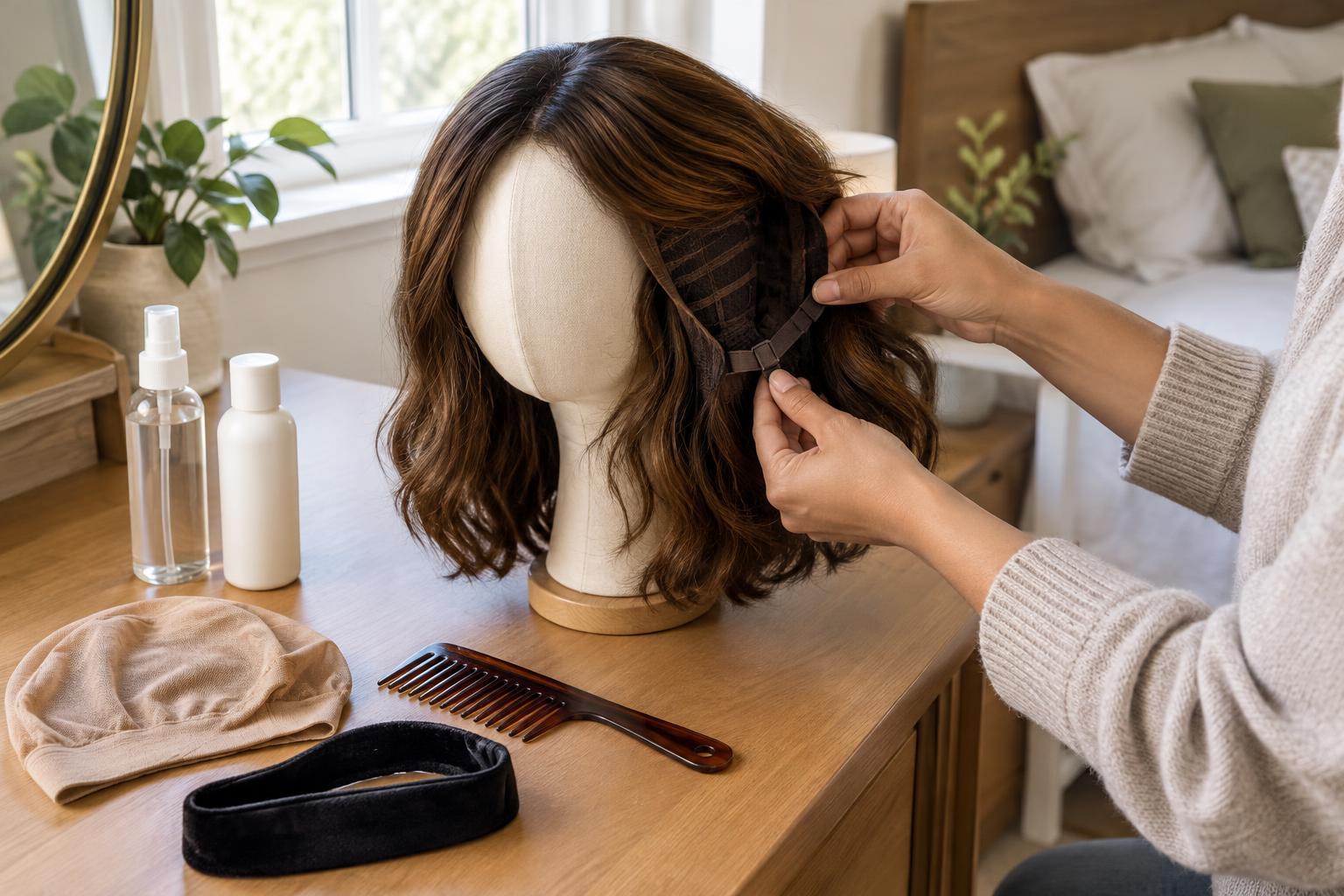
Before comparing fringes and lace, check the cap measurements provided by the seller and follow their measuring guide. Head circumference is important, but front-to-back and ear-to-ear measurements can help explain why two wigs labelled the same size feel different. Adjustable tabs may fine-tune the fit; they cannot turn a substantially wrong size into a comfortable one. The wig should feel secure without pressure that becomes distracting after a short wear.
Consider what will sit beneath the cap. Your own hair, a wig cap or a grip band can change how the wig fits and where its front edge lands. If possible, try a wig with the same preparation you expect to use at home. Move around, look down and gently turn your head. Notice whether you keep wanting to push the wig back, pull it forward or scratch beneath it. Comfort can change over time, so a brief mirror check is only part of the test.
Make the first choice manageable
When comparing listings, look for clear photos of the front, sides and cap interior, plus a description of the fringe, parting area and any lace. Check what comes pre-styled and what may need cutting or positioning before wear. Return conditions are worth reading before purchase, particularly if you are unsure about colour or fit.
If you are torn, choose based on the routine you want now rather than every style you might try later. A fringe may be the simpler first step if you want to put the wig on and leave the front mostly alone. An exposed hairline may be worth the extra practice if having hair off your face is important to you. You can begin with a style that feels easy, learn what you like about its fit, and use that experience to guide your next choice.