Pulling before you know how the accessory is attached
The easiest removal mistake is to tug at an accessory before finding its fastening. A snap clip, slide, decorative comb and hairpin may look similar once hidden under the hair, but each needs a different motion to come out. Pulling straight up can catch fibres in the teeth of a comb or drag a pin across the cap.
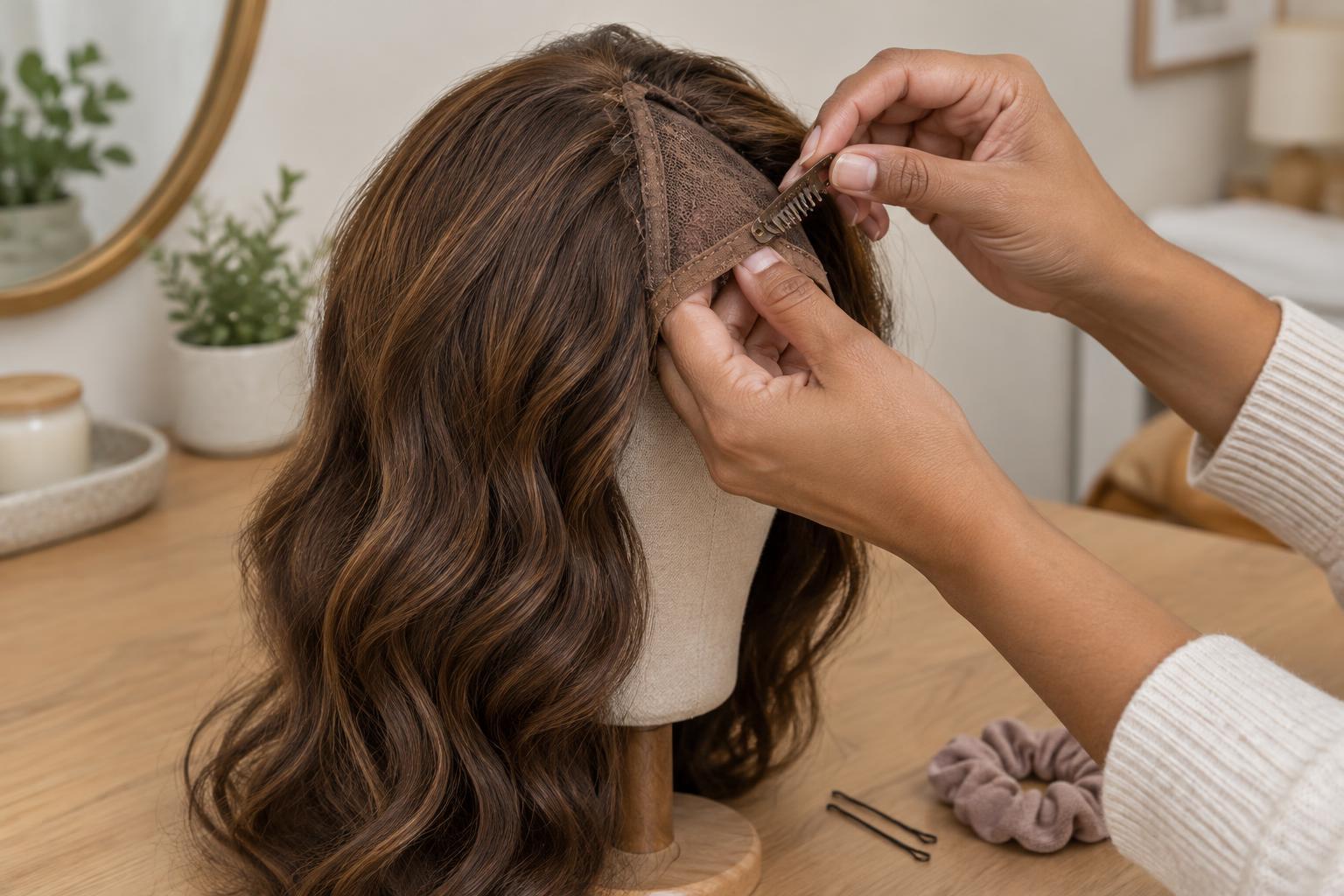
Take a moment to locate both ends of the accessory with your fingers. Open a clip fully before lifting it away. Slide pins back along the route they went in, rather than lifting them through the hair. For a comb, gently release any hair caught around its teeth before easing it out. If you cannot see the fastening clearly, use a mirror or ask someone to help instead of pulling by feel.
Tugging on the wig instead of supporting it
An accessory can feel surprisingly secure when it has been woven into a style. If you pull against it while the wig is on your head, the force may shift the wig or strain the hairline. Delicate areas, including lace fronts and partings, deserve particular care because the hair and cap construction can be easier to disturb there.
Hold the hair close to where the accessory sits while you work, without gripping or stretching the cap. Use one hand to steady the accessory and the other to free small sections of hair. If the wig keeps moving, it may be easier to remove it first and place it on a stable stand. Do not pin the wig tightly to the stand through delicate lace simply to make the task easier.
Dragging bands and elastics through the lengths
A headband or scarf can trap loose strands underneath its edge. Sliding it off quickly may lift fibres at the hairline or undo a carefully arranged parting. Loosen ties or adjustable fastenings first, then lift the band in sections, freeing any hair tucked beneath it as you go.
Small elastics create a different problem: unwinding them by force can tighten a knot around the fibres. If an elastic is caught, separate the surrounding hair with your fingers before trying to unwind it. For a disposable elastic that cannot be removed gently, carefully cutting the elastic may be safer than pulling it out. Keep scissors pointed away from the wig fibres and cap, and skip this step if you cannot clearly see what you are cutting.
Trying to brush out a snag while the accessory is still in place
Brushing through a snag can tighten fibres around a clip or comb. Instead, stop as soon as you feel resistance. Identify where the hair is caught, open or loosen the fastening, and free a few strands at a time. Work with your fingers first; a wide-tooth comb may help with a remaining tangle once the accessory is out.
Start detangling at the ends of the hair and move gradually upward while supporting the section you are working on. Check the wig’s care guidance before adding water or a detangling product, since suitable methods can differ between human-hair and synthetic wigs. Avoid using heat as a quick fix unless the wig is specifically labelled as heat-friendly and you know its recommended temperature range.
Forgetting the final check
Once the visible accessory is gone, check for a second pin, a hidden elastic or a clip tooth still holding a few strands. Run your fingers lightly over the styled area and look at the cap from inside if anything feels caught. Leaving a fastening in place can create a snag the next time you brush, wash or store the wig.
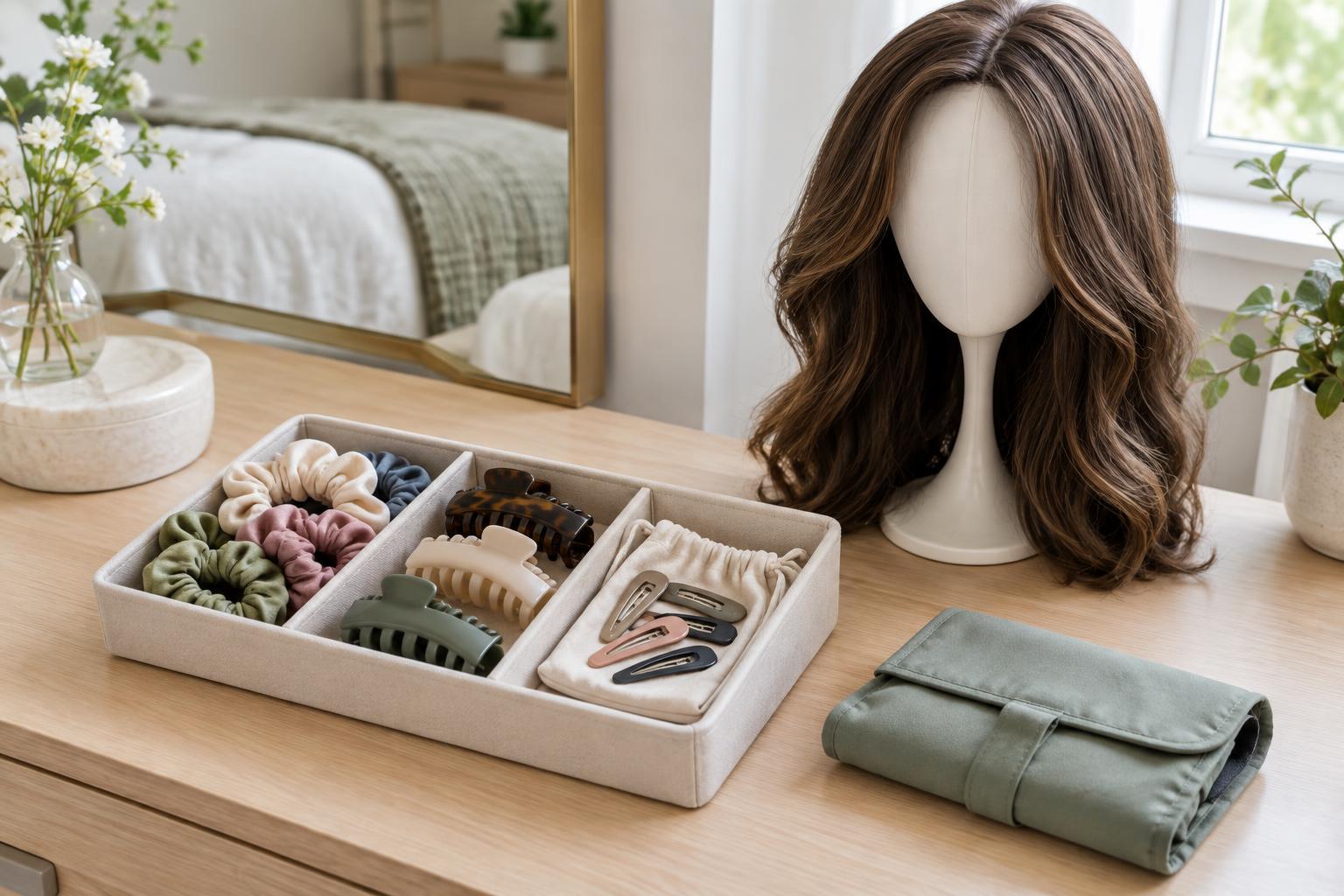
Gently smooth the freed hair and inspect the area for tangles before putting the wig away. Store accessories separately so their teeth, hooks or rough decorations cannot catch on the fibres. A slow removal routine takes only a little extra attention, but it makes it easier to keep both the style and the wig construction intact.