Prepare for a useful try-on
A good try-on is about more than whether you like the colour in a mirror. Give yourself time to put the wig on properly, adjust it and notice how it behaves during ordinary movements. If you are comparing several wigs, try to use the same lighting and wear your hair underneath in a similar way each time.
If you have hair, flatten and secure it as you would when wearing the wig regularly. A wig cap may help contain loose hair, but it also adds a layer that can change the fit, so test the setup you expect to use. If you prefer not to wear a cap, assess the wig without one. Check that the wig is facing the right way and that any adjustable tabs are set evenly before judging its size.
Check comfort and cap fit
Start by placing the front edge where you intend to wear it, then settle the cap around your head without pulling it down by the fibres. The wig should feel secure without relying on tightness. Notice whether it presses at the temples, behind the ears, along the front edge or at the nape. A little awareness of a new wig can be normal; persistent pinching, rubbing or a developing headache is a reason to reconsider the fit.
Look for excess space as well as pressure. A cap that bunches at the crown or gaps around the sides may shift even if its adjustable tabs are tightened. Tabs can fine-tune a fit, but they may not make a cap that is fundamentally too large or too small comfortable. If you are choosing between sizes or constructions, compare how each feels after several minutes rather than deciding from the first few seconds.
Think about your usual day. Glasses, hearing devices, hats or headphones can change how the ear tabs and side areas feel. If you use any of them, try them on with the wig where possible. Comfort is personal, and a feature that feels unobtrusive to one wearer may bother another.
Test security through movement
Stand up, sit down, turn your head and look down as if picking something up. Then gently shake your head and run your fingers through the style as you normally might. You are checking whether the cap creeps backwards, the nape rides up or the hair moves away from where you placed it. Do not judge security by tugging hard on the wig; ordinary movements give more useful information.
Pay attention to what you would need to keep adjusting. A wig that stays in place only when you hold a particular posture may be frustrating to wear. If you plan to use a grip band, clips or another securing method, test the wig with that method rather than assuming it will solve a fit problem. Clips need suitable hair to attach to, and any added grip should still feel comfortable. Follow the wig maker’s guidance before adding attachments or altering the cap.
Look at the wig from more than one angle
View the style from the front, sides and back, using a second mirror or a photo if that helps. Check the hairline, parting, temples and nape at a normal viewing distance as well as up close. Ask whether the amount of hair suits the look you want: some people prefer a full silhouette, while others want less volume around the face.
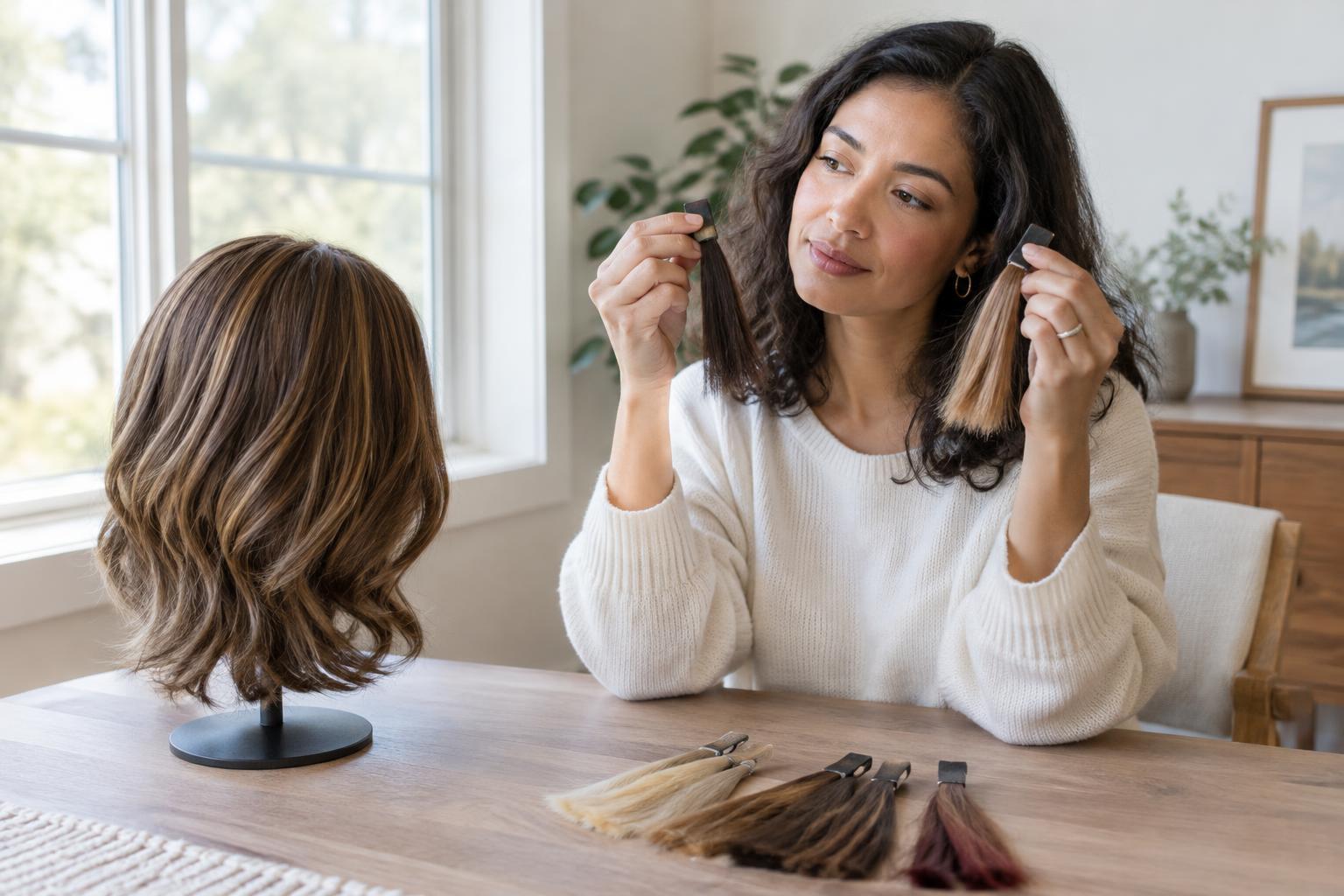
Try the part and fringe in the positions you would actually wear them. Hairline and parting options vary by construction; not every wig is designed to be parted anywhere or styled away from the face. Notice how the colour looks in more than one type of lighting if you can. A shade may appear different beside a window than it does under indoor lights, and neither view alone tells the whole story.
Finally, consider whether the wig feels like your style, rather than whether it meets someone else’s idea of natural-looking hair. A bold cut or colour can be an excellent choice. The useful question is whether its appearance matches your intentions and whether you feel at ease wearing it.
Make a final decision without rushing
Before buying, repeat your three main checks: can you wear it comfortably, does it stay where you put it, and do you like how it looks during normal movement? Make a brief note of any concern, such as pressure behind one ear or a front edge you expect to keep adjusting. This makes comparisons easier if you try on several styles.
If you are shopping remotely, check the seller’s size guidance, construction details and return conditions before removing tags or changing the style. At home, try the wig on indoors under the conditions allowed by the return policy. Avoid cutting, heat styling or attaching accessories until you are sure you want to keep it. A promising wig should work with your routine, not require you to overlook discomfort in the hope that you will stop noticing it.